Join WhatsApp Channel

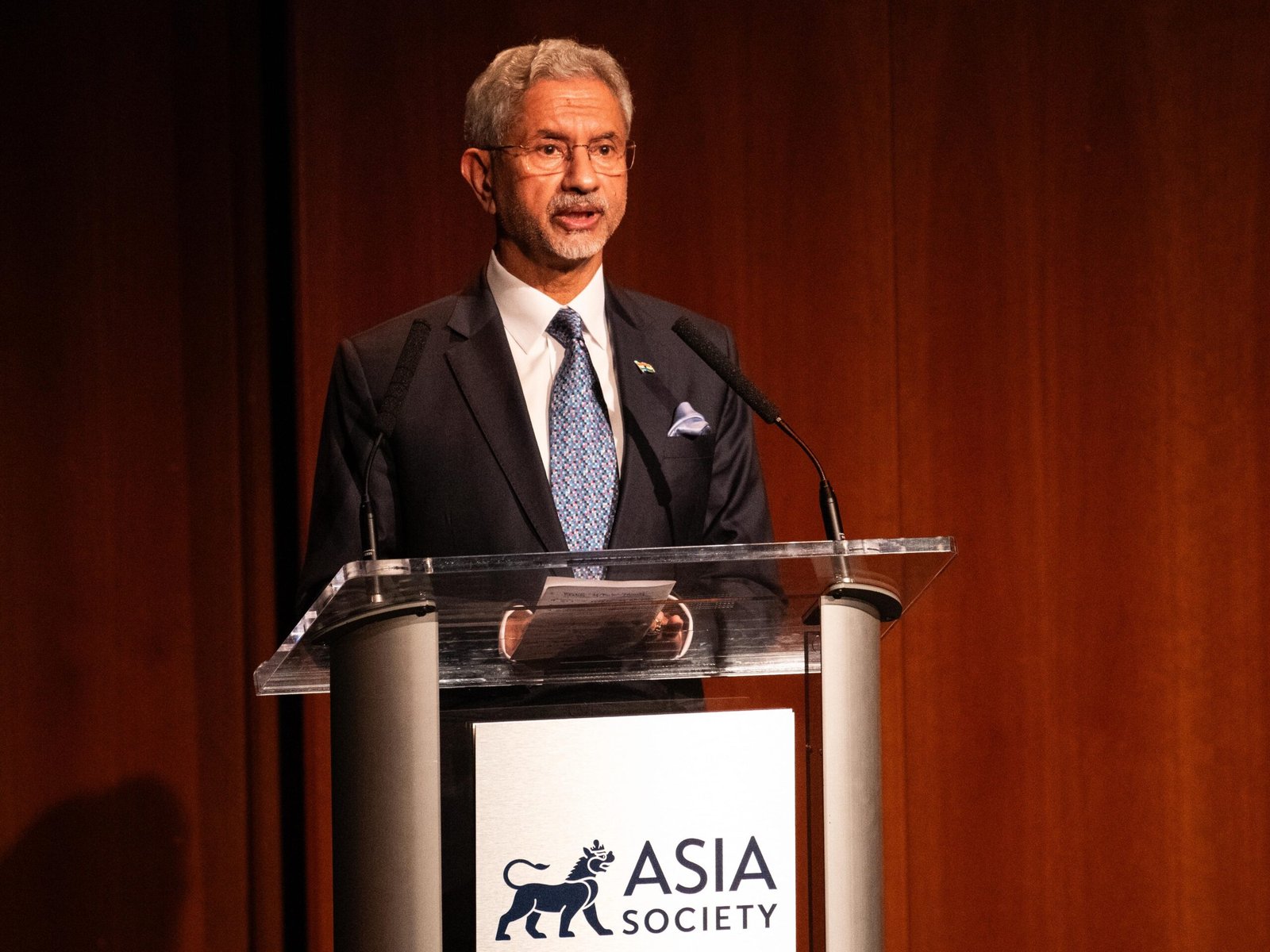
India’s Foreign Minister S. Jaishankar said intensifying competition among major powers is colliding with deep economic interdependence, creating a more volatile international environment and forcing countries to rethink how they conduct diplomacy.
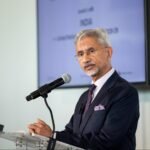
“The fact is that it’s a tough world, getting tougher by the day, and the big countries are setting the tone,” Jaishankar said in opening remarks at the Asia Society Policy Institute in New York on September 28, on the sidelines of the 81st session of the United Nations General Assembly.
“On the one hand, there is a very strong sense of competition. I would say an almost obsessive sense of competition, and this coexists with a deeper and deeper interdependence,” he noted.
Jaishankar said interdependence remains an economic reality even as competition increasingly shapes governments’ decisions. Countries must weigh their desire to compete against the consequences of doing so with partners and rivals on whom they still depend, he said.
That tension is visible in policy debates and in the way governments approach one another. It also creates opportunities for countries to use their advantages as leverage, particularly when they have access to resources, markets or capabilities on which others rely.
“If countries are interdependent, which means some countries have leverage on others, and the sense of competition is very high, then the tendency is to weaponize that leverage,” he said. “And we are seeing that more and more.”
He said the pressures created by competition, along with sharper policy decisions and the responses they provoke, have changed the work of diplomats. “Diplomacy has become an extreme sport,” Jaishankar said. Governments now have to anticipate high-risk decisions by other countries and consider how to defend themselves or limit the impact.
At the same time, he said, diplomats cannot assume that every period of turbulence represents a lasting shift. They need patience to see longer-term developments through while remaining ready to respond to immediate challenges.
“You have to have the patience and fortitude of chess,” he said. The difficulty, he added, is being “patient” and “resolved” on one hand while remaining “nimble and responsive and sharp” on the other. He described that combination as a predicament facing diplomats across the world.
Jaishankar said the international landscape has become increasingly difficult to divide into separate countries or regions. Events in one part of Asia affect other parts of the continent, while developments across Asia are closely connected to changes elsewhere.
“It is today very difficult to separate Asia from what’s happening in the world. It’s even more difficult to separate parts of Asia from what’s happening in other parts of Asia,” he said.
He argued that this is pushing governments and analysts toward a more cohesive view of the Asia-Pacific region. That approach can be difficult, he said, because policymakers are accustomed to placing issues in distinct categories and seeking solutions within them.
In Jaishankar’s assessment, the underlying driver of the current upheaval is a rebalancing of power among countries. Some economies are growing, either in absolute terms or relative to others, while others are losing ground. As those shifts become more pronounced, they affect how governments see their place in the world.
The changes are creating adjustment problems and stirring anxieties, he said. Rising powers are reassessing what they can achieve, while countries that believe they have less influence than before are responding to that perception. Both reactions are shaping domestic politics and international decisions.
Jaishankar said governments also appear less inclined to rely on deterrence as their default approach. Where countries have the capability to act, he suggested, they may feel increasing pressure to use it.
“I think what we are seeing is a world which used to be content playing it safe, where deterrence was, in a sense, the default option. That was the norm,” he said. “So it’s a kind of use it or lose it mindset, which today has set in.”
He placed those developments in the context of the decades since the United Nations was founded. The international system moved through a bipolar period and what he called a unipolar moment, he said, before entering the current period of rebalancing. He argued that the world is now moving “quite visibly towards greater multipolarity.”
Another sign of change, Jaishankar said, is an erosion of alliances and a greater tendency for countries to act independently. He referred to the United States and China as two powers that may find points of convergence but remain broadly competitive.
“So there are limits to what the two of them can agree upon vis-à-vis the rest of the world,” he said. Other countries, meanwhile, are trying to determine how best to protect their interests amid changing U.S. policies and continuing exchanges between Washington and Beijing.
“The rest of us are coming to terms today with a very different America, with the fact that there is also today a certain conversation taking place between America and China,” he said. Countries outside that relationship, he added, are “busy making” their own arrangements.
Those decisions include how to reduce exposure to risk, diversify economic and diplomatic ties, identify new partners and draw more value from existing relationships. Jaishankar said countries would continue to calculate, adjust and find new accommodations as the international order develops.
He said those changes were reflected in his meetings with nearly 90 counterparts during the week of the UN General Assembly.
Jaishankar also described the immediate global outlook as “pretty grim.” He pointed to two major ongoing conflicts with consequences for countries around the world, as well as the difficult situation in the Middle East, or West Asia. In Africa, he cited the conflict in Sudan and other areas of instability.
He said many countries also face what he called the “4F crisis” in his UN General Assembly address: pressures involving food, fuel, fertilizers and finance. Those challenges are compounded by vulnerabilities in supply chains, setbacks in progress toward the Sustainable Development Goals and growing anxiety about technology, he said.
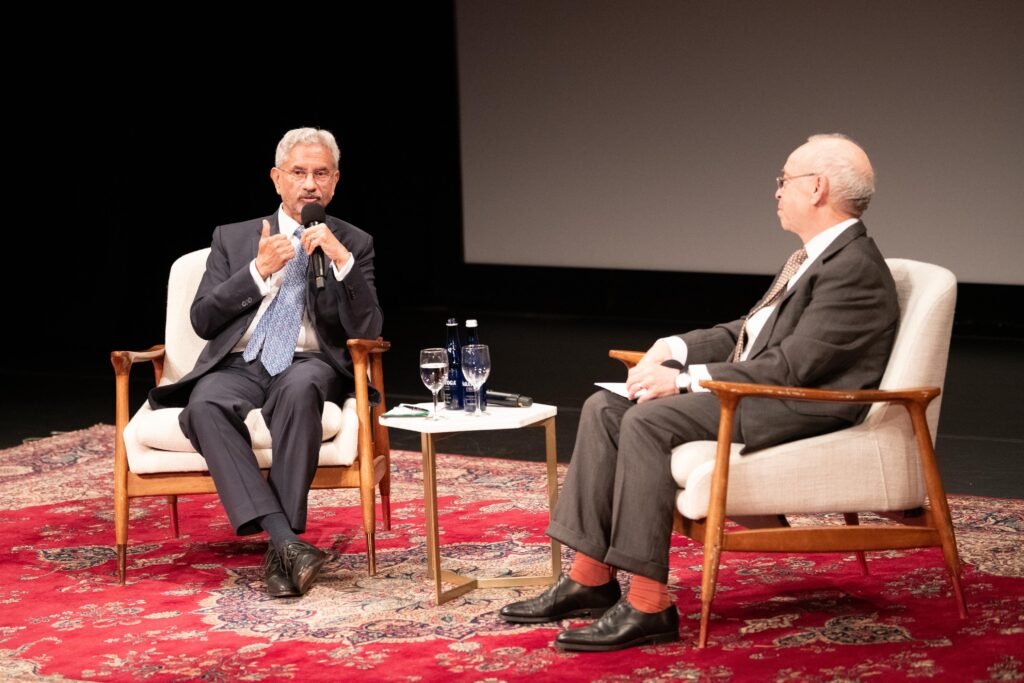
Later, in a discussion with Daniel Russel, a distinguished fellow at the Asia Society Policy Institute, Jaishankar addressed the changing international order, U.S. policy, trade, ongoing conflicts and India’s relationships with the United States, China and Japan.
He said the United States, as a global power, may previously have kept more of its options open. Now, he argued, countries are increasingly explicit about dealing with a range of partners to advance their interests.
“But I think today that pretense has dropped for everybody,” he said. “Everybody is openly dealing with everybody else.”
Jaishankar described that pattern as part of the movement toward multipolarity. Countries will seek the best arrangement they can obtain in a given situation, he said, based on a sharper definition of their interests.
“Everybody is going to be chewing it [gum], and everybody is actually going to get the best deal that they can get out of a given situation,” he said, using the image of a “universal gum” to describe the approach. Whether governments welcome the change or not, he added, U.S. actions can influence how other countries behave.
“Once Washington takes the lead on that, it becomes, in a way, a kind of a global fashion,” he said.
On trade, Jaishankar argued that international rules, particularly economic ones, have eroded over time. Trading structures were built on market assumptions, he said, but practices have since moved substantially away from those assumptions. He suggested that governments had allowed nonmarket practices to become part of the trading system without adequately confronting them.
“I think erosion of market assumptions, for which the U.S. by no means was responsible,” he said, attributing that change to another country without naming it in that passage. Taken together, such developments are helping propel the world toward a different approach, he said.
Jaishankar said countries may have to set aside an older policy playbook and develop a new one, a process he did not expect to happen quickly. He acknowledged that the United States has its own grievances about the trading system, whether based on “real or perceived unfairness,” but argued that its responses can affect countries other than those responsible for the practices at issue.
“In this case, let us say India. Part of our problem is, the complaints may be emanating out of some other country, but the reactions are actually visited on us, which is rather unfair,” he said.
Asked whether limits or safeguards might prevent competition from producing a more disorderly international system, Jaishankar said the answer was uncertain. One possibility, he suggested, is that the United States could increasingly pursue separate arrangements with individual countries, leaving the combined results to function as a system.
“We’ll have to wait and see,” he said. He questioned whether checks or safety nets would constrain competition, or whether countries could find themselves in a more “Hobbesian” world shaped by separate bargains and the self-interest of major powers.
For countries seeking to avoid that outcome, Jaishankar emphasized the value of being viewed as stable, consistent and reliable. In a volatile environment, he said, such a reputation could make other governments more willing to form or strengthen partnerships.
He also called for diversification. The more countries find shared interests and common ground with a range of partners, he said, the greater their ability to help create a balancing structure. He suggested that governments could pursue their own interests while also recognizing the longer-term value of predictability and stability.
Jaishankar described India’s relationships with the United States, Europe, Japan, China, Russia, the Gulf, ASEAN and parts of the Global South as “kind of a portfolio management approach.” Maintaining a range of relationships, he said, could help countries seek a degree of stability in an otherwise uncertain environment.
A highly volatile system carries practical risks, including for trade, he said. Governments and businesses may therefore continue to value dependable partnerships even when other arrangements appear to offer greater immediate returns.
“So I think the world will go for that kind of mix. You will find partners who are stable partners, reliable partners,” Jaishankar said. “I’m not pessimistic about the world. I’m just saying, it’s more competitive. It’s tough.”
He said new negotiations and bargains would eventually produce a different pattern of international relationships. Although its shape is not yet clear, he expressed confidence that countries’ desire to protect their own stability would remain an important force.
“I would still count on the self-interest of countries and their sensibilities and their desire ultimately to stabilize their own lives as a driving force,” he said.
Related posts:
 Minister Jaishankar Calls for Accountability Over State-Sponsored Terrorism at UNGA
 India’s Foreign Minister Launches 2028-29 UNSC Campaign at United Nations
 Foreign Minister Jaishankar Reflects on President Trump’s Inauguration, Highlights US-India Cooperation, Visa Issues, and Quad Priorities
 Foreign Minister Jaishankar Highlights Quad Progress, US-India Ties, and Political Unity