Join WhatsApp Channel

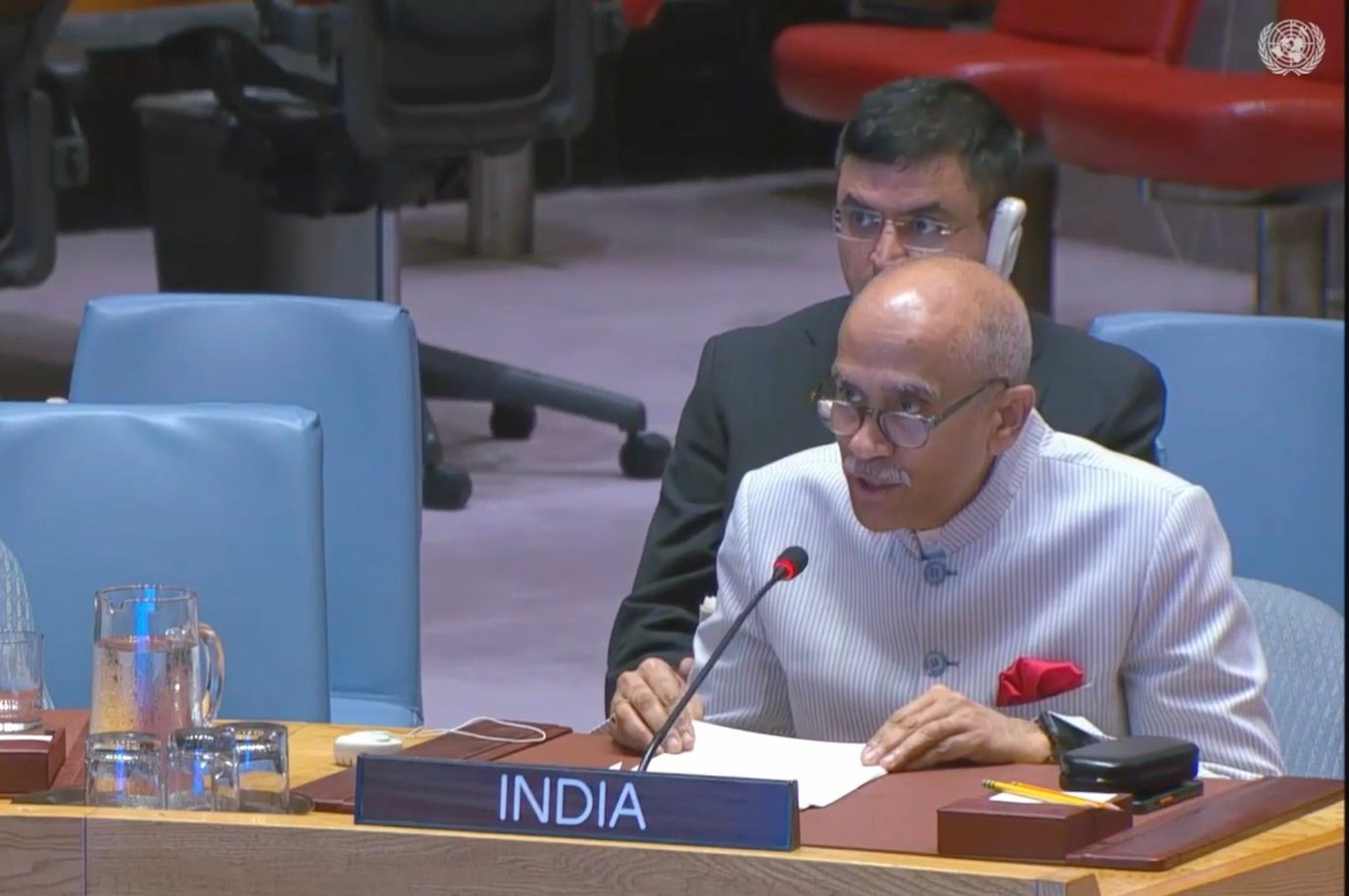
India’s Permanent Representative to the United Nations, Harish Parvathaneni, said the relationship between Indians and Afghans predates modern maps and borders, noting that the historic roads connecting Kabul with the plains of Hindustan served not only as trade routes but also as corridors for ideas, knowledge, belief and faith.
Speaking at a UN Security Council briefing on the United Nations Assistance Mission in Afghanistan on September 16, 2026, Harish said empires had “risen and receded” across the region over the centuries, but the bonds of “friendship and kinship” between Afghans and Indians had not been “broken.”
“It is this spirit that guides my country’s policy towards this nation,” he said. “We stand in favor of peace, stability and prosperity that could aid sustainable development of Afghanistan, as evidenced by our participation in the Doha Working Group meetings, our strong bilateral development partnership and our efforts in regional initiatives.”
Harish reiterated Prime Minister Narendra Modi’s belief that India’s “shared aspiration” for a peaceful and secure Eurasia is closely linked to peace and stability in Afghanistan. He said India has contributed to Afghanistan’s development through more than 500 partnership projects across all 34 provinces.
“Our commitment to providing humanitarian assistance to the people of Afghanistan will continue. We are working with UN agencies as well as others, such as the Afghan Red Crescent Society, to deliver aid to those who need it the most in Afghanistan,” the Ambassador said.
He said visits by Afghan ministers to India in recent months had facilitated bilateral consultations on cooperation in “humanitarian assistance, development projects, healthcare, food security, capacity-building, counter-narcotics, sports, education, trade, travel and connectivity.”
According to Harish, these discussions are intended to address the development and welfare needs of Afghanistan’s more than 48 million people, who have faced severe deprivation, suffering and what he described as international neglect over the past five years.
Citing the UN secretary-general’s report, he highlighted the strain on Afghanistan’s public health system, including the closure of 150 health facilities during the first half of the year. He urged member states to invest in the country’s healthcare system to help prevent a broader humanitarian catastrophe.
India supplied 33 tons of vaccines and related materials to support Afghanistan’s child immunization program during the previous quarter. During the latest reporting period, India also provided Afghan health authorities with specialized medical equipment, including “neonatal and pediatric care devices, cardiograph machines, ventilators, patient monitors, electrocautery equipment, plastic surgery sets and specialized medical kits.”
The assistance was supplemented by another 17 tons of essential medicines and medical supplies delivered to Kabul to strengthen healthcare services.
Harish said India continues to support development initiatives in Afghanistan, particularly in the “healthcare sector, including the construction of maternity clinics, with a view to strengthening medical infrastructure and improving access to essential healthcare services” for the Afghan people.
“We are also discussing pharmaceutical trade, availability of quality and affordable medicines, drug regulation, quality standards and regulatory cooperation with Afghan agencies,” he said.
In agriculture, India and Afghanistan are discussing cooperation in “agricultural research, quality seeds, irrigation, horticulture, livestock, food processing and capacity-building,” Harish said.
“Let us recognize what the World Drug Report 2026 of the UN Office on Drugs and Crime states: Opium poppy cultivation and production in Afghanistan have remained at historically low levels since Afghan authorities banned narcotics in 2022,” he said.
“We believe that forging closer cooperation with agricultural research institutes will aid the Afghan authorities in their commitment to move Afghans away from the cultivation of crops that had been aiding the global drug syndicates and help in the global counter-narcotics effort.”
In partnership with the UN Office on Drugs and Crime, India has provided 68 tons of medical supplies and 34 tons of social support items for programs supporting the rehabilitation of people with drug addiction, Harish said. “We urge member states to support this effort.”
Since August 2021, India has supplied Afghanistan with more than 50,000 tons of wheat, more than 450 tons of medicines and vaccines, and 40,000 liters of pesticides, he said.
“We have provided humanitarian assistance and critical care items in the face of disasters such as earthquakes. However, we realize that moving towards economic self-dependence is extremely important for our Afghan brothers and sisters,” he said. “We have been having discussions on enhancing bilateral trade, facilitating Afghan exports to India and strengthening B2B linkages.”
Harish said India has become a major destination for Afghan exports and remains committed to expanding bilateral trade in support of Afghanistan’s economic development.
India continues to grant tariff-free access to Afghan goods, facilitate commerce through the dedicated India-Afghanistan Air Freight Corridor and issue free long-term business visas to Afghan traders.
“We strongly condemn the trade and transit terror inflicted on Afghanistan in violation of UN declarations on Landlocked Developing Countries, WTO norms, provisions of the UN Charter and international law, and the tenets of basic human compassion,” he said.
Harish also expressed concern about the humanitarian conditions facing Afghans returning to the country. Citing the secretary-general’s report, he said 2.9 million Afghans returned in 2025, while another 1.15 million returned by August 22, 2026, with most of those movements described as involuntary. He argued that the forced return of more than 3 million people under unsafe and undignified conditions would have prompted greater political concern, humanitarian assistance and reintegration efforts elsewhere in the world.
He said the absence of a comparable international response reflected the challenges of the current period. India maintains that returns must be voluntary, safe and dignified, and that reintegration efforts require sustained international support. Harish said India is working with UN agencies and Afghan authorities to provide housing, food and other essential items to returning Afghans. In July 2026, India donated family tents to Afghanistan’s Ministry of Refugees and Repatriation to support shelter and rehabilitation efforts.
India’s scholarship and fellowship programs have provided educational opportunities to more than 3,000 Afghan students since 2023, including 1,000 women, Harish said. An additional 1,000 scholarships are being offered during the current academic year for Afghan students pursuing bachelor’s and master’s degrees at Indian universities. India also continues to provide financial and logistical assistance to Afghan women-led self-help groups.
Harish said human rights could not be advanced separately from security, development and economic opportunity. He called for “principled, practical and sustained engagement” to support the progress of Afghan society and reaffirmed India’s support for expanding opportunities for all Afghans, including women.
Referring to the 25th anniversary of the September 11 terrorist attacks, the Ambassador said the victims’ memory should strengthen international resolve to confront not only terrorists but also those who aid, finance and support their crimes.
India reaffirmed its support for UNAMA and emphasized the continued importance of its mandate in promoting peace and stability in Afghanistan. Harish also extended India’s wishes to incoming UNAMA head Rabab Fatima as she prepares to assume the role.
He called on the international community to recognize Afghanistan’s present circumstances and broaden its approach by encouraging positive action. Harish warned that the world could not exclude 48 million Afghans facing deprivation and hardship from its “collective conscience” without consequences. He said the international community should employ “positive inducements and nudges” so that future generations of Afghans can say the world supported them when they needed help.
Harish described Afghanistan as a collective global responsibility and said the Security Council has an important role in addressing matters that fall directly within its mandate.
The Ambassador concluded by congratulating France on assuming the Security Council presidency for the month. He also thanked Georgette Gagnon, UNAMA’s officer-in-charge and deputy special representative of the Secretary-General for political affairs, as well as the civil society representatives who briefed the Council.
Related posts:
 India Reaffirms Support for Afghanistan’s Peace and Stability at UN Security Council
 India Calls for Peace, Stability, and Greater Humanitarian Support for Afghanistan at UN Security Council
 At UNSC, India Highlights Centuries-Old “Civilizational Relationship” with Afghanistan
 ACAA Calls for Renewed UK Action Five Years After Taliban Takeover