Join WhatsApp Channel

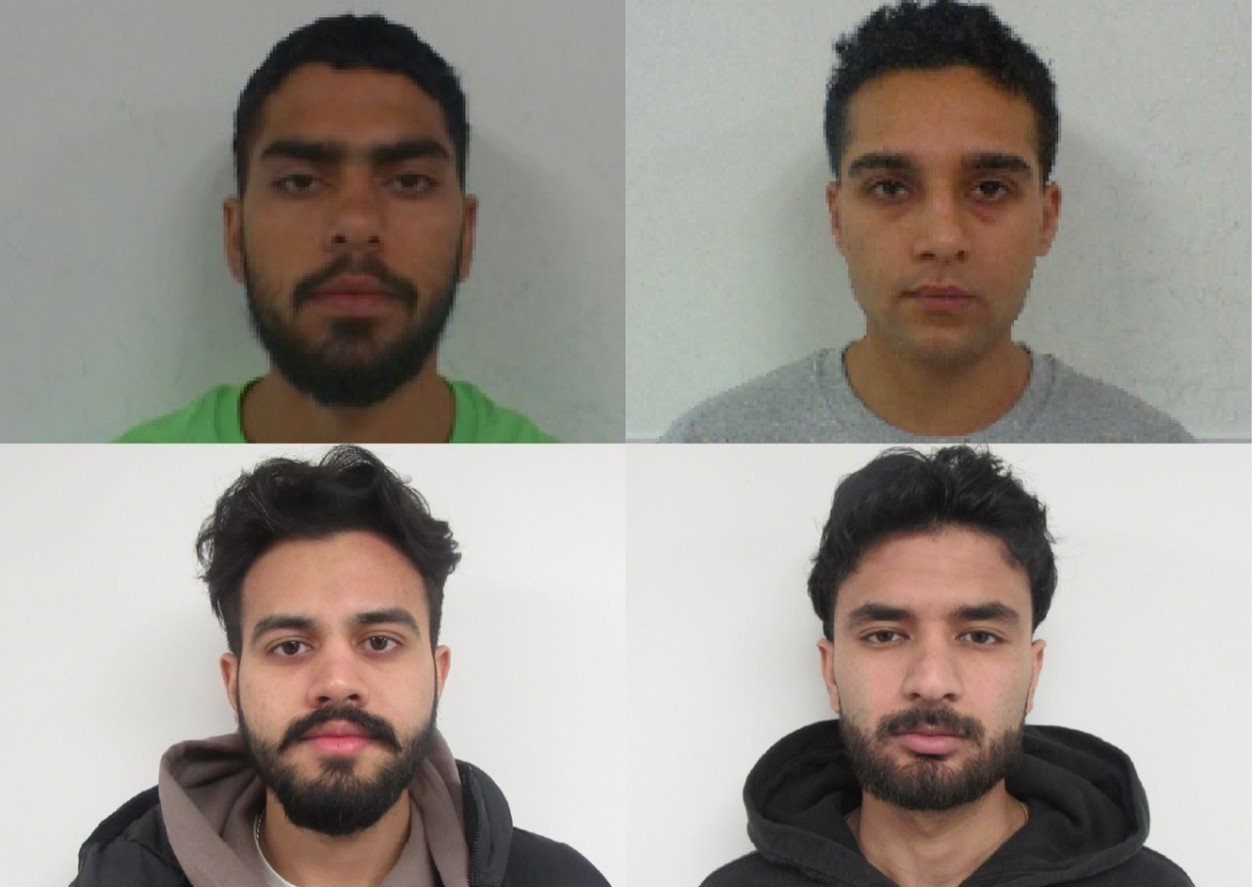
Canada is removing approximately 400 inadmissible individuals each week, according to an official statement issued Monday. Among those recently deported were four Indian nationals whose cases illustrate the Canada Border Services Agency’s ongoing efforts to identify and remove individuals linked to extortion and organized crime.
According to the CBSA, the four individuals are:
- Palwinder Singh, who was linked to an extortion-related shooting in fall 2025. He was removed after the Immigration and Refugee Board of Canada found him inadmissible under the Immigration and Refugee Protection Act for membership in a criminal organization connected to extortion-related violence.
- Jasmer Singh, who was convicted in Canada of forcible confinement. He was found inadmissible under the IRPA on grounds of serious criminality, issued a deportation order and removed from the country.
- Amitoz Bajwa, who was removed after the IRB found him inadmissible under the IRPA for membership in an organization engaged in a pattern of criminal activity. He was also linked to firearms-related activity and an extortion-related shooting.
- Sahibjot Singh, who was linked to an organization engaged in a pattern of criminal activity. The IRB found him inadmissible under the IRPA. According to the CBSA, Singh acknowledged committing offenses that formed part of the organization’s pattern of criminal activity. He was subsequently removed from Canada.
Responding to concerns about extortion and organized crime, Public Safety Minister Gary Anandasangaree said the federal government remains committed to coordinated enforcement efforts.
“Extortion and organized crime threaten the safety of our communities. The Government of Canada is committed to disrupting these activities through strong collaboration with law enforcement partners and decisive enforcement action. By identifying and removing inadmissible individuals involved in criminal activity, we are strengthening public safety,” Anandasangaree said in a statement.
“The removal of more than 100 individuals linked to extortion activities reflects CBSA’s sustained efforts to identify, investigate and take action against those who pose a threat to our communities. These results also demonstrate the impact of strong collaboration with law enforcement partners across Canada and our shared commitment to combatting organized crime,” said Erin O’Gorman, president of the Canada Border Services Agency.
Enforcement efforts intensified in 2025 amid reports of extortion threats targeting members of Punjabi communities in several provinces, including British Columbia, Manitoba, Alberta and Ontario. Some victims reportedly received demands for large ransom payments, raising concerns among business owners and other community members.
Provincial leaders also called for greater federal involvement. The premier of British Columbia offered to convene police and CBSA officials to discuss measures to address the problem, which had created fear among members of Punjabi and Sikh communities.
In response to growing public concern, provincial and federal law enforcement agencies established specialized units to identify and investigate suspected extortion networks. Some individuals previously removed from Canada lacked legal immigration status, including those who had entered the country unlawfully or remained after entering on visitor visas.
The CBSA removed 23,160 inadmissible individuals in 2025. Of those, 1,010 were subject to findings involving serious inadmissibility, including national security concerns, war crimes or human rights violations, organized crime, serious criminality and other criminal activity.
The agency is currently removing approximately 400 inadmissible individuals each week. Under Canada’s Border Plan, the government allocated $30.4 million to strengthen the CBSA’s capacity to complete 20,000 removals annually during the previous fiscal year and in 2026-2027.
In a recent statement, the CBSA said it continues to work with law enforcement agencies across Canada to identify, investigate and remove individuals suspected of involvement in extortion who are inadmissible under the IRPA.
“Through joint enforcement efforts nationwide, the CBSA supports a coordinated response to extortion. The agency investigates foreign nationals who may be in violation of IRPA, including those engaged in criminal and organized crime activities, such as extortion. These investigations are built on information from law enforcement partners, other government agencies, CBSA-led investigations, and public reporting. The CBSA places the highest priority on enforcement and removal of cases involving criminality, organized crime, and individuals who pose a risk to public safety.
“The CBSA dedicated resources to investigating cases with potential links to extortion in the Pacific and Prairie regions in August 2025 and expanded the initiative to the Greater Toronto Area in November 2025.”
As of September 3, 2026, authorities had issued 188 removal orders on various inadmissibility grounds and removed 111 individuals from Canada. The regional figures were:
- Pacific Region: 91 removal orders issued and 58 individuals removed.
- Prairie Region: 47 removal orders issued and 30 individuals removed.
- Greater Toronto Area: 50 removal orders issued and 23 individuals removed.
The CBSA also operates a tip line through which members of the public can provide information about individuals believed to be inadmissible to Canada, including details about their whereabouts. The agency reviews and investigates the information it receives.
Related posts:
 Canada Unveils ‘Follow the Money’ Strategy to Combat Rising Extortion and Organized Crime
 Extortion Fears Mount Across Canada as Community Leaders and Parliament Press for Federal Action
 Is Canada, Like Punjab, Fighting a War Against Drugs?
 Online Job Ads Luring Women Into Drug Smuggling Uncovered in RCMP-CBSA Investigation