Death denotes grief, as losing someone near and dear impacts you emotionally because you are not going to see that person again. Deaths do not move us apart. Rather, they bring us together, perhaps because of grief or the realization of the ultimate reality. Death is inevitable, as everyone must go one day, but what makes you sad is that a part of your life linked to the departed soul goes with them, and you must live with that part missing. Though memories, sweet and sour, remain inseparable, the physical separation can, at times, become painful.
I am reminded of a fable in which an old woman went to Gautam Buddha and asked him to use his spiritual powers to revive her only son. She was told to bring some rice from any house in her neighborhood that had never suffered a bereavement. The old woman ran back to her village, went from house to house, and returned disappointed and dejected, saying she could not find even a single such house. Gautam Buddha told her that death is inevitable and has no time frame. It can come to anyone at any time.
It is the timing of death that decides the extent of the bereaved family’s grief. The death of an older person who lived a contented life and leaves behind a family of grandchildren and great-grandchildren is sometimes “celebrated,” with the funeral procession carried out with much fanfare and the last rites performed in a celebratory manner. I remember one of my colleagues at The Tribune whose grandfather passed away in his sleep at the age of 95. Since I could not join him and his family for the old man’s “Antim Ardas,” he excitedly narrated how several cases of a popular brand of whisky were consumed at the “langar” that followed the “bhog ceremony” in celebration of his grandfather’s final journey.
But that is one part of the story.
Advertisement
Deaths are generally devastating, as families and societies are wrecked by the untimely deaths of young and even older people, including family breadwinners. At times, incurable diseases devour lives that are precious to their families and dependents.
Losing a person in the prime or middle of life can heap unimaginable misery on those left behind. Such deaths are nothing less than immense tragedies for the bereaved and society.
Then there is another category in which the person who falls to the will of the Almighty is old, infirm, and sick. His or her presence serves not only as a source of strength and support but also as an inspiration for the youngsters in the family. Parents, especially if they are not dependent, normally fall into this category. They are “givers,” not “takers.”
They bail you out of difficult situations and are always ready to contribute to your well-being and happiness. In some cases, even if someone has lost parental care, the eldest or senior siblings take over the role of parents and serve as the head of the family. They play this role selflessly, without discriminating between their own children and their younger siblings.
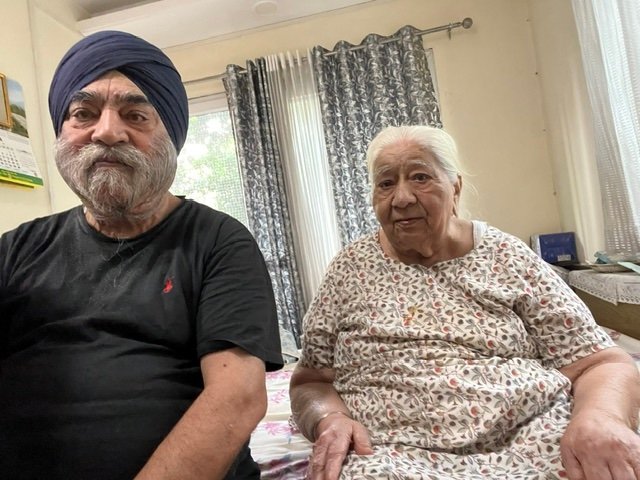
Before being overwhelmed by my emotions, I decided to write this piece to eulogize my eldest sister, “Vadde Behan Ji,” Jagdish Kaur, who passed away in her sleep on the last day of August. At 93, though bedridden, she was alert and full of life. She never allowed the “tragedies” in the family to overtake her. Rather, her faith in the Almighty, along with her own virtues and leadership qualities, enabled her to stand like a rock after suffering a series of bereavements, including the loss of her husband, Sardar Iqbal Singh, and both her sons, Inderpal Singh and Romi Singh, in the prime of their lives. She fought the battle of life without a frown on her face.
Only last year, she lost her youngest son to cancer. While she was trying to overcome the grief of losing the last male member of her family, some unknown intruders attempted to break into her house. All attempts to persuade her to move to another, “safer” location were unsuccessful, as she maintained that she would not leave the place her husband had built for her. She spent the last 50 years of her life in the same house where she breathed her last.
She leaves behind her daughter and son-in-law, daughters-in-law, and grandchildren, as well as members of her parental families on both sides.
When I met her for the last time before returning to Canada in time for the FIFA World Cup in June this year, she was relaxed and recovering from a long hospitalization. Her memory was so sharp that she could recall every minute detail of her marriage, which took place when she was just completing her teenage years. She remembered how the marriage ceremonies were simple and devoid of showmanship.
Memories of Partition were still vivid in her mind. Life after marriage was another subject she often loved to recall.
Since she was the eldest and had married even before I was born, we all looked up to her as more than a sister. She had seen so much in life that we cannot imagine today. Our Jija Ji, Iqbal Singh, was a multifaceted personality. He ran a specialized tour and travel business exclusively designed for Americans visiting India to see Agra, Udaipur, Jaipur, and several other major attractions. In those days, special DLY license plates were issued to both Indian and imported cars used to transport American tourists.
It naturally provided my sister with immense opportunities to interact with American women visiting India, as some of them loved to visit her home to see how Indian families lived. She had an air-conditioned home in the early 1960s, while her husband drove Chevrolets and Impalas, a rare sight on Indian roads at the time.
Since she was a family-oriented person, she never missed an opportunity to be with us for family functions and festivities, and her home in Delhi served as our “home away from home.”
Though she may have left us physically, she will always be with us in our thoughts and prayers. Live happily, Behan Ji, wherever you are.