Join WhatsApp Channel

I was five years old when my father put a piece of clay in my hands and told me to feel it before I tried to shape it. I didn’t know it then, but he was handing me more than a lesson — he was handing me five generations of history.
My family’s roots trace back to Chitradurga district in Karnataka, where my forefathers worked among the artists and sculptors associated with the Mysore Palace nearly a century ago. My father, Shilpi R. Kalachar, carried that tradition forward and became a celebrated sculptor, honored with the Jakanachari and Karnataka Rajyotsava awards. He was my first teacher — not just of technique, but of patience. Sculpture doesn’t reward speed. It rewards attention.
In 2007, I moved to the United States to build a career in technology, and I assumed art might fade into memory. Instead, it became a way to carry a piece of home into a new country — and, over time, a way to give something back to the communities that welcomed me.
Today I live and work in the Washington, D.C. metro area, where I’ve been fortunate to receive strong support from both the Indian and broader American communities. That support — invitations to exhibit, temples that have hosted my work, and audiences that show up year after year — is a big part of why an award-winning practice that started with a five-year-old and a lump of clay has been able to grow into what it is today.
Work That Has Traveled
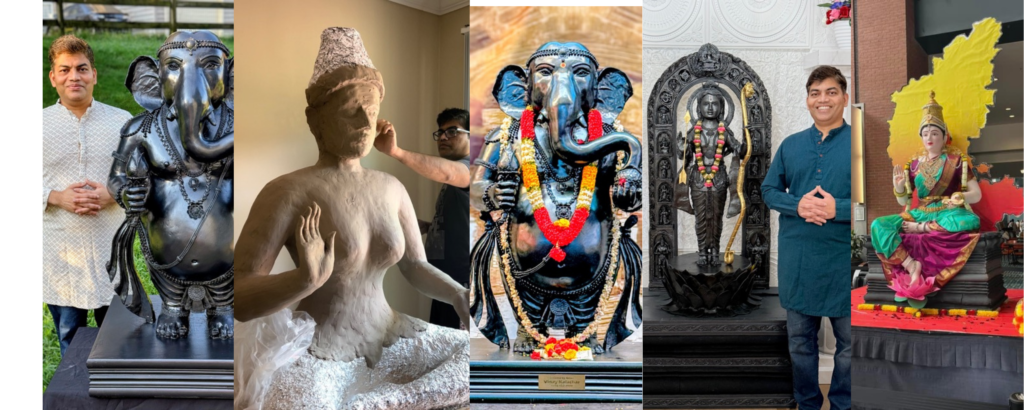
Over nearly two decades, my sculptures have been exhibited in galleries, temples, and major cultural gatherings across both the United States and India, and today my artworks are held in private and community collections in both countries. A 6.2-foot Ram Lalla idol I created was exhibited during Ram Mandir anniversary celebrations in the Washington, D.C. area. In 2024, I sculpted a 12-foot Bhuvaneshwari Devi for the AKKA World Kannada Conference in Richmond, Virginia, giving thousands of attendees a monumental connection to Karnataka’s cultural identity.
But it’s the piece I completed most recently that stays with me the most.
The Ganesha That Stopped the Room
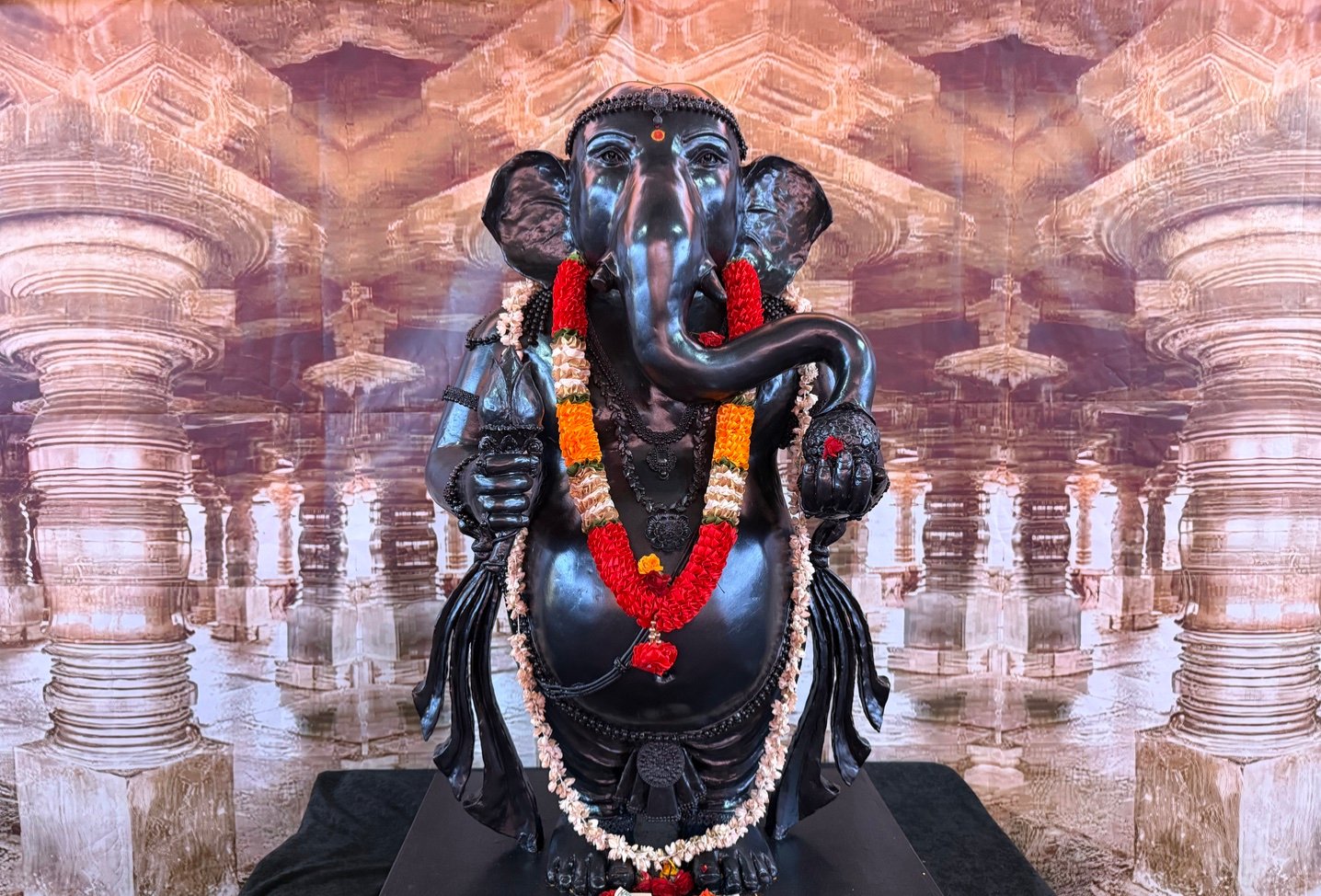
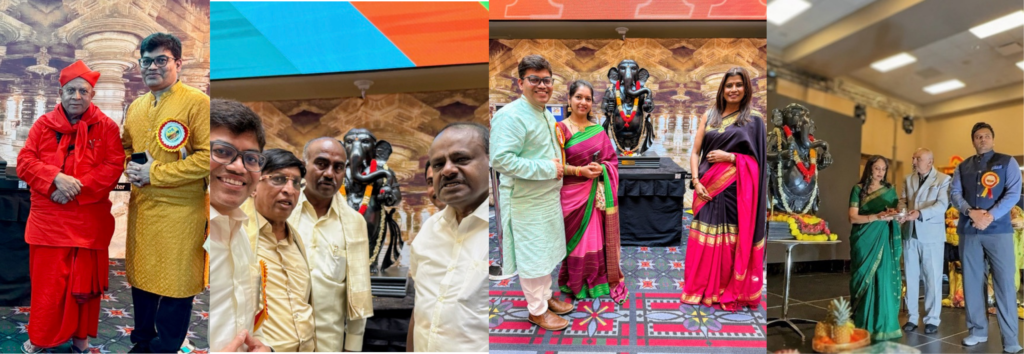
At AKKA 2026, I unveiled a Ganesha sculpture that became one of the focal points of the entire conference. I built it the way I build everything — starting with a rough form, then slowly working in proportion, expression, and detail until the piece felt alive rather than assembled. Watching people stop and linger in front of it was, honestly, the reason I do this work. A sculpture doesn’t just occupy space; done right, it holds a room’s attention and gives people something to feel together.
That piece arrived at a meaningful moment. We’re living through an era when artificial intelligence can generate a polished image — a Ganesha, a portrait, anything — in seconds. I use technology every day; I’ve built a career in it. But I don’t believe it can replace what happens when a hand spends weeks shaping something that didn’t exist before, doubting it, and finally finishing it.
Teaching the Next Generation
That belief is why I spend as much time teaching as sculpting. My children, Aaryan and Anvitha, along with other young students, are learning to draw, sculpt, and sit with an idea until it becomes real. I’m not trying to make every child a professional artist. I want to protect something simpler: the confidence of making something yourself, and the patience of failing at it first.
None of this happens alone. My wife, Shweta, and our children have supported every late night in the studio, alongside my parents, siblings, and communities including the JSS Temple and Spiritual Mission, the Sri Bhakta Anjaneya Temple, and the Kaveri Kannada Sangha, whose 50th anniversary we celebrated in Washington, D.C. in 2022.
Where the Legacy Goes Next
My forefathers shaped stone and clay in the shadow of the Mysore Palace. I’ve spent nearly two decades shaping it in studios and community halls across America, with pieces now part of collections on both sides of the world. Five generations in, the tradition hasn’t just survived the distance — it’s found new form.
My sculptures preserve where I came from. My teaching may decide where this legacy goes next. And whatever technology brings, the imagination and human hands behind the creation still matter most.
Disclaimer: The opinions and views expressed in this article/column are those of the author(s) and do not necessarily reflect the views or positions of South Asian Herald.