Join WhatsApp Channel

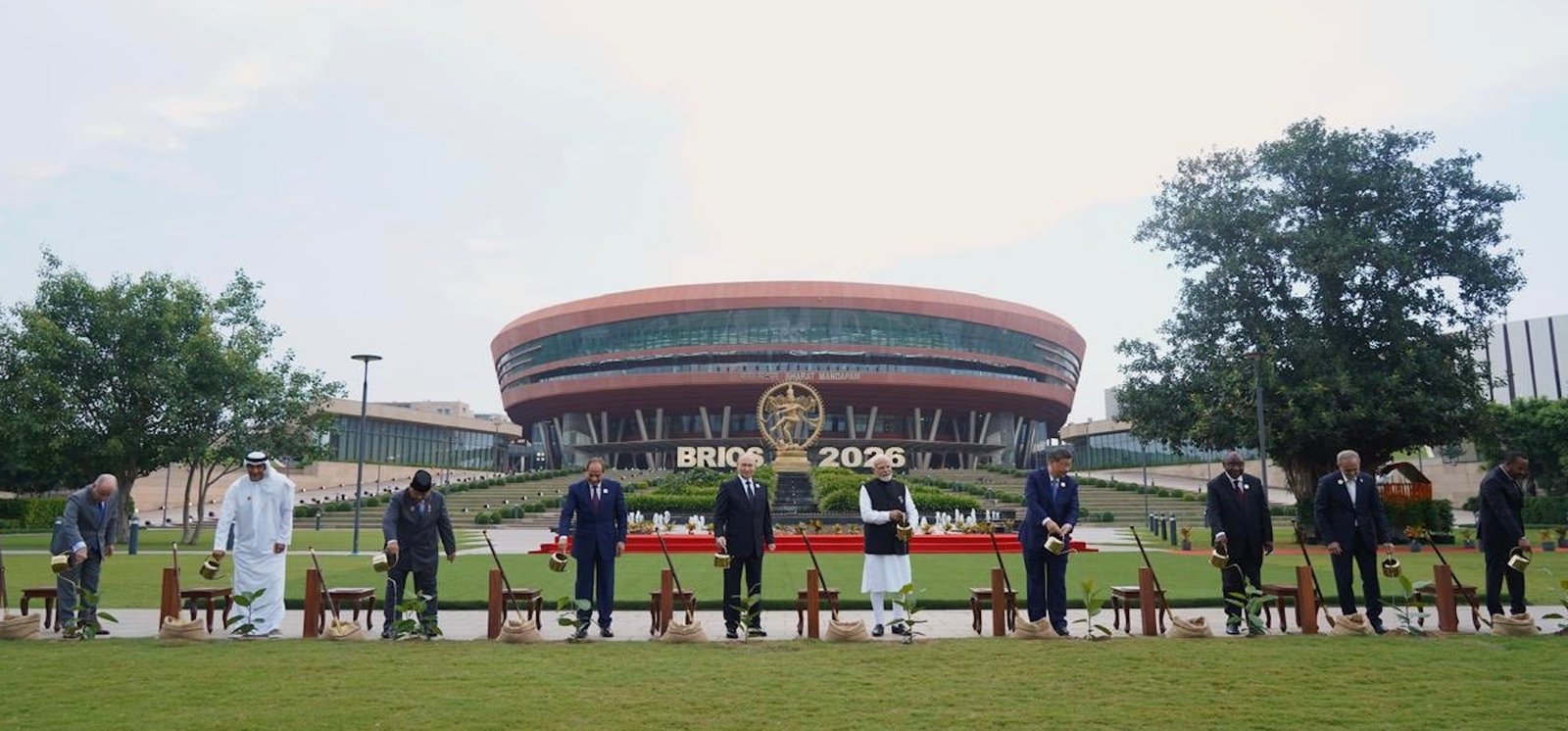
As India hosted the 18th BRICS leaders’ summit in New Delhi from Sept 12-13, 2026. The grouping is riddled with paradoxes and duality of its purpose. Now is the time for BRICS to be more unified than ever and take lead to become the building bricks of the fast-emerging global order pivoting towards the East and South.
BRICS first leaders’ summit happened in 2009 as a forum for major emerging and developing economies seeking greater influence in institutions dominated by Western powers. Since then, it has transformed into a powerful geopolitical bloc. Initial grouping comprised of Brazil, Russia, India, China, and later joined by South Africa, it has since been expanded to include Egypt, Ethiopia, Indonesia, Iran, Saudi Arabia and UAE. The bloc accounts for 50% of the world’s population, 40% of global GDP, and 26% of global trade. Their expansion from five to eleven members highlights a growing discontent in the Global South towards the Western-led institutions. BRICS symbolizes a collective effort to reduce reliance on the West and strengthen the rise of the Rest. In so doing, it serves as a political, economic and diplomatic coordination forum for leading countries from the Global South.
Against the backdrop of the ongoing conflicts in Ukraine and West Asia, trade war, rising tensions with US among other challenges will test the bloc’s ability to find common ground among countries with competing geopolitical interests. This gives BRICS an opportunity to really focus on precise agenda to fight Trumpism. India’s chairship of this summit aims to advance this forum with a people-centric approach and the spirit of ‘Humanity First.’ The goal is to redefine BRICS as Building Resilience and Innovation for Cooperation and Sustainability. This year’s agenda focused on boosting intra-BRICS trade, investment, digital economy, AI, poverty reduction, supply chain resilience, climate change among others. The summit will be pushing to link central bank digital currencies (CBDCs) across the bloc for cross-border payments as an expansion of non-Western cross-border payment channels.
Despite the bloc’s growing stature and legitimacy, it is riddled with internal differences and divergent ideas and agenda. Such as India and China owing to their decades long border dispute and mutual suspicion. Although the visit of Chinese President Xi Jinping to New Delhi signaled thawing and potential reset of relations. Another case in point is navigating geopolitical differences between the UAE, Saudi Arabia and Iran amid the ongoing conflict in West Asia. A positive development was the meeting between Iranian President and the Crown Prince of the UAE giving hope for further dialogue and diplomacy to de-escalate the situation in West Asia. India’s role in bringing the member states together to arrive at a common agenda and consensus was critical. The key question remains: amid the ongoing geopolitical uncertainty and flux, can BRICS rise to the occasion and be a leading anchor of stability in this emerging global order?

As the host, New Delhi had a delicate balancing act to weigh in its strategic interests within the BRICS and outside with its ties with the US and the broader West. India on one side wants to become the posterchild of the Global South, while at the same time preserve its democratic and common values that it shares with US owing to the strong people to people contact and its prospects of negotiating a trade deal with US. The successful adoption of New Delhi Declaration showed consensus and reflected upon India’s diplomatic heft and strategic approach in bringing all the member-states. It deplores any kind of aggression and stresses that ‘dialogue and diplomacy are the way forward’ to end conflicts. The declaration also mentioned occupation of Lebanon’s territory by Israel to show its balanced approach to global affairs. As well as supporting comprehensive reforms of the UN, including its Security Council.
To become the building BRICS of the emerging global order, it must manage and overcome the very paradox of this forum. On one hand, it needs to strengthen its internal discourse and agenda as a leading platform for the voice and inclusion of the Global South. On the order hand, BRICS member states need to be more unified in their stance despite bilateral differences between the member states. BRICS as a forum must further mature to develop the ability to set aside their bilateral divergences to strengthen its ability to reach common positions and policy thereby furthering South-South cooperation. Simultaneously it must foster resilience to overcome any headwinds from the Trump or the West against its agenda. Therefore, BRICS should avoid more of optics and really focus on deliverables. The need of the hour is to strengthen unity through multilateralism and align development strategies among member countries. Rather than merely increasing the membership and hence the breath of the member grouping, the focus should be on strengthening and deepening the cooperation between the member countries. This will serve the vision of common development of the Global South and inject greater certainty and positive energy into a world beset by turbulence and tumultuous change.
To conclude BRICS must evolve to come out of this half glass empty-half glass full bloc to overcome its impending challenge within and outside. New Delhi summit now paves the way for further strengthening of the agenda under China’s Presidency for BRICS next year. The rise of the BRICS as a genuine representative of the Global South should not be construed as a mere geostrategic posturing of the bloc as a riposte to the hegemony of the West. But rather a genuine grouping of countries to share their agenda and concerns for the common good of their people and international community in general for stability, security and inclusive development of all.
Disclaimer: The opinions and views expressed in this article/column are those of the author(s) and do not necessarily reflect the views or positions of South Asian Herald.