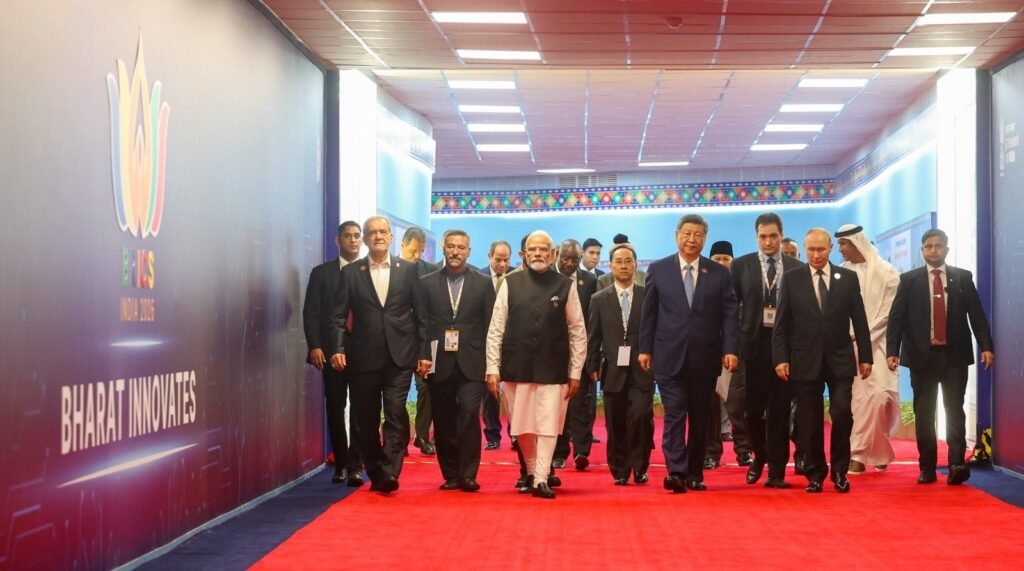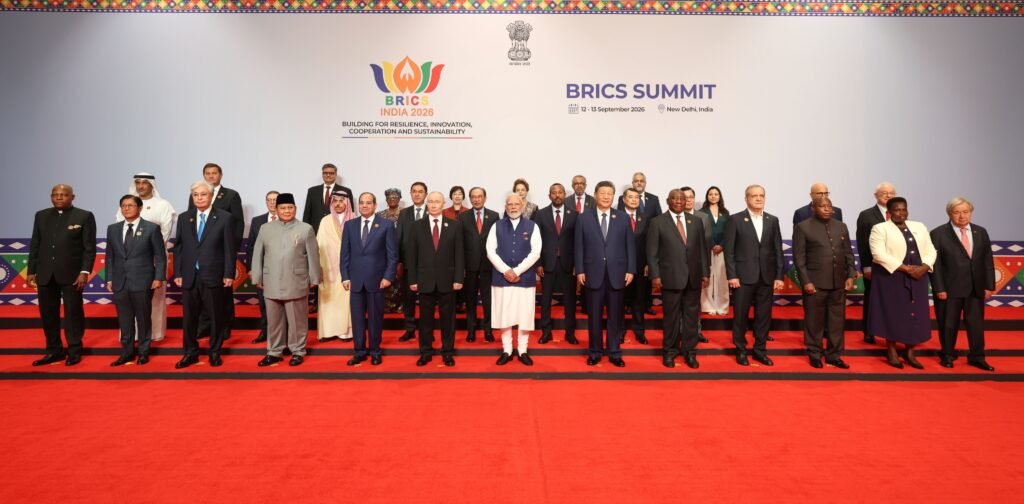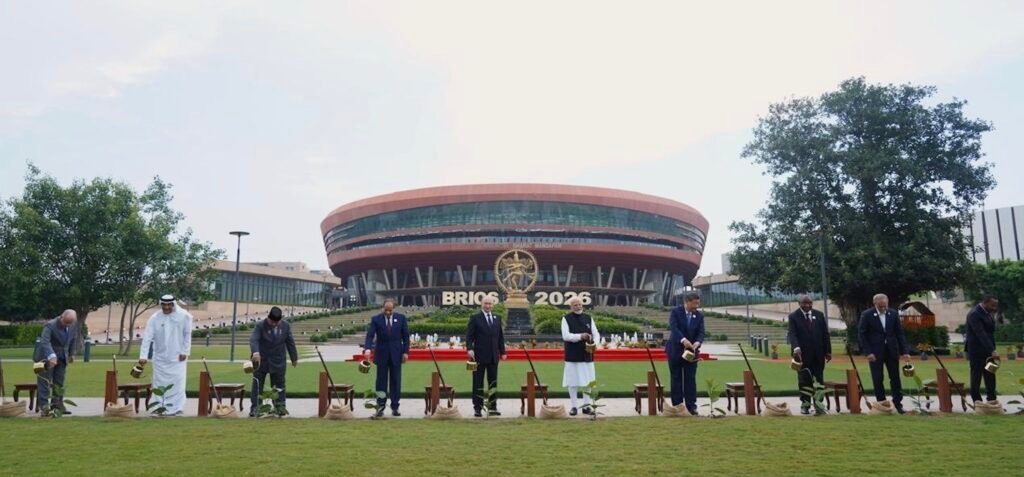
Even as the BRICS summit in New Delhi is winding up, disturbing news that a ship has been hit by a projectile in the Strait of Hormuz on Sunday, preceded by Saudi Arabia announcing that it was shutting down its East-West pipeline after a drone attack from Iraqi soil, heightened fears and hastened diplomatic moves towards restraint in the region.
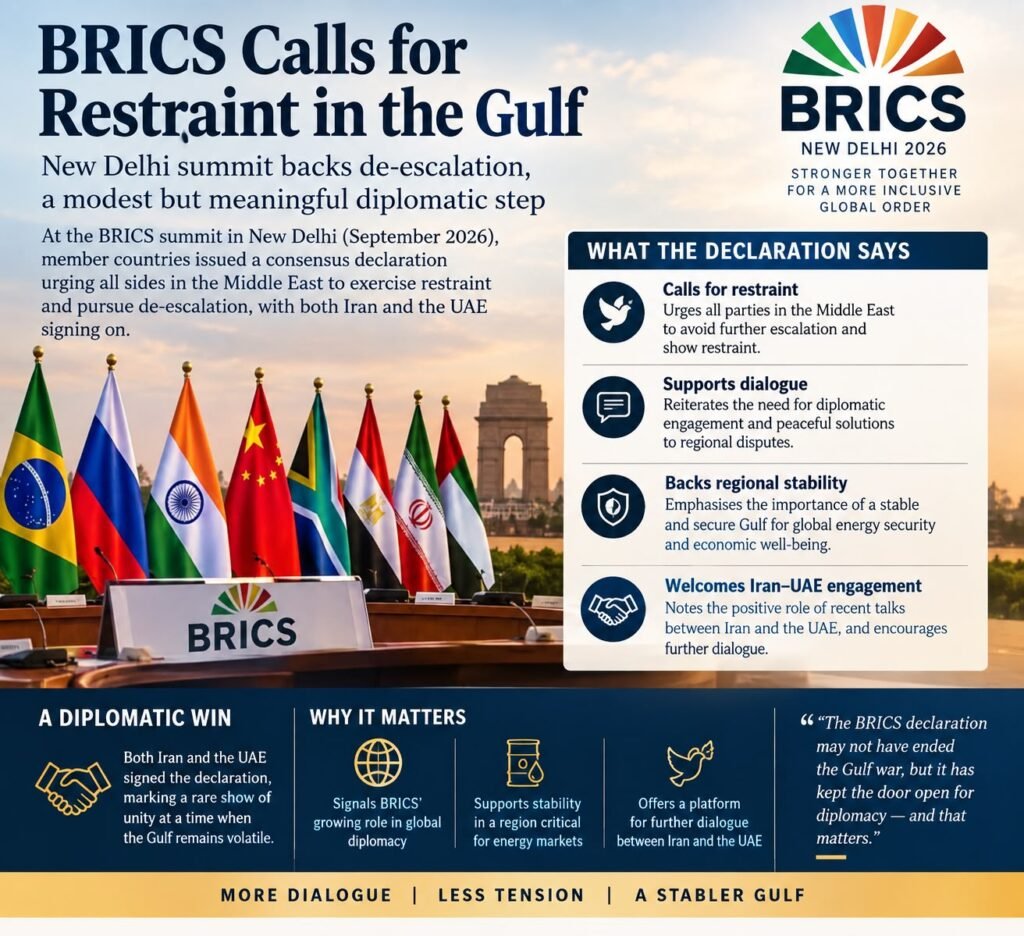
While the BRICS grouping does not have the power to enforce an end to the ongoing war in the Middle East, with the Iranian president, the UAE crown prince and the foreign minister of Saudi Arabia present in New Delhi, its declaration calling for restraint and reopening of direct high-level contact between the two sides comes as a powerful message for peace from those affected by the conflict.
The breakthrough came on the first day of the summit when the expanded BRICS grouping unanimously adopted the New Delhi Declaration, expressing “deep concern” over the continuing escalation in the Middle East and calling for “maximum restraint” besides avoidance of actions that could further aggravate the conflict.
“The BRICS voiced the rest of the world’s concern over the fighting and its consequences and the fact that leaders who had not seen eye to eye before signed on it gives us some confidence,” Pinak Ranjan Chakravarty, former Secretary (Economic Relations) in the Ministry of External Affairs, told UNI.
Advertisement
The Iranian President Masoud Pezeshkian met the Crown Prince of Abu Dhabi Khaled bin Mohamed Al Nahyan on Saturday on the sidelines of the summit, which marks the two neighbours’ highest-level meeting since the conflict started.
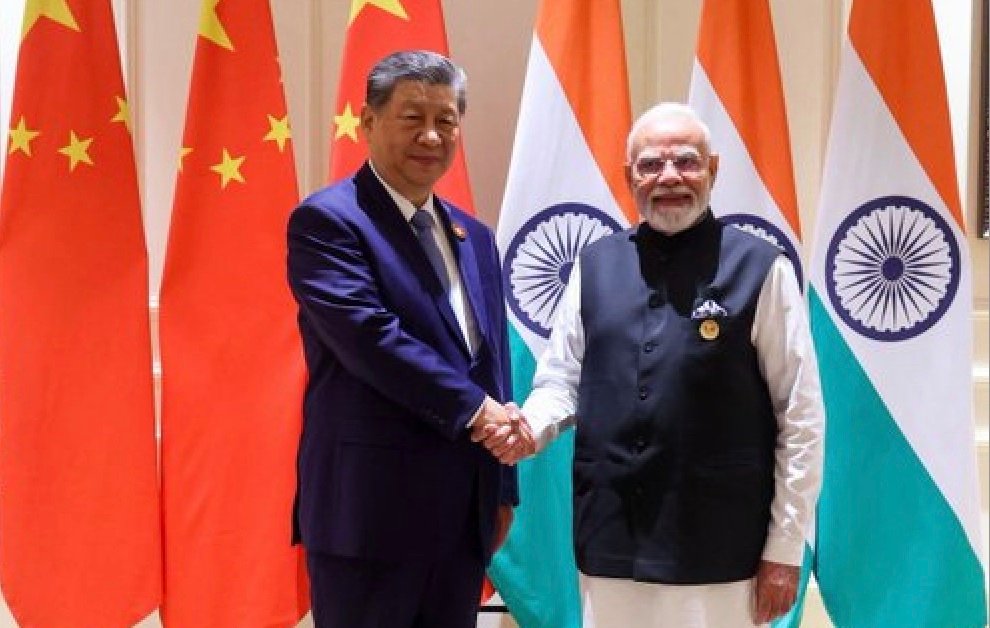
The fact that Chinese President Xi Jinping who has held talks with Russia, India and Iran on the Gulf situation, will be meeting President Donald Trump towards the end of this month, should bring an impetus to bringing in at least an uneasy truce to this conflict, which has now widened with the Iran-backed Houthi rebels in Yemen seizing the key port of Mokha from the Saudi backed-government forces as well as two islands at the mouth of the Red Sea.
If the Strait of Hormuz remains locked due to the conflict and the Red Sea and Suez Canal similarly stop working because of threats from Houthis, global commerce will be in tatters. About 40 per cent of the world’s crude oil and a sixth of the globe’s seaborne commerce transits through these two crucial waterways.
The significance of the BRICS declaration seeking peace in the region and the fact that three of the involved parties signed up to it, makes this meeting a crucial factor in the events which may unfold later this year.
Earlier, BRICS foreign ministers had failed to produce a joint statement when they met in May amid sharp divisions over the Iran conflict. This time, after several days of negotiations, India succeeded in steering the 11-member grouping towards consensus.
However, it is important to understand that the BRICS has not become a formal mediator in the Iran-US or the wider Gulf conflict. There is no BRICS ceasefire mechanism, enforcement arrangement or negotiated settlement, nor did the Iran-UAE meeting result in any publicly announced agreement on shipping or energy security.
However, the fact that Tehran and Abu Dhabi could meet at the highest level while simultaneously endorsing the same BRICS language urging restraint sends a signal that regional governments retain an interest in preventing the conflict from widening.
Prime Minister Narendra Modi’s separate meeting with the UAE Crown Prince reinforced India’s role as a bridge between countries. Modi described a strong India-UAE partnership as important for peace, stability and prosperity in an increasingly uncertain West Asian environment.
The inclusion of Ethiopia in the grouping adds another dimension to the Red Sea question. While Addis Ababa cannot by itself lift the Houthi blockade or negotiate a settlement in Yemen, its potential importance is logistical and strategic as its geographical position gives it tremendous reach over the Horn of Africa through which a ship must pass to enter the Red Sea.
“The swinging oil prices from USD73 a barrel of Brent crude in February, before the war started, to USD105 now, itself has ratcheted up inflation and caused economic hardships all around,” pointed out MEA officials while underlining why almost all 11 members of the BRICS grouping were concerned that efforts towards peace should be worked on. (UNI)