Join WhatsApp Channel

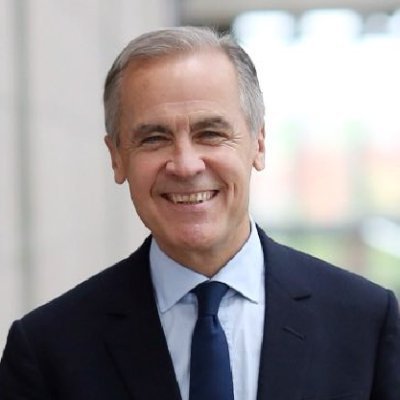
Is Canada going through one of the most difficult periods in its recent history?
The question has become a subject of debate among business leaders, financial experts and ordinary Canadians as the country confronts economic uncertainty, strained relations with the United States and growing concerns about national unity.
Prime Minister Mark Carney’s Liberal government faces several challenges, including a widening trade conflict with the United States, labor market pressures, healthcare concerns and renewed debate over Alberta’s place within Canada.
Albertans are scheduled to participate in a provincial referendum on October 19. Contrary to claims that the vote would directly trigger Alberta’s secession, the referendum is nonbinding. Voters will be asked whether Alberta should remain a Canadian province or take steps toward holding a future binding referendum on separation, according to Elections Alberta.
Speaking during a two-day Cabinet retreat in Banff, Alberta, Carney sought to emphasize that his government remained focused on its responsibilities.
“I will be here, ministers will be here, we will be doing our jobs. People will be observing what we do,” he said.
The political environment remains closely divided. Carney’s Liberal Party recently won three federal by-elections, bringing its representation in the House of Commons to 173 seats and preserving its narrow majority, according to Reuters.
Economic uncertainty and questions about national unity could also affect immigrant communities, including Indian Canadians. Many households and businesses have close professional, commercial and family connections with the United States, leaving them exposed to disruptions in cross-border trade.
The tariff dispute has increasingly affected Canadian manufacturers and small businesses. On August 21, Carney suspended trade negotiations with Washington and directed Canadian negotiators to return to Ottawa after last-minute changes to the terms proposed by the United States.
“They have worked hard, in good faith, to defend the interests of Canadians throughout these negotiations up until the very last minute. However, last-minute changes in the U.S. proposed terms were unfair, uneconomic, and called into question the reliability of any deal,” Carney said in a statement.
Carney said his government had sought to preserve tariff-free access to the United States for most Canadian businesses, provide greater stability in the bilateral trading relationship and reduce tariffs affecting strategically important industries. He also identified the protection of small and medium-sized businesses and the preservation of Canada’s economic independence as central objectives.
“We have recognized from the beginning that America has changed, and that we will not return to our old relationship. Our government understood, before many, that America is altering all its trade relationships, putting tariffs on its closest allies and charging for access to its vast market,” he said.
Carney maintained that Canada had negotiated in that environment while seeking favorable access to the U.S. market and greater certainty for Canadian workers and businesses.
“Throughout, our goal has been to secure the best deal for Canadians, never a deal at any price or on any deadline,” he said.
The prime minister announced that Canada would match U.S. tariffs dollar for dollar and introduce additional measures to support affected businesses and workers.
“At midnight tonight, the U.S. intends to impose a 50% tariff on roughly $28 billion of Canadian goods. Canada will match those tariffs dollar for dollar to protect our workers and businesses,” Carney said in the August 21 statement.
He also pointed to Canada’s efforts to strengthen its domestic economy, advance major infrastructure projects and expand access to international markets.
“Canada has what the world wants. And we will not allow any nation to determine our future. We will set our own course to keep building Canada strong for all,” the statement said.
The dispute has continued despite Ottawa’s retaliatory measures. The United States recently announced restrictions affecting additional Canadian products and access to federal procurement contracts. Carney described the latest measures as “relatively modest,” while acknowledging that they could have serious consequences for the companies and industries directly affected. The Associated Press reported that his government was studying the measures before deciding whether to respond.
“We are closely looking at the measures that the Americans have just announced,” Carney said, adding that his government recognized that “for the affected companies and sectors, the reprisals are significant.”
As tensions with Washington persist, Canada has accelerated efforts to diversify its international trade relationships, including rebuilding commercial ties with China and India.
In January, Carney and Chinese President Xi Jinping announced a new strategic partnership focused on energy, agriculture and trade. Under the agreement, Canada reduced its 100% tariff on a limited number of Chinese electric vehicles to 6.1%. The initial annual import quota was set at 49,000 vehicles. China, in return, agreed to reduce tariffs on several Canadian agricultural and seafood products. Reuters reported that the agreement marked a shift from Ottawa’s earlier alignment with Washington on Chinese electric vehicle tariffs.
Canada is also working to expand its economic relationship with India after several years of diplomatic tension. Carney’s visit to India earlier in 2026 helped reset bilateral relations, followed by Indian Commerce and Industry Minister Piyush Goyal’s visit to Canada in May.
During Goyal’s visit, the two countries agreed to advance negotiations on a Comprehensive Economic Partnership Agreement and pursue their goal of increasing bilateral trade. The Canadian government said the discussions covered energy, critical minerals, agriculture, technology, education and investment.
Since the beginning of 2026, Ottawa has sent ministerial and business delegations abroad to negotiate new agreements and identify markets for Canadian products traditionally destined for the United States.
Carney’s measured response to the latest U.S. actions suggests that Ottawa remains reluctant to escalate the conflict automatically. His government appears to be balancing short-term support for affected industries with a longer-term strategy of reducing Canada’s economic dependence on its southern neighbor.
Whether that strategy will provide sufficient relief to Canadian workers and businesses remains uncertain. For now, the trade confrontation, domestic economic pressures and debate over Alberta’s future are testing the Carney government’s ability to protect Canada’s economy while maintaining national cohesion.
Related posts:
 Canada’s G7 Presidency Culminates in Niagara as PM Carney Pushes $1 Trillion Investment Vision
 Canadian MP Iqra Khalid Addresses U.S. Tariffs on Canada
 G7 Summit 2025 Ends with Renewed Alliances, Sharp Divides, and a Surprise Exit by President Trump
 Canada’s Retaliatory US Tariffs Take Effect as Trade Dispute Escalates