Join WhatsApp Channel

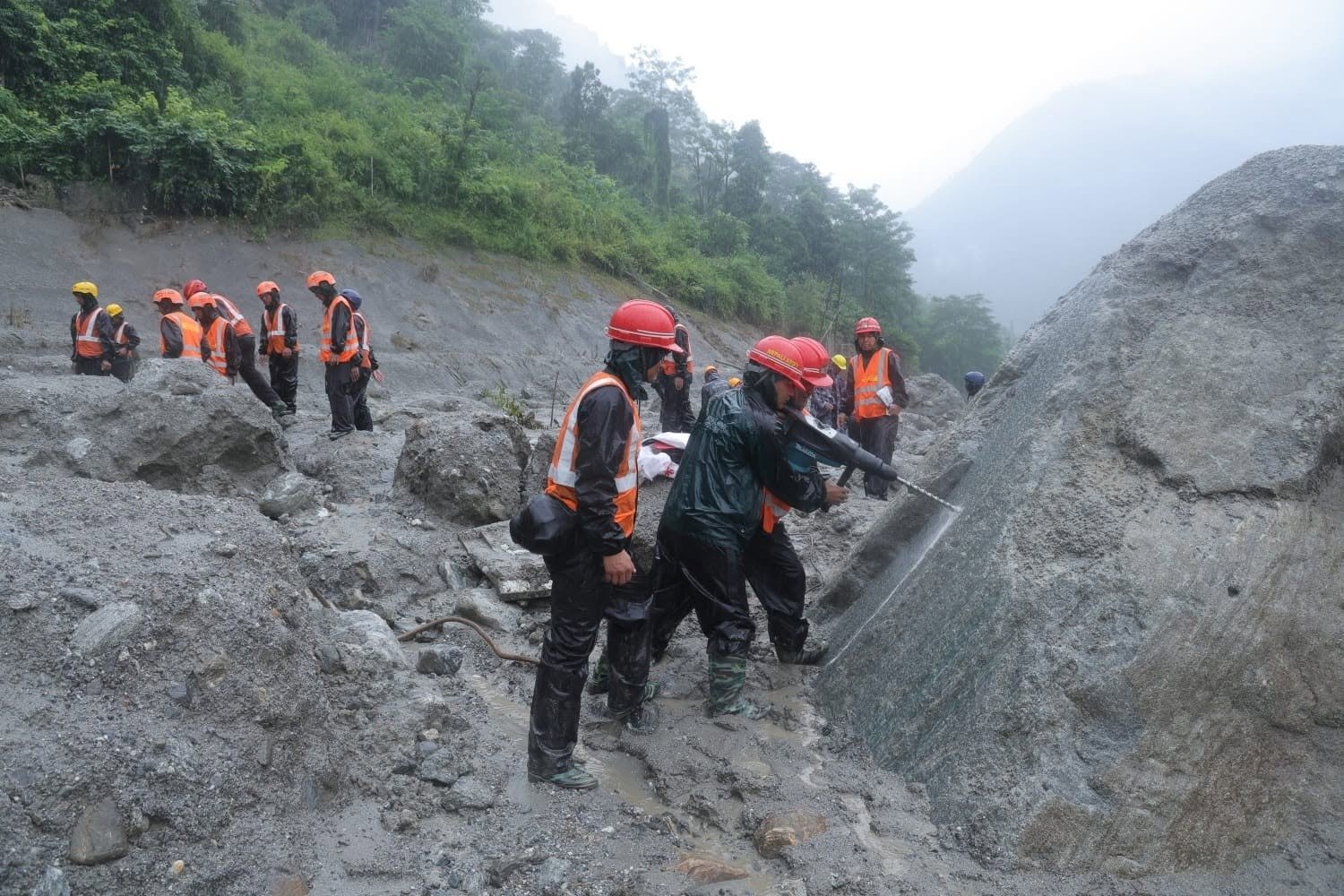
Nepal observed a national day of mourning on Monday for victims of the devastating flash floods that swept through parts of the country, with candlelight vigils planned as rescue teams continued searching for survivors.
National flags were flown at half-mast across government offices and at Nepali diplomatic missions abroad, marking the final day of the traditional 13-day Hindu mourning period. Official commemorations were kept to a minimum while search and rescue operations remained under way.
At least 1,385 people are known to have died after a flash flood, believed to have been triggered by a glacial collapse, tore through villages in a Himalayan valley along the Nepal-Tibet border.
More than 5,000 people remain missing nearly two weeks after the disaster. Nepal’s National Disaster Risk Reduction and Management Authority (NDRRMA) said 4,996 people were still unaccounted for, including at least 589 foreign nationals, while around 13,400 people had been rescued.
“There will be no government programmes organised as the rescue and search operation is still going on in the flood-hit areas,” said Phanindra Paudel of the National Emergency Operation Centre.
President Ram Chandra Paudel visited flood-affected areas in Nuwakot and Rasuwa districts on Monday to assess the situation and review rescue and relief efforts. According to the President’s Secretariat, he was briefed by senior officials on search and rescue operations, relief distribution, temporary holding centres and rehabilitation.
Paudel also renewed his appeal for international action on climate change, calling on the international community to take “concrete and effective” measures to ensure climate justice for Nepal and other countries facing severe climate-related risks.
He said the disaster had exposed the extreme vulnerability of the Himalayan environment and served as a warning about rising global temperatures and the growing dangers linked to climate change.
The August 26 floods were triggered by an ice and rock avalanche near the Nepal-Tibet border. The Bhotekoshi River, flowing south from the Himalayan border region, carried the floodwaters downstream, destroying homes, vehicles, roads and bridges and damaging several hydropower projects.
Some of the last hopes for finding survivors are focused on tunnels at hydropower stations, where hundreds of workers are believed to remain missing.
In Nepal, NDRRMA figures show that 363 bodies have been recovered in Chitwan district, 223 in Nawalparasi East, 221 in Nawalparasi West, 197 in Nuwakot, 169 in Rasuwa, 75 in Gorkha, 70 in Dhading and 38 in Tanahu.
Identifying the dead has become another major challenge. Only 98 bodies had been formally identified and handed over to relatives by Monday, according to NDRRMA.
Many of the bodies recovered after being swept downstream were badly damaged, decomposed or incomplete. Police said the distance they had travelled, along with prolonged exposure to water and mud, had made identification particularly difficult.
Nepal Police has been collecting DNA samples from relatives of missing people to help identify unidentified remains. Officials said more than 1,000 unidentified bodies had been buried after samples were collected so that their identities could be established later.
Hospitals have struggled to manage the large number of unidentified bodies. Crowds continued to gather at medical facilities, carrying photographs of missing relatives and examining images of the dead displayed on walls.
The disaster also claimed at least 43 lives on the Chinese side of the border, while more than 500 people remained missing in Tibet, according to Chinese media reports.
Australian tunnel rescue specialist Arnold Dix, who is advising Nepali teams, described the scale of the operation on X as involving “multiple potential rescues, unfolding at the same time, in different places, each with its own dangers, uncertainties and lives that may still be saved.”
Four people have been rescued alive in recent days, three of them from hydropower facilities or tunnels.
On Saturday, a 64-year-old Nepali woman was rescued from the fourth floor of her partially buried home in Nuwakot, more than 10 days after an avalanche of ice, rock and mud struck the building. Nepal’s Armed Police Force found her alive and she was airlifted to a hospital in Kathmandu.
On Sunday, rescue teams in China recovered 12 bodies near the Nepal-Tibet border using excavators, shovels and ground-penetrating radar.
The latest figures cited by authorities put the number of people still missing in Nepal at more than 5,000. On the Tibetan side, Chinese media had reported a death toll of 31 and 531 people unaccounted for as of Friday.