Join WhatsApp Channel

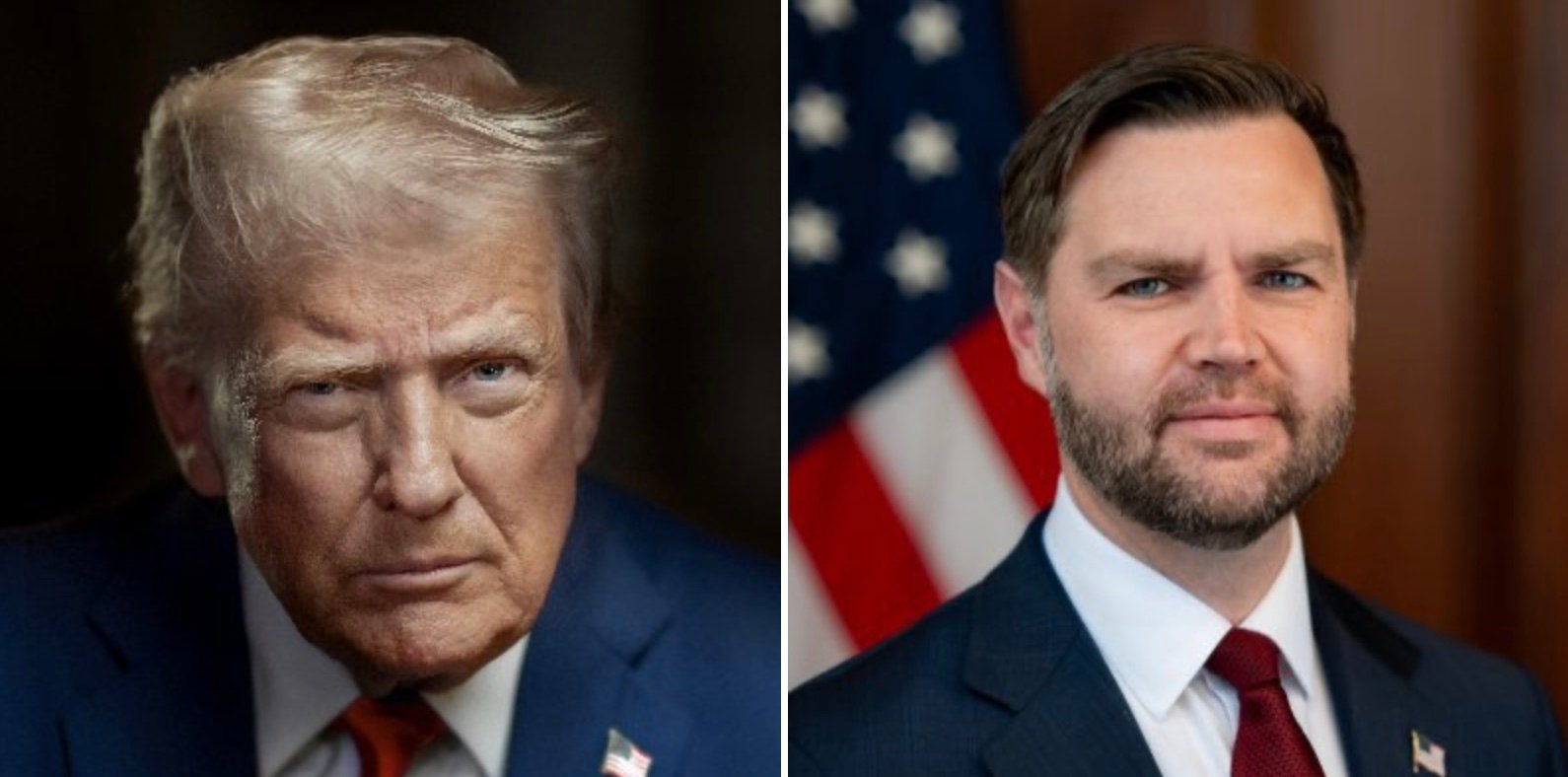
A day after Vice President JD Vance argued that what was going on in Iran is “not war,” President Donald Trump got into the definition game essentially supporting his Number Two. “A lot of people don’t call it a war. I call it a military conflict because it’s small potatoes for us” making the point “It’s not a big thing. We did Venezuela and we did this.”
President Trump also said “I don’t think it matters what you call it. What matters is the fact we have had tremendous success.” It is obvious that between the President and the Vice President, the administration is keen on getting away from calling the goings on in the Middle East as war, especially in the context of a Mid Term Congressional elections some seven weeks away.
In a political spectrum where comparisons to Vietnam, Afghanistan and Iraq come easily, President Trump too could not resist the temptation of asking “how long were we in Vietnam,” but quickly adding that even one death of an American soldier was far too many. The Vietnam quagmire lasted through six Presidents starting with Harry Truman but military escalations beginning and escalating with the Presidencies of John F Kennedy, Lyndon Johnson and Richard Nixon. More than 58,000 American service personnel died, thousands more wounded leaving a country still living with the pains of the past. In contrast, the war in Iran has left 18 American troops dead and some 800 wounded. The death toll on the “other” side too has to be factored in, sometimes too tragic as in Iran with the death of school children or those in a wedding even if not intentionally.
To be fair to President Trump, he did not trivialize the small number of American casualties or gloat in the past failed tragedies. The administration is sensitive to the existing political fact: that the war in Iran is highly unpopular and one that jeopardizes the chances of Republican law makers running for re-election in the House of Representatives and the Senate. Recent polls have shown that only 25 percent believe that the Iran war is worthwhile; some two-thirds have disapproved the President’s handling of the conflict; and four out of five respondents have taken the view that the war has resulted in rising food and gas prices. Not a pretty feeling for November 3 and to 2028.
Going beyond comparing fatalities, there is a fundamental difference between Vietnam and the current conflict in Iran. Vietnam was wrapped up in the Cold War tussle between the United States, the then Soviet Union and China; a war woven around a so-called domino theory that painted the fall of one country to communism to overtaking the region and finally reaching the shores of America. And a war also had a domestic context: no American President wanted to go down in history as the one who “lost” Vietnam to the communists, a re-run of the Korean war and the McCarthy era that came to haunt policy corridors.
The Vietnam war at least had a rationale with a set of objectives however flawed and goofy they may have been at the time. The Iran war has had no such game plan nor an exit strategy like what President Richard Nixon had from South Vietnam even if that might have been pretty difficult to swallow for a superpower. In the present context, it all started off with ridding Iran of capabilities to build a nuclear weapon; but soon fell in the trap of regime change thanks to Israeli successful assassination of civilian and military leaders. And when Iran threatened shipping and mined the Strait of Hormuz, the entire attention shifted to that theatre where even now the bulk of the military attention is on both sides.
But Israel seems to have something different up its sleeves, if the recent statements of its Prime Minister are anything to go by. For a country that has generally been viewed as the one which egged the United States to start bombing operations on February 28, Tel Aviv now maintains that regime change is the only desired objective and something that can be achieved. “The regime is now faltering. It is weaker than ever. It is fighting for its survival… I am confident in our ability to remove this threat once and for all – in other words, to topple this regime. That is the central mission that still lies ahead of us, but it is close. It is not impossible. It is within reach,” Benjamin Netanyahu has recently said.
The problem is that the United States and Israel could be pursuing regime change through different means. To Washington this change in the power structure will come about through tightened direct and indirect sanctions-cum-tariffs. But nearly everyone knows that bringing the regime to its knees through economic means is going to take time as Iran has seen this played out for the last five decades and perhaps even having mastered in ways of going around punitive measures.
An empty treasury and grocery shelves in super-markets could be the right recipe in bringing to the streets; but the clerics are perhaps confident of their brutal crackdown managers to handle the situation. Israel is perhaps placing its bets on the Mossad and its moles inside Iran to facilitate in getting rid of what is left of a civilian and military leadership. This would in turn raise the question of whether what emerges is better or worse than the present scheme of things.
Talking of wars as small potatoes is very different than Thomas Jefferson being the Founding Father of French Fries in the early 1800s; or Vice President Dan Quayle in 1992 giving a new spelling to potato at an elementary school: adding an “e” at the end of correctly spelt word of a kid! In the current context, the potato is boiling in a kitchen that is already too hot.
Disclaimer: The opinions and views expressed in this article/column are those of the author(s) and do not necessarily reflect the views or positions of South Asian Herald.