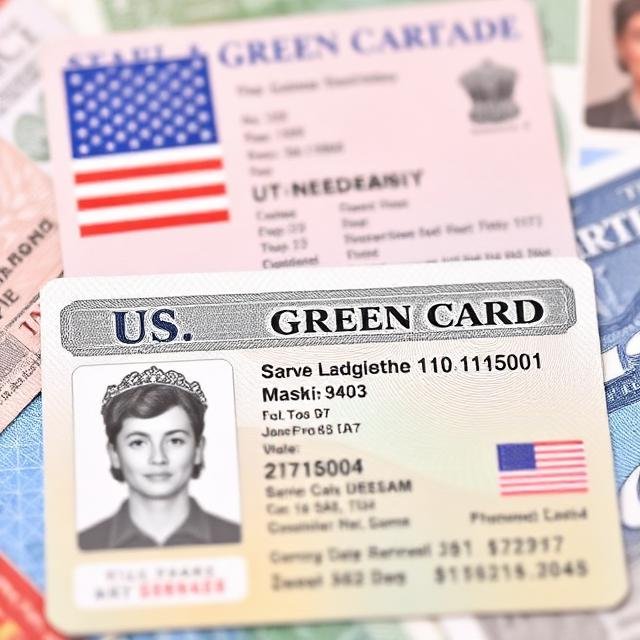
For immigrants waiting years for a U.S. green card, the latest obstacle may not be a visa backlog or an employer change. It may be using the wrong government form.
U.S. Citizenship and Immigration Services has updated three key documents used in the adjustment-of-status process: Form I-485, the principal application for permanent residence; Form I-485 Supplement J, critical for many employment-based applicants seeking to confirm a qualifying job offer or use job-portability provisions; and Form I-485 Supplement A, used in certain cases under Section 245(i).
The Sept. 4 revisions might appear routine. But they come just two weeks before another, potentially more consequential change.
On Sept. 18, USCIS is scheduled to introduce a further revised edition of Form I-485, tied to a new public-charge framework. Unlike a conventional transition, the new edition will have no grace period: applications filed on or after Sept. 18 must use the new form, while the new edition cannot be filed before that date.
Advertisement
The result is an unusually compressed sequence of changes: Jan. 20, 2025 → Sept. 4, 2026 → Sept. 18, 2026.
For applicants, lawyers and employers, that creates a simple but consequential risk: a filing can be substantively sound and still be rejected because the paperwork is obsolete.
A Bureaucratic Trap?
USCIS’s latest revisions underscore an uncomfortable reality of the American immigration system: procedural compliance can be nearly as important as substantive eligibility.
An applicant may meet the requirements for permanent residence, possess an approved immigrant petition and have an available visa number. But an incorrect edition date, a mismatched supplement or a filing submitted on the wrong day can derail the application.
A rejection is not the same as a denial. Yet it can add weeks or months to an already lengthy process.
For applicants facing visa backlogs, those delays can be particularly costly. The problem is compounded by timing. Someone preparing an application in early September could download a newly revised form, only to discover that another edition becomes mandatory days later.
Immigration attorneys must manage multiple form versions and precise filing deadlines. Individual applicants, particularly those without extensive legal support, face an even greater risk of error.
The Sept. 4 updates therefore raise a broader policy question: How much of the burden of navigating rapid administrative change should fall on immigrants themselves?
Sept. 18 Could Be the Bigger Turning Point
The more consequential development is the public-charge framework scheduled to take effect with the Sept. 18 revision.
The new rules would replace the narrower 2022 framework and restore a broader totality-of-the-circumstances approach in determining whether an immigrant is likely to become a public charge.
That could give immigration officers greater discretion to examine an applicant’s overall circumstances, including financial resources and other relevant factors.
For applicants with stable employment and straightforward financial records, the practical effect may be limited. But for immigrants with complicated finances or a history involving certain means-tested benefits, the new framework could produce more intensive scrutiny.
The likely consequences could include additional requests for evidence, more documentation and longer adjudication times in borderline cases.
The concern is not simply that standards may become stricter. Greater discretion can also mean less predictability.
A rules-based system gives applicants a clearer understanding of what is required. A broad totality-of-the-circumstances test leaves greater room for interpretation, potentially producing different levels of scrutiny in cases with similar circumstances.
For a system already burdened by backlogs, greater discretionary review could become another source of delay.
Why Supplement J Matters to Indian Professionals
The changes carry particular significance for employment-based immigrants, especially Indian professionals caught in long green card queues.
For these workers, Form I-485 is more than paperwork. It represents a critical transition from temporary immigration status toward permanent residence.
Supplement J is particularly important because it can confirm a continuing qualifying job offer and, in eligible cases, support job portability under Section 204(j) of the Immigration and Nationality Act.
The portability provisions can allow certain applicants whose I-485 applications have been pending for at least 180 days to change employers or positions in the same or a similar occupational classification without restarting the green card process.
For workers facing years of uncertainty, that protection can be economically significant. It can allow professionals to pursue promotions, change employers or respond to layoffs without automatically losing years of progress toward permanent residence.
The latest revision does not eliminate those protections. But it reinforces a growing challenge: even where immigration rights remain unchanged, the procedures required to exercise them can become increasingly complicated.
Policy Meets Litigation
The Sept. 4 changes are also linked to a broader policy involving certain children born in the United States to foreign government employees.
The revised forms reflect an Interim Final Rule expanding the circumstances under which certain children may seek registration as lawful permanent residents. But the policy is already entangled in litigation.
An injunction in Casa Inc. v. Trump has limited implementation for members of a certified class unless the government obtains further relief.
The episode illustrates the increasingly unstable environment in which immigration policy operates. Rules can emerge through executive action, regulations, agency guidance and revised forms—and then be challenged in court almost immediately.
Applicants are left trying to determine not only what the government requires, but whether those requirements are fully in force and to whom they apply.
The Larger Implication
The USCIS revisions may look like an administrative update. They are better understood as part of a broader transformation.
Immigration policy is increasingly implemented through the machinery of administration: revised forms, altered questions, stricter documentation and shorter transition periods.
The Sept. 18 deadline is therefore more than a technical requirement. It could signal a system moving toward greater scrutiny and broader discretionary decision-making.
For green card applicants, the immediate lesson is clear: check the edition date, filing deadline and USCIS instructions immediately before submission.
But the larger lesson is more troubling.
America’s immigration system already asks applicants to navigate complex laws and years-long backlogs. Rapid changes to the forms themselves add another layer of uncertainty—and another opportunity for an otherwise eligible immigrant to make a costly mistake.
For thousands of employment-based applicants, particularly those who have spent years waiting for permanent residence, the path to a green card is increasingly defined not only by whether they qualify, but by whether they can successfully navigate an administrative system whose rules are changing faster than many applicants can adapt.
Disclaimer: The opinions and views expressed in this article/column are those of the author(s) and do not necessarily reflect the views or positions of South Asian Herald.