Join WhatsApp Channel

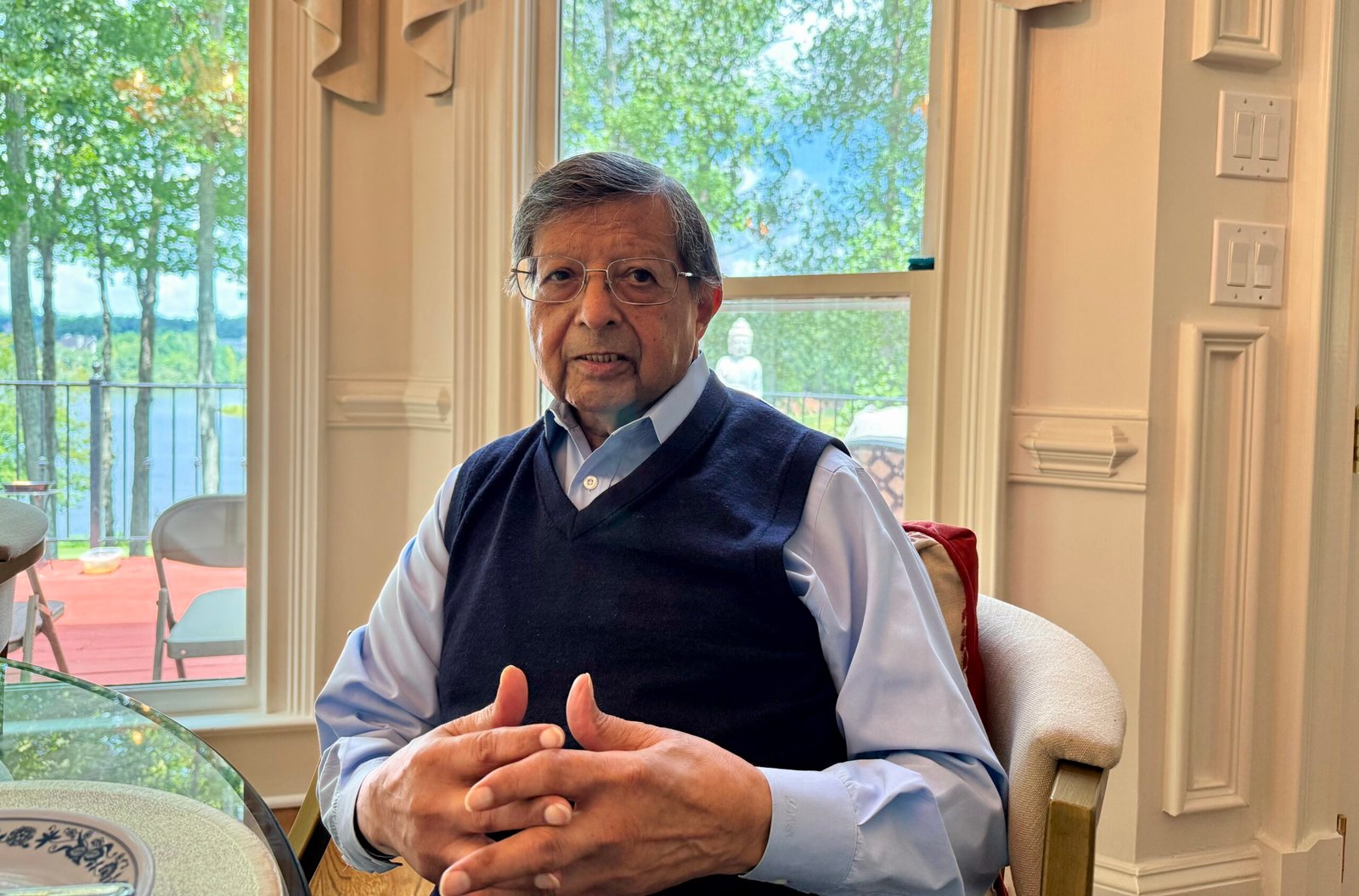
As economic power shifts toward Asia, India is emerging as a strategically important force in an increasingly complex global order. Renowned Scholar, Philanthropist, and Padma Bhushan recipient Prof. Jagdish Sheth, Ph.D., believes the country’s talent, technology capabilities and global diaspora could help it become the “service capital of the world.” However, he says India must transition from a protected domestic economy to a globally integrated, high-wage economy while remaining humble about its achievements.
In an exclusive interview with South Asian Herald, at his house in Atlanta, Prof. Sheth reflects on India’s strategic role amid growing tensions between the United States and China, the consequences of artificial intelligence and digital technology, and the economic pressures created by aging populations. He also discusses the significance of the Padma Bhushan, his association with the Consulate General of India in Atlanta, the potential of the Indian diaspora, his life in academia and his plans as a scholar following retirement.
India is increasingly emerging as an important global economic and strategic player. What factors, in your view, position India to become even more strategically significant to the world in the coming decades?
I believe the 21st century will become the Asian century. The 1800s were defined by European colonial expansion, and the 20th century was largely the American century. Now, economic power is shifting toward Asia. Japan and South Korea are already advanced countries, while China is becoming an advanced nation and, according to forecasts, is expected to become the world’s largest economy.
India is becoming highly strategic within a new trilateral relationship involving India, China and the United States. China and the United States are distancing themselves from each other rather than becoming closer partners, making India increasingly important as the third major economy. According to International Monetary Fund data based on purchasing power parity, China is already number one, the United States is number two, and India has an economy of approximately $11 trillion to $12 trillion. Even that may underestimate India’s economy because it has a much larger cash economy than the other two countries. India will therefore become the third leg in counterbalancing the growing rivalry between China and the United States.
As India’s global influence continues to grow, what are the key areas the country needs to focus on to become not only a global power, but also an admired and respected nation?
There is a broader picture to consider. India must make a shift in two dimensions. First, it must move from a highly protected domestic economy to a globally integrated economy. Second, it must aspire to transform from a low-wage nation into a high-wage nation by using technology to increase productivity and hourly wages. This is especially important because much of India’s agricultural economy is not yet high-tech.

India has several resource advantages that can support this transition. Its greatest advantage is its talented people. In fact, India can become the service capital of the world, just as China became the manufacturing capital of the world. India’s second major advantage is its global diaspora. Wherever you go in the world, you are likely to encounter someone of Indian or South Asian origin. The diaspora is an enormously valuable asset that India can leverage more effectively.
Digital technologies, particularly artificial intelligence, are rapidly transforming economies and societies. What unintended consequences of this technological transformation concern you the most?
One of the biggest unintended consequences of digital technology will be the rise of what I call the “roommate nation,” in which families increasingly live more like roommates. We are witnessing a generational discontinuity that is much stronger than ever before. In my time, a generation spanned about 25 years, and parents and grandparents taught us values, proper behavior and how to participate in the community. That continuity is weakening today.
Even family dinners in America can feel like a chore. Everyone rushes through the meal and then goes in a different direction. One person is on WhatsApp, another is watching YouTube, someone else is talking on the phone, and another person is watching television. We no longer have the bonding that families need. Digital technology is anchored primarily in only two of the body’s five senses: hearing and vision. But touch, which comes from meeting in person, is also important, as are smell and taste. As the human race becomes increasingly digitally oriented, we will experience more unintended social consequences.
Many advanced economies are experiencing rapidly aging populations. What implications could this demographic shift have for the global economy, labor markets, and economic growth?
As nations age, their fundamental needs begin to shift. The two most important needs will be health preservation and wealth preservation. Industries serving those needs will grow significantly around the world, including in China, which is aging much faster than many people recognize. Japan is currently the most prominent example of a large aging nation. Birth rates are declining across advanced economies, and populations are beginning to contract.
Both health preservation and wealth preservation are service industries, and their growth will bring a major change in the economic paradigm. During the industrial age, manufacturing created services such as repair and maintenance. In the service economy, services will create manufacturing. Healthcare, for example, generates demand for hospital beds, support systems, instruments and medical devices.
The greatest consequence of aging, however, will be the rising burden of social obligations. The United States spends approximately $5 trillion on healthcare, with 30 to 35 percent devoted to extending life during its final year. An additional 10 percent goes toward saving newborns, including premature babies. The cost is highly skewed and is ultimately unsustainable.
Corporations that provide healthcare and pension benefits can no longer afford the obligations created under an earlier economic model. At one time, there could be eight new automobile factory workers supporting every retiree. Today, there may be eight retirees for every new worker because the remaining work is performed by robots and machines. Machines do not pay premiums toward future pension obligations.
This places an enormous burden on society. Social Security and government-funded healthcare programs are becoming financially unsustainable. Similar pressures affect the National Health Service in the United Kingdom and Canada’s taxpayer-funded healthcare system. Some corporations may eventually have to declare bankruptcy to escape their pension obligations, as several airlines have already done.
Can you talk about your association with the Consulate General of India in Atlanta and how that relationship has evolved over the years?
Since the Consulate General of India opened in Atlanta, we have been fortunate to have wonderful consul generals. The most recent consul general, Ramesh Babu Lakshmanan, who is unfortunately completing his tenure and returning, has been remarkable. He is open, inclusive and welcoming to every community. He has a strong sense of humor and is equally comfortable engaging with the non-Indian community. He is probably one of India’s finest brand ambassadors.
Many people may not realize that Lakshmanan oversaw the logistics for the 2023 G20 Summit in New Delhi, which involved dignitaries from around the world and approximately 55 locations. He managed that enormous responsibility successfully. I believe he is one of India’s rising young diplomats and will continue to do very well.
You were conferred the Padma Bhushan in 2020 for your contributions to literature and education, one of India’s highest civilian honors. What does this recognition mean to you personally and professionally?
The Padma Bhushan is deeply meaningful to me for one simple reason: Every community to which I belong, including the academic community, the Atlanta community, the Jain community and the Indian diaspora, believes the award represents them. I see myself as a nominee on their behalf, and they take great pride in the recognition.
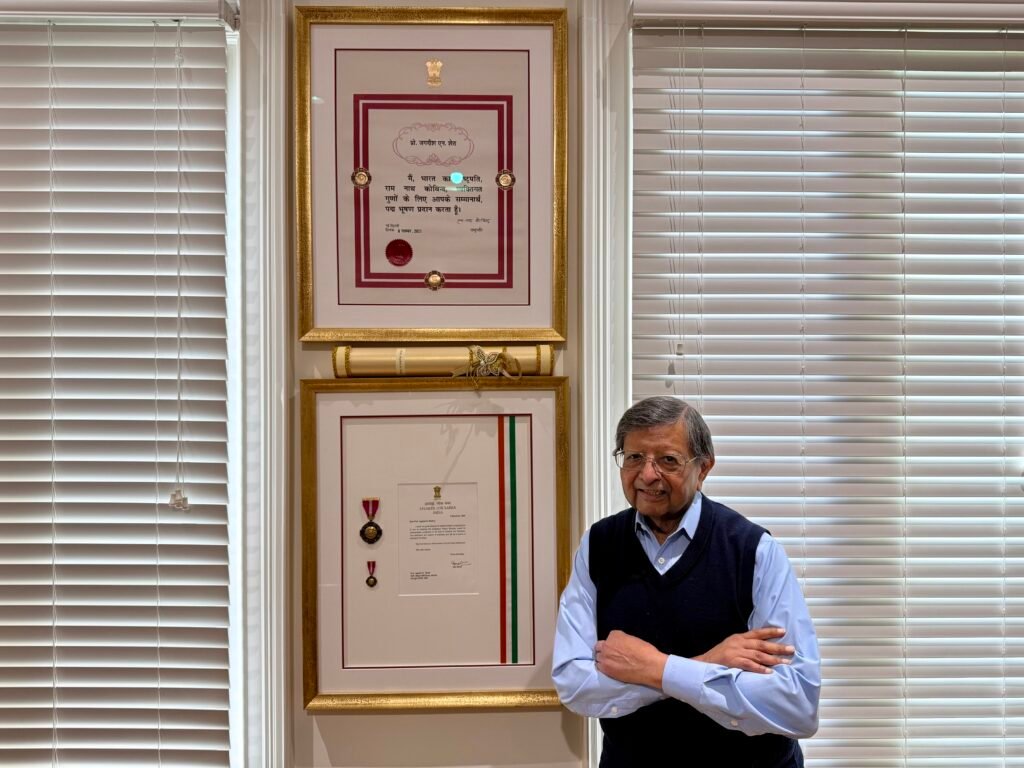
I have never seen so many people feel proud of my receiving an honor as they did with the Padma Bhushan. I have been fortunate to receive awards from several other institutions, and those recognitions have also affected me positively on an emotional level. However, the Padma Bhushan remains especially meaningful because so many communities view it as their own recognition.
How do you assess the contributions of the Indian diaspora to India’s development and its growing influence on the global stage?
The Indian diaspora has always been a great asset, although previous administrations did not fully recognize its potential. The focus was largely on remittances from Indians working in Dubai, Abu Dhabi and elsewhere. Over time, however, India began to recognize the diaspora’s extraordinary talent and diversity across academia, medicine, business and corporate leadership.
Members of the diaspora are well connected within their communities, highly integrated into their adopted countries, and widely respected and admired. The question is how they can become an even greater asset to India, whether as advocates, ambassadors or responsible representatives of India and South Asia.
The diaspora must be nurtured by the government through more frequent and meaningful interactions. Engagement should not be limited to a single annual event at which overseas Indians receive awards. Relationships must be built more consistently, both from individual to individual and institution to institution. Encouraging members of the diaspora to visit India and become more involved with the country is essential. India and diaspora organizations can host more events and create sustained opportunities for engagement.
You have six decades of combined experience in teaching and research, with associations spanning the University of Southern California, the University of Illinois Urbana-Champaign, Columbia University, MIT, and Emory University. Looking back on this remarkable academic journey, what experiences or accomplishments have been most meaningful to you?
I have always believed that the purpose of an institution or an individual is to unlock the potential of others. If you take a grain of wheat and turn it into a loaf of bread, the value added may be only three times greater. If you take an industrial commodity such as a rough diamond, a skilled diamond cutter and polisher can reveal its brilliance and increase its value by 15 to 20 times.
But when a mentor or educator helps unlock the potential of a human being, the value added is infinite. That is the true purpose and meaning of human life. It is also the central objective of the institutions in which we teach. How do we unlock the potential of our colleagues and students? They are already brilliant, but how can we motivate them to contribute to society? That is what drives us in the academic world.
As India works toward becoming a developed nation by 2047, what message would you like to share?
India should do two or three important things. First, it must remain humble. Every nation takes enormous pride in its achievements. The greater the achievement, the more humility a country should demonstrate.
Second, India should pursue more bilateral agreements with countries around the world, particularly in the economic sphere but also in culture. To become more globally integrated through higher education, India should invite leading international universities to establish a presence in the country by providing them with land and buildings.
Institutions such as the IITs, IIMs, and AIIMS have large campuses that are increasingly located near major urban centers. India could invite foreign universities to establish operations at or near these institutions. Capital expenditure is one of the biggest obstacles preventing foreign universities from entering India, particularly because many are government-funded in their home countries.
It is beneficial for Indian students to study abroad, but it is equally important for international students to come to India and learn. India must also transition from a domestic-centric market toward becoming a creator of globally recognized brands.
As you enter retirement, what are your plans for the next chapter? Could you also discuss the work of the Sheth Family Foundation and the priorities you hope to pursue through the foundation?
I will continue to be active as a scholar. The primary responsibility I will no longer have is teaching. I plan to devote my discretionary time to writing more books and articles, particularly books intended for professionals and the general public rather than undergraduate students.
My latest book is titled A Digital Shock, which examines seven shocks society will encounter because of digital technology, particularly artificial intelligence. One of those shocks is the rise of the “roommate nation,” while another is digital addiction. More people are increasingly engaging with the virtual world because they find it to be an appealing fantasy. I believe these developments will have serious consequences for society.
Another issue I find fascinating is the number of stranded assets created as society moves away from industrial-age assets and toward digital assets. Many companies list assets on their books at values considerably higher than their market value. I call this “Stranded Assets Theory,” an area in which I have done significant work involving electric utilities and telephone companies. We must consider how to revitalize stranded assets, such as transforming shopping malls into community living spaces or repurposing warehouses for multiple uses.
(This interview has been edited for length, brevity and clarity)