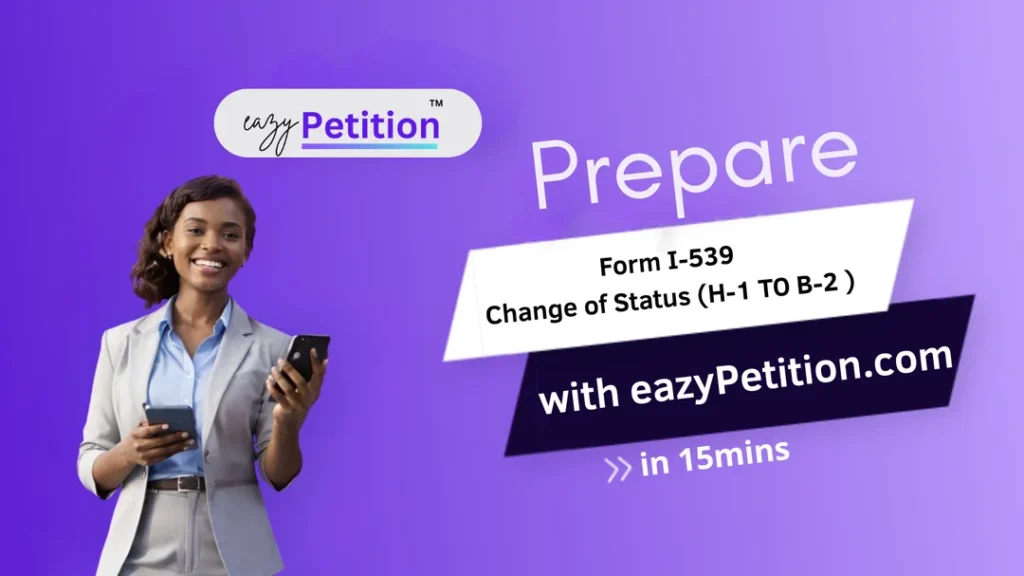
EAZYPETITION LLC, a Texas-based legal technology company, has launched its AI-powered immigration petition preparation platform, eazyPetition, following a beta phase in the United States, while also introducing an on-demand Paralegal-as-a-Service model for U.S. immigration attorneys.
The platform uses artificial intelligence to extract information from immigration documents and supporting evidence, allowing users to review, verify and generate print-ready USCIS petition forms through a guided workflow.
USCIS petition preparation often requires applicants, employers and legal representatives to gather information from multiple records, including passports, visas, I-94 arrival and departure records, previous petitions, educational credentials and employment documents. The same information may need to be entered repeatedly across different forms and during subsequent renewals.
Amit Gupta, founder of eazyPetition, told South Asian Herald that the platform was developed to simplify this process by allowing users to store documents and reuse information from earlier filings.
Advertisement
“As students, IT professionals and family members of naturalized U.S. citizens navigate complex and repeated USCIS petition preparation for many years to maintain their legal status and work authorization, eazyPetition makes the process seamless by offering one solution to store all underlying documents and create a new petition or use a previous one to prepare a new petition in under 30 minutes,” Gupta said.
According to the company, each stakeholder involved in a petition, including an applicant, employer or family sponsor, can complete their portion of the workflow in less than 30 minutes. The platform currently supports offline petition preparation, with completed documents printed, signed and submitted through existing USCIS filing procedures.
Alongside the AI platform, eazyPetition has launched Paralegal-as-a-Service, allowing U.S. immigration attorneys to access paralegal support on a case-by-case basis for a flat fee of $100 per case.
Under the model, attorneys can submit individual immigration cases instead of hiring full-time paralegals or paying hourly rates. The fixed fee applies regardless of the number of forms involved or the time required to prepare the case, subject to the program’s terms and conditions.
The company said the service offers a 48-hour turnaround guarantee after receiving the required case information and documents. Attorneys may receive a full refund if the committed turnaround is not met, subject to applicable terms. Refunds are also available for eligible cases that receive a Request for Evidence or a denial from USCIS.
Gupta said the new model could help immigration law firms manage fluctuating caseloads while expanding access to legal talent beyond traditional geographic boundaries.
“We see Paralegal-as-a-Service as more than a new way to access paralegal support; it is a new way of thinking about how legal work can be delivered,” Gupta said, adding that the case-based model could allow firms to scale their operations while creating opportunities for qualified legal professionals in India and other markets.
The service covers paralegal work involved in preparing immigration cases, including document review and completion of required forms based on information and documents provided by attorneys and clients.
The company said the model could also create remote work opportunities for qualified legal professionals and freelance paralegals in India, connecting them with U.S. immigration practices that require flexible support. Eligible professionals would be able to work on U.S. immigration cases without being directly employed by a U.S. law firm, subject to eazyPetition’s engagement and eligibility requirements.
EazyPetition said its engineering team in India is also contributing to the development of the platform, drawing on expertise in artificial intelligence, document intelligence, workflow automation and legal technology.
The company said the combined offering reflects its effort to address both the technology and human-resource requirements of immigration case preparation, as legal professionals and law firms look for ways to reduce repetitive administrative work and manage changing caseloads.