 Join WhatsApp Channel

Bangladesh’s Foreign Ministry had begun preparing a comprehensive briefing for Prime Minister Tarique Rahman’s proposed visit to India as early as August 10, nearly a week before Dhaka indicated that the visit may not go ahead in the prevailing diplomatic environment, according to internal documents seen by UNI.
The documents show that the South Asia Wing of Bangladesh’s Ministry of Foreign Affairs, on August 10, initiated the preparation of an updated document titled “Brief on Bangladesh-India Relations,” with different wings and units of the ministry asked to provide fresh inputs by August 13.
“Among the issues for which briefs were prepared were trans-boundary water sharing and climate change, trade and investment, technological cooperation, cultural and sports diplomacy, maritime affairs, Bangladesh-China ties, Rohingya repatriation, LDC transition and GI status of Tangail sarees,” sources in Bangladesh’s Ministry of Foreign Affairs said.
Officials said that they were told to keep the notes ready as the talks could be held at the end of August or in September.
The Ganges Water Sharing Agreement, also popularly known as the Farakka agreement which, is expiring in December this year, and its renewal or recasting was obviously at the top of the minds of the Bangladeshi diplomats, and much of their briefing notes were on the agreement.
Documents show that the briefing exercise also sought updated assessments of Bangladesh’s relations with China, including the Belt and Road Initiative, Chinese investment, and Chinese-funded projects. Bangladesh-US relations and Washington’s policy towards South Asia were similarly included.
“Indian sensitivities about Chinese investments were possibly the reason why explanatory briefs on China-Bangladesh relations and the Belt and Road Initiative were prepared,” officials said. China is believed to be interested in developing the Mongla port and a Teesta water storage programme, which are very near the Indian border.
The Russia-Ukraine war and Bangladesh’s position on the conflict were among the other issues identified for the proposed talks.
The documents also indicate that Dhaka was preparing to discuss Bangladesh-India cooperation in multilateral organizations and groupings, including BRICS, SAARC, BIMSTEC, the Commonwealth, and the United Nations.
Economy and trade-related matters, including Bangladesh’s graduation from the UN’s least developed country category, which could raise the tariffs its exports face, the geographical indication status of Tangail Saree, and wider multilateral economic cooperation, were also included in the proposed briefing.
Though the dispute over GI for Tangail Sarees, where India too has given a local GI for Tangail sarees woven in India, is a small issue but one with sentimental value on both sides of the border. Bangladesh has long been protesting about it.
The Myanmar situation and the Rohingya crisis were to be examined in the context of the roles of China, India, and ASEAN in efforts to facilitate the repatriation of the nearly one million who have taken refuge in Bangladesh.
The breadth of issues identified in the document suggests that the proposed visit was being viewed as an opportunity to address not only immediate political differences but a much wider set of strategic, economic, security, and regional questions confronting the two neighbors.
The prospective agenda also extended beyond South Asia, with the Middle East crisis and the Israel-Palestine conflict listed as subjects, alongside EU-India relations and cooperation.
“The note, however, did not prescribe specific negotiating positions or policy recommendations. Instead, it was essentially a coordinated information-gathering exercise, with various wings of the Foreign Ministry tasked with supplying updated material that could form the basis of a comprehensive brief for the Prime Minister,” official sources said.
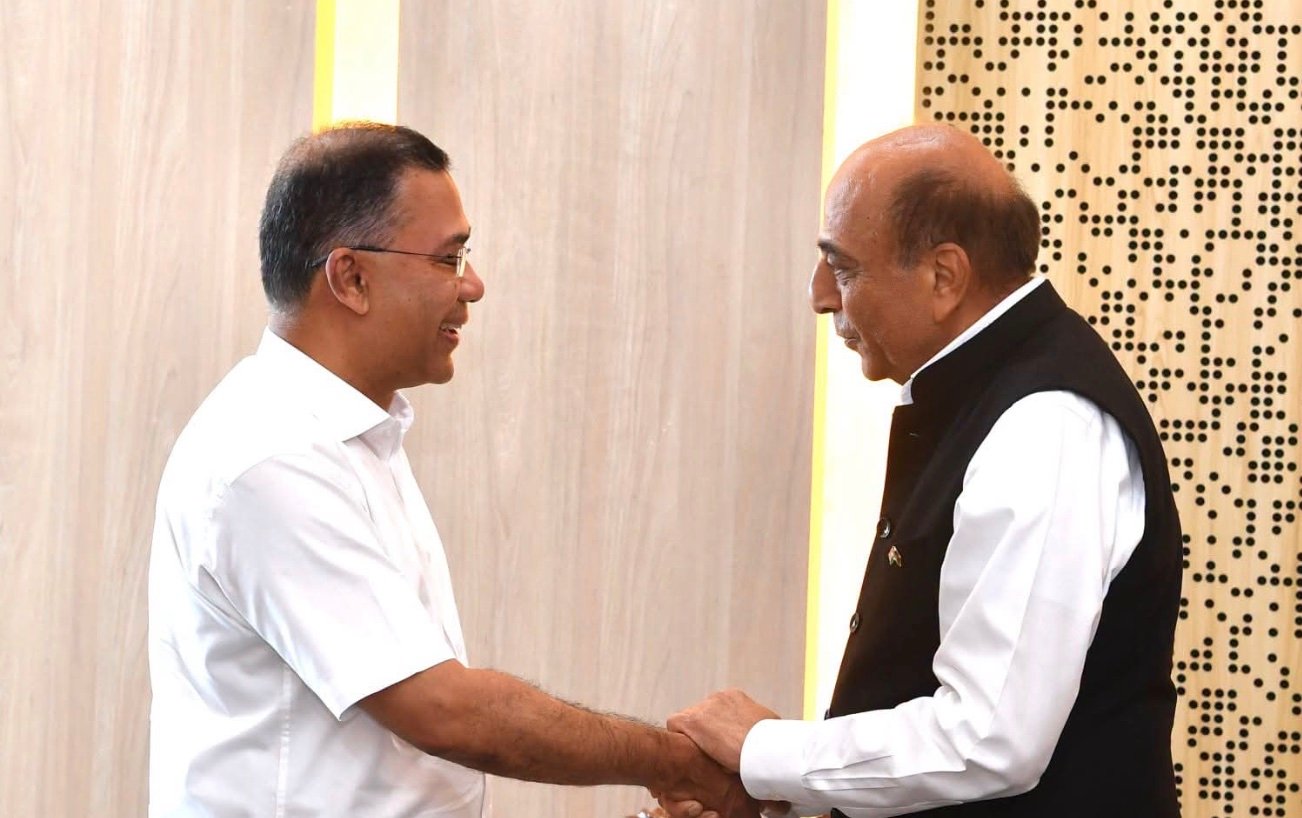
The timing of the exercise is significant as it coincides with Bangladesh’s Prime Minister Tarique Rahman’s meeting with India’s High Commissioner to Bangladesh, Dinesh Trivedi.
However, the trip came under a cloud with domestic politicians demanding various agendas and preconditions for the meeting, including the extradition of former Prime Minister Sheikh Hasina, now living in India. (UNI)
Related posts:
 Why Bangladesh’s Pivot Toward Türkiye Could Redefine South Asia’s Geopolitical Landscape
 India’s Expanding Defense Ties with Europe and Bangladesh’s Strategic Balancing in South Asia
 Beyond a Courtesy Call: Paul Kapur’s Dhaka Visit and Bangladesh’s Rising Strategic Weight in South Asia
 From Dhaka to Washington: A Strategic Partnership That Could Reconfigure South Asia’s Geopolitical Landscape
