Join WhatsApp Channel

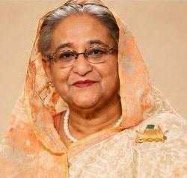
In an emotional speech, former Bangladesh Prime Minister Sheikh Hasina said on August 5 that she is prepared to return to her country despite the possibility of being detained or killed, asserting that it was her duty to return to her people.
“I may be detained, but it is my duty to my people to return,” Hasina said in an interaction with the press here, even as nearly a million people watched the programme online, despite strictures passed by the Bangladesh government to the press and online media in that country not to cover or telecast the event.
She said she wanted to return so that Bangladesh could get back on the path of “progress, secularism and peace”.
While thanking India for its hospitality, the former Bangladesh prime minister said Bangladesh remained her country and she needed to get back on its hour of need.
“I was arrested in 1983, 1985, and 1987, some seven times. They may jail me or kill me, I have to go back to my people,” she said.
Recalling attacks on her life, Hasina said there had been 19 attempts on her. She also said she wanted to return to Bangladesh in December, which she described as the country’s “victory month”.
“I will tell everybody the date when I come,” Hasina said.
She said the situation in Bangladesh had not changed with the BNP coming to power.
Hasina alleged that poverty had increased, more than two crore people had become unemployed, and factories had been shut down.
She further alleged that the Bangladesh government was borrowing between Tk 500 crore and Tk 700 crore every day to run the state.
Hasina accused the authorities of destroying symbols associated with Bangladesh’s Liberation War, including Bangabandhu Sheikh Mujibur Rahman’s house and museums.
“The killings have not stopped. Awami League leaders and workers are still being killed or arrested,” she said.
She alleged that women activists of the Awami League were facing torture and abuse in prisons.
Hasina said the alleged persecution was not confined to the Awami League, claiming that journalists, academics, judges, and ordinary citizens had also not been spared.
“Bangladesh needs reconciliation,” she said.
Hasina also recalled the circumstances surrounding the birth of her son, saying, “Sajib Wazed Joy was born in captivity.”
“I speak as the daughter of Bangladesh’s Father of the Nation,” she said.
Commenting on Sheikh Hasina’s statements, former Indian high commissioner to Dhaka Veena Sikri told UNI, “I think she delivered a very powerful message, and we will have to ponder over it seriously.”
Earlier, Sajeeb Wazed Joy, son and political adviser to former Bangladesh prime minister Sheikh Hasina, accused the country’s authorities of presiding over a deepening crisis of law, order, and democratic accountability, warning that instability in Dhaka could have consequences well beyond Bangladesh’s borders.
Speaking ahead of his mother, Joy argued that the violence that accompanied the fall of Hasina’s government on August 5, 2024 had not ended with her departure.
Instead, he said, killings, arrests, and what he described as politically motivated prosecutions had continued under the administration led by Nobel laureate Muhammad Yunus.
“Deaths continued in Bangladesh after August 5, 2024,” Joy said, alleging that the Yunus administration had subsequently issued an ordinance providing blanket immunity to protesters who committed killings. He claimed that the legal indemnity remained in force even under the newly elected government in Dhaka.
Joy also alleged that tens of thousands of people were being held without proper due process and that killings in police custody continued.
Journalists and businessmen, he said, had been detained for extended periods without trial or bail.
“Bangladesh today is a failed state,” Joy said, portraying the country’s post-Hasina transition as a breakdown not merely of political authority but of the institutions needed to guarantee due process and individual rights.
His allegations could not be independently verified in full. They come amid a fiercely contested political struggle over responsibility for the deaths during the 2024 uprising and the subsequent treatment of members and supporters of Hasina’s Awami League.
Joy also raised concerns about the media environment. Journalists suspected of being insufficiently supportive of the authorities, he said, were being removed from their positions. The claim reflects a wider battle over the independence of Bangladesh’s press, with competing political camps accusing one another of using state institutions to silence opponents.
The security dimension of Joy’s argument was more stark. He alleged that Pakistan’s Inter-Services Intelligence agency, or ISI, had been given “a free hand” in Bangladesh and claimed that Islamist organizations, including Hizb ut-Tahrir and al-Qaeda-linked elements, were operating with greater freedom in Dhaka.
Such claims are particularly sensitive in a country whose strategic position gives it significance beyond its immediate borders. Bangladesh sits at the intersection of South Asia and the Bay of Bengal, connecting India’s north-east with the wider maritime economy of the Indian Ocean. Any sustained deterioration in political stability could therefore carry implications for India, Myanmar, regional trade, and maritime security.
Joy’s intervention also sought to shift the argument from the politics of the Hasina government to its economic successes.
Supporters of the Awami League point to Bangladesh’s rapid economic expansion during Hasina’s years in office, when annual GDP growth frequently reached the 6-7 per cent range before the pandemic and subsequent global shocks. They argue that the period produced a significant transformation of the country’s physical and economic infrastructure.
“We had 6.5-7 per cent GDP growth,” Awami League supporters say, pointing to flagship projects including the Padma Bridge and the Matarbari deep-sea port as symbols of an ambitious development strategy.
The Padma Bridge, in particular, was presented by the Hasina government as evidence that Bangladesh could finance and execute large infrastructure projects independently. Matarbari was conceived as a strategic gateway capable of strengthening Bangladesh’s maritime connectivity and industrial base.
Yet the economic record is now being reassessed alongside allegations of authoritarianism, institutional capture and corruption levelled against the Hasina government. Human Rights Watch, for example, has documented serious allegations of arbitrary arrests, enforced disappearances, and excessive use of force during the previous administration, while also calling for accountability for abuses committed during and after the 2024 uprising.
Earlier on Tuesday, news reports indicated that Bangladesh Information Adviser Zahed Ur Rahman had warned the neighboring nation’s media that announcing or publicizing Hasina’s planned speech would violate a December 2024 order by Bangladesh’s International Crimes Tribunal.
At a regular briefing by the Ministry of External Affairs, responding to questions about Hasina’s scheduled interaction, Randhir Jaiswal, spokesperson for the government, said, “The interaction you refer to is being organized by a private media entity. The government has no involvement whatsoever in it. Neither does it endorse any views that may be expressed at the meeting.”
Hasina spoke virtually at the interaction organized here by the Foreign Correspondents’ Club of South Asia (FCC South Asia) on Wednesday.
Hasina’s statement comes at a particularly significant moment in Bangladesh’s history when Premier Tarique Rahman is trying to consolidate power and attempting to grow closer to both the US by conducting joint military and naval exercises and to China by awarding it a number of lucrative projects which are uncomfortably sites near India’s border.
It also comes at a time when a crackdown and trials of large numbers of journalists and academics, besides Awami Leaguers, have started.
The political transition following the events of August 2024 has reshaped the country’s domestic political equations, while questions surrounding Sheikh Hasina’s political future continue to have significant implications for Bangladesh and the world at large.
For India, the issue carries an added strategic dimension as Bangladesh occupies a pivotal position in India’s eastern neighborhood, sharing a long border, besides economic, cultural, and security linkages. (UNI)