 Join WhatsApp Channel

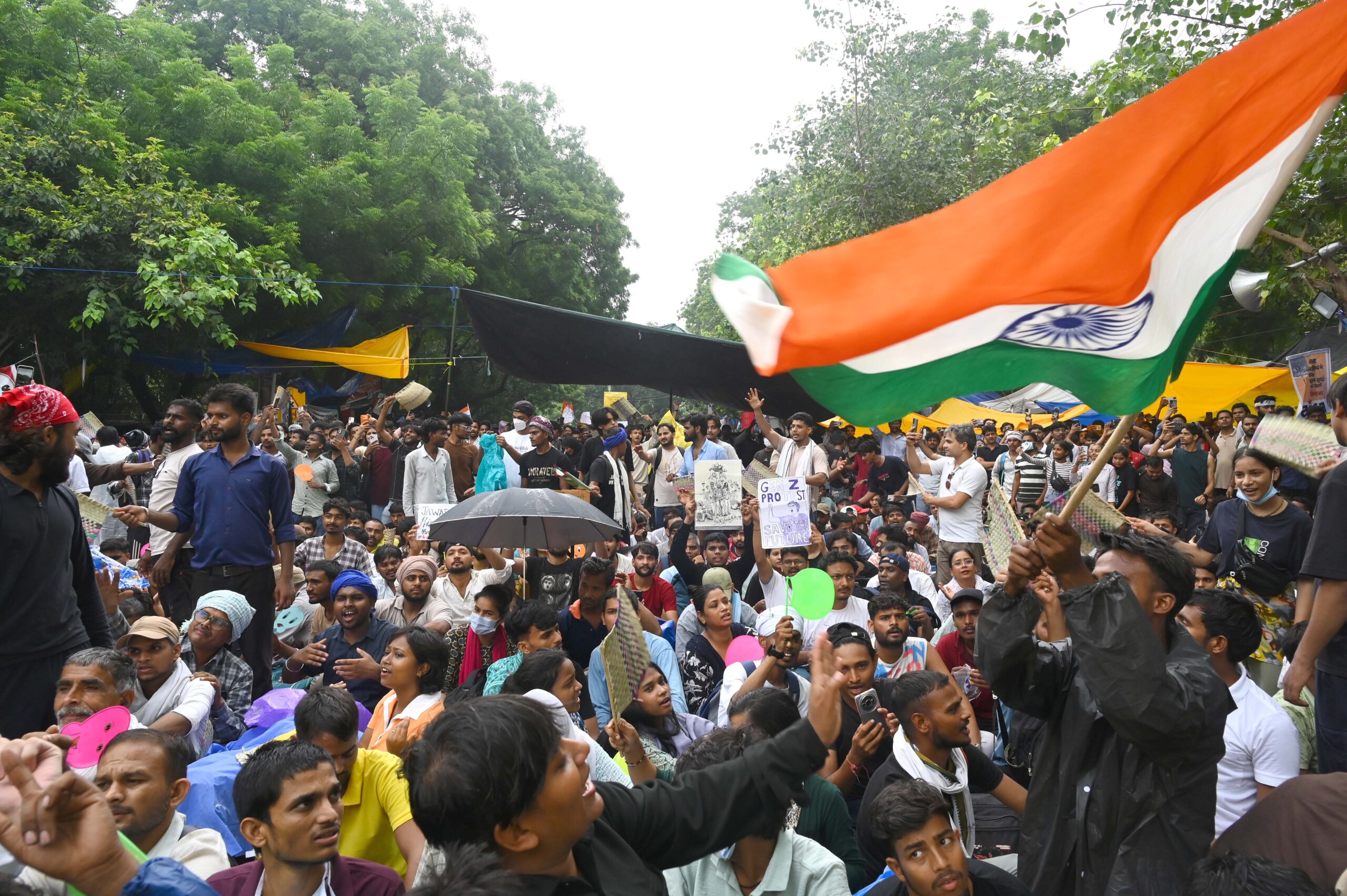
Two years after enacting the Public Examinations (Prevention of Unfair Means) Act, the Narendra Modi government has proposed sweeping amendments that substantially increase penalties for paper leaks, impose harsher sanctions on service providers and organized crime syndicates, and promise time-bound probes and fast-track trials.
The legislative palliative comes after weeks of protests by students across the country and resignation by Education Minister Dharmendra Pradhan and his replacement by another minister. While the law is good in intent, it is also perhaps time to consider wholesale reforms of the examination system.
The new law is both a bid to protect the integrity of India’s public exams, and an acknowledgement that the existing legal framework, although among the toughest in India, has not been able to restore public confidence in examinations that determine the futures of millions of young Indians.
What’s at stake is not merely the credibility of competitive examinations, but the legitimacy of one of the country’s most important social contracts since independence, that merit, rather than money or privilege, will determine access to higher education and public employment. The immediate political catalyst for both the student agitation and the hurried legislation was the fact that yet another controversy over irregularities in the conduct of the highly competitive National Eligibility cum Entrance Test (NEET), India’s nationwide entrance examination for undergraduate medical education, broke out affecting millions of students.
The proposed amendments to the law now seeks to move beyond punishing individual candidates caught cheating towards punishing and dismantling the organized commercial ecosystem that has increasingly come to dominate examination fraud. The original 2024 legislation criminalized a broad range of offences, including leaking question papers or answer keys, impersonation, conducting fake examinations, manipulating merit lists, unauthorized assistance during examinations and tampering with computer systems.
The new amendment significantly ups the ante, for individuals, prison terms would after the laws is implemented, increase from the existing three-to-five-year range to between five and ten years, while maximum penalty would rise five-fold from Rs 10 lakh to Rs 50 lakh. Testing agencies or companies conducting the tests will face an even steeper increase with the maximum fine rising from Rs 1 crore to Rs 5 crore, while debarring these firms from participating in future public examinations.
Directors and senior executives found complicit in irregularities would face increased personal criminal liability rather than allowing them to hide behind a corporate façade. The sharpest escalation, however, is reserved for organized examination fraud, where identified criminal syndicates involved in coordinated leaks, manipulating examinations or institutionalizing conspiracies would face a minimum prison sentence of seven years along with minimum financial penalties of Rs 10 crore.
The proposed law also gives the executive powers to attach and forfeit property where institutions themselves are found guilty, signaling an effort to strip organized operators of the financial gains that have made examination fraud an increasingly lucrative enterprise. Perhaps equally significant are the procedural reforms accompanying the tougher punishments. Probes would have to be conclude within two months, while special fast-track courts would be set up to hear cases. Appeals would lie directly before Division Benches of the respective High Courts, which hopefully will reduce procedural delays that have often blunted the deterrent value of prosecutions.
However, experience from both India and abroad suggests that increasing statutory penalties alone rarely eliminates organized fraud. The 2024 Act itself was enacted after an earlier round of NEET controversies, yet allegations of paper leaks have continued to emerge in subsequent examinations. In all, over the last ten years there were an astounding 152 paper leaks of various kinds connected with public exams.
The persistence of such scandals indicates that the challenge lies less in the absence of criminal sanctions than in weaknesses across the examination ecosystem. The attempt to create a “One Nation, One Examination” framework for admissions to higher education has failed to inspire confidence. Repeated paper leaks, allegations of malpractice and administrative lapses have exposed the weaknesses of concentrating the fate of millions of students in a handful of centrally administered tests.
The idea of a common examination is not inherently flawed. Since independence, India has demonstrated its ability to successfully conduct nationwide competitive examinations, guided by constitutionally sanctioned or regulated bodies such as the union Public Service Commission (UPSC) and the Staff Selection Commission (SSC). Their examinations are generally regarded as fair, transparent and professionally managed.
However, the same cannot be said of several other national entrance examinations. The National Eligibility-cum-Entrance Test (NEET), in particular, has become a symbol of the risks associated with excessive centralization.
The basic question that has to be asked whether a nation with thousands of universities and institutes of higher learning hundreds of millions of students like India can realistically depend on one single examination conducted by a single agency? India’s examination architecture should reflect the reality of its diversity. The nation should not depend on one single overstretched agency such as the National Testing Agency (NTA).
Instead, the central government should possibly consider a decentralized yet coordinated model. Groups of universities could be encouraged to form regional or thematic testing consortia, which could jointly conduct entrance examinations for engineering, medicine, dentistry, pharmacy and other professional courses. Such bodies would understand the requirements of their member-institutions, more accountable and better equipped to respond to shifting requirements.
At the same time there is a need for coordination amongst these testing bodies, so that students aspiring to apply for multiple institutions can find a calendar which supports their requirements. (UNI)
Related posts:
 Ease of Doing Business Boost as Jan Vishwas Act Decriminalizes Cantonment Norms
 The “Cockroach” Rebellion: How India’s Medical Exam Scandal Ignited a Global Movement
 India Moves to Decriminalize Corporate Offences, Replace Jail With Penalties
 Pennsylvania Physician Convicted for Illegal Distribution of Opioids and Fraud Conspiracies
