Join WhatsApp Channel

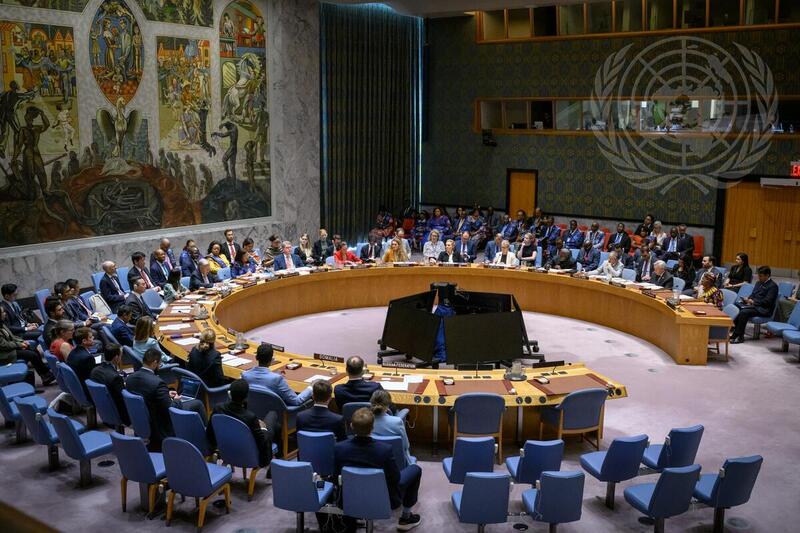
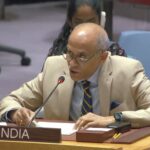
Permanent Representative of India to the United Nations, Ambassador Harish Parvathaneni, has emphasized that India recognizes the “illicit exploitation” and “trafficking” of natural resources can, in certain situations, contribute to financing armed groups and prolong conflicts.
Addressing the United Nations Security Council Open Debate on “Natural Resources Governance: the Foundation of Peace, Security and Prosperity” on July 22, 2026, Ambassador Harish said, “However, we must remember that natural resources are, first and foremost, an engine of development and prosperity for sovereign States. The challenge before us is therefore not the existence of natural resources themselves, but ensuring that they are governed in a transparent, accountable and nationally owned manner for the benefit of present and future generations.”
Ambassador Harish said the primary responsibility for the governance and management of natural resources rests with sovereign states. He emphasized that national ownership, capacity building, and institutional strengthening should remain at the center of both national and international efforts, adding that solutions must be tailored to national circumstances and implemented with the full consent and leadership of the countries concerned.
He also said states have a responsibility to ensure that subnational provinces rich in oil and gas, minerals, rare earths, and precious metals, and which sustain local communities, receive an equitable share of the benefits generated from those resources. Such an approach, he said, is essential to preventing instability and insecurity not only within individual countries but also across neighboring regions.
Ambassador Harish noted that resource-rich provinces often remain underdeveloped, creating conditions that foster insecurity and instability beyond national borders. He said such situations can invite cross-border intervention and resource extraction by external actors, further deepening local grievances and fueling unrest. He added that a heavy-handed, security-driven approach to governing resource-rich regions only aggravates these challenges.
Highlighting India’s approach, Ambassador Harish said responsible supply chains, greater transparency, sound governance, and stronger due diligence can reduce opportunities for illicit trade while enabling producing countries and subnational regions to derive greater developmental benefits from their natural resources. He also stressed the importance of promoting local value addition, technology partnerships, and investment to help resource-rich developing countries move beyond exporting raw materials and become active participants in global value chains.
Turning to the role of the United Nations, Ambassador Harish said it is equally important to preserve the respective mandates of the organization’s principal organs and institutions.
“The Security Council has a clearly defined responsibility under the Charter for the maintenance of international peace and security,” he said, adding that broader issues relating to sustainable development, natural resource governance, climate action, and economic cooperation appropriately fall within the mandates of the General Assembly, the Economic and Social Council (ECOSOC), the United Nations Development Programme (UNDP), the United Nations Framework Convention on Climate Change (UNFCCC), and other UN bodies. He said maintaining this institutional balance is essential to ensuring both effectiveness and legitimacy within the multilateral system.
He also highlighted the role of the Peacebuilding Commission, saying it is well positioned to support nationally led efforts to “strengthen institutions, enhance transparent and accountable natural resource governance, mobilize international support for capacity-building, and foster inclusive dialogue among governments, local communities and development partners.”
The Ambassador added, “Its comparative advantage lies in bringing together diverse stakeholders dealing with peace, with development and financing in support of nationally identified priorities, while fully respecting the sovereignty of the countries concerned.”
He said India supports stronger international cooperation to combat the illicit exploitation of “natural resources, promote responsible and resilient supply chains, and assist countries” in building governance capacities, where requested.
Ambassador Harish said that while fully respecting the purposes and principles of the UN Charter, member states should work collectively to ensure that natural resources become drivers of sustainable development, shared prosperity, and lasting peace so that no one is left behind.
Responding to remarks made by Pakistan during the debate, Ambassador Harish said it was not India’s intention to raise bilateral issues in the forum, but that his delegation was “compelled” to respond because Pakistan had chosen to “misuse” the discussion to “peddle its false narrative.”
He reiterated India’s position on the Indus Waters Treaty, saying, “Our position on the Indus Water Treaty remains clear and consistent. Cooperation on the basis of mutual trust and goodwill cannot be expected when cross-border terrorism is regularly deployed as an instrument of State policy.” He further stated, “As for the Union Territory of Jammu and Kashmir, it has always been, is, and will remain an integral and inalienable part of India.”
Ambassador Harish said this is the “constitutional and legal” reality that Pakistan deliberately chooses to “ignore.” He added that the only outstanding issue concerning Jammu and Kashmir is the “naked aggression” and “illegal occupation” of India’s sovereign territory by Pakistan.
“Instead of pointing fingers at India, Pakistan would serve itself and its people far better by putting its own house in order,” he added.
Related posts:
 Opinion: Pakistan’s Fake Narrative Against India to Hide its Own Mismanagement of Water Resources
 United Nations Has Lost Its “Foundational Focus,” Says India’s Envoy P Harish at UNSC Open Debate
 At UN Security Council, India Defends Operation Sindoor, Rejects Pakistan’s Claims, Calls for Stronger Rule of Law and UN Reforms
 India Calls for ‘Zero Tolerance’ on Civilian Deaths at UNSC Debate