Join WhatsApp Channel

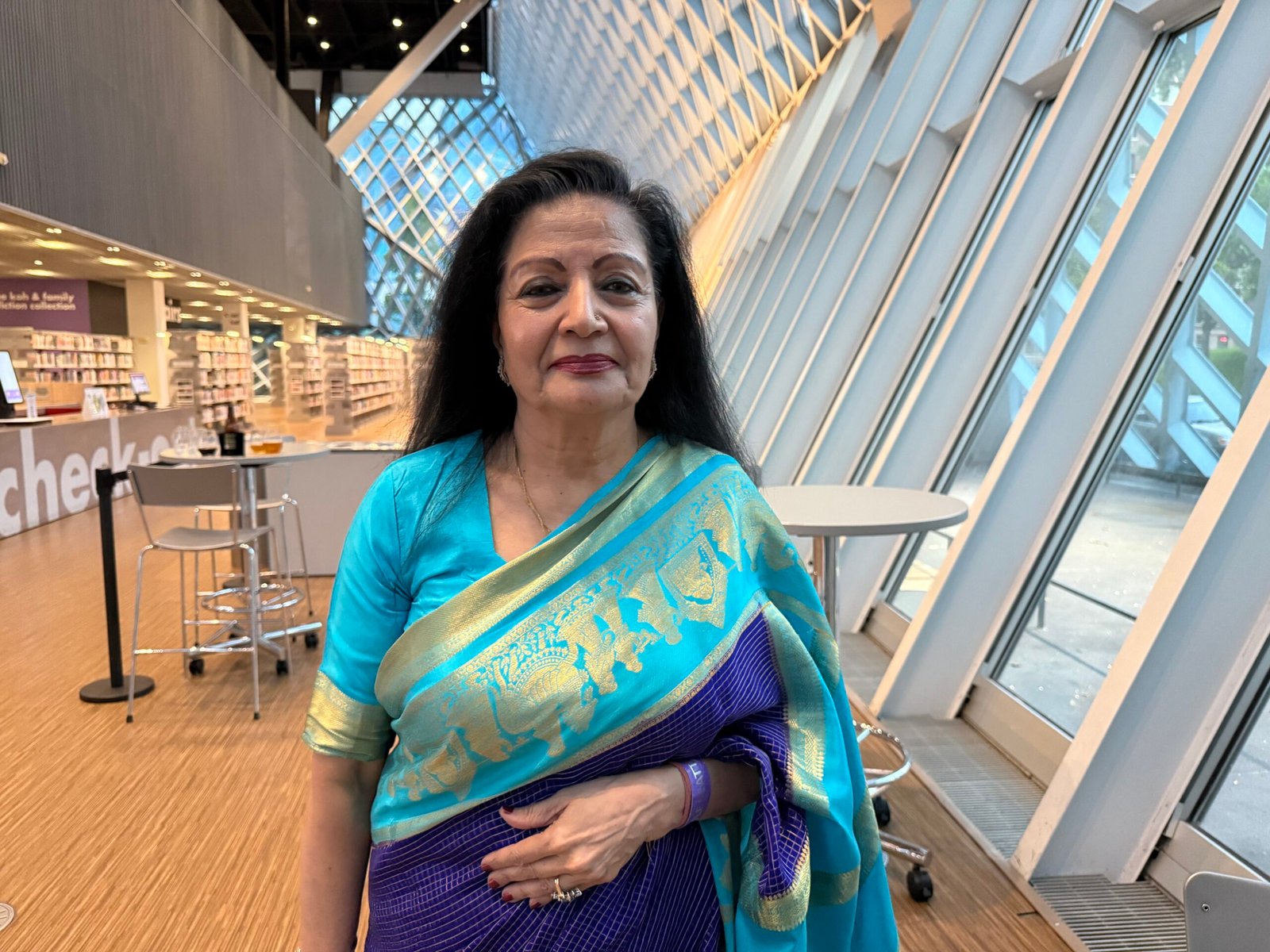
Ambassador Lakshmi Murdeshwar Puri relaunched the international edition of her novel, “Swallowing the Sun,” during the Jaipur Literature Festival (JLF) Seattle 2026, held September 17-20, at the Seattle Public Library, describing the book as an epic saga set against the upheaval and transformation of India’s freedom movement.
Puri, a former Assistant Secretary-General at the United Nations and the former Deputy Executive Director of UN Women, who visited Seattle to participate in the literary festival, said the novel explores women’s empowerment, social reform, cultural renewal and the contributions of young people to India’s struggle for independence. Prior to her career at the United Nations, Puri served as an Indian diplomat for 28 years.
“I’m delighted to be here in Seattle. This is my first visit to this marvelous city, which is a hub of global technology. I am here to attend the iconic Jaipur Literature Festival Seattle edition, where I will relaunch my novel. The original Indian edition was launched at JLF in January 2024,” Puri told South Asian Herald in an exclusive interview at the Seattle Public Library on September 18.
Puri joined author Sonora Jha for a September 19 conversation titled “The World in Her Words,” moderated by Kavita Garg.
Set during India’s freedom movement, “Swallowing the Sun” follows Malti and her sister as they leave their village in the Ratnagiri region for a boarding school in Indore following their mother’s death. Their father refuses to surrender them to child marriage and instead insists that they receive an education.
Malti later attends Elphinstone College, beginning a journey that challenges the social expectations imposed on women at the time.
“The book is an epic saga set against the tumult and transformation of the freedom movement,” Puri said. “It traces the journey of empowerment of a young woman.”
Puri said the novel’s female characters refuse to accept traditional limitations and aspire to lives considered extraordinary for women of their generation. “Most of my characters in the book are empowered women and boundary-breaking women who seek to be extraordinary and achieve the impossible,” she said.
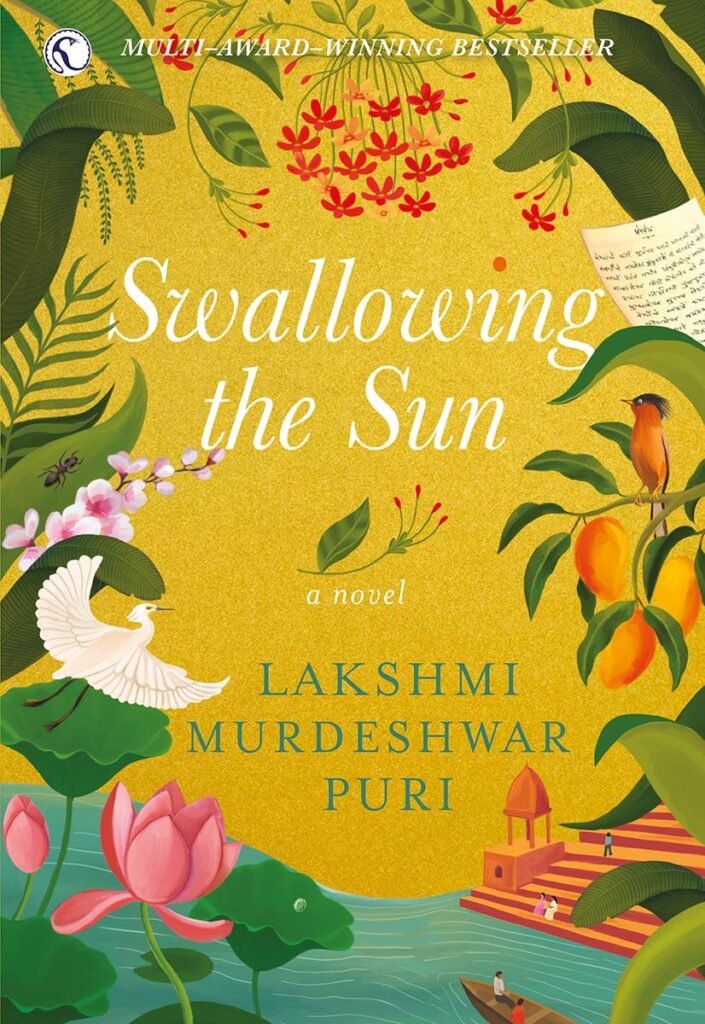
The novel also examines the role of Western-educated Indian youth who began rediscovering their civilizational heritage while confronting the psychological effects of colonial rule. Puri said this cultural reawakening helped young people build confidence, overcome self-doubt and participate in the independence movement.
She added that the novel draws attention to the richness of Marathi culture, literature, poetry and theater, as well as the cultural renaissance that accompanied the political struggle for freedom. According to Puri, these artistic and literary traditions provided emotional and intellectual strength to those working for independence and social reform.
Gender and caste reform are central to the story. The novel also features historical figures, including Mahatma Gandhi, Madan Mohan Malaviya, Annie Besant and Jehangir Petit, who appear in cameo roles and interact with its fictional protagonists.
Puri said she wanted to highlight women whose contributions to the freedom movement have not received the same attention as those of prominent male national leaders. “What I have brought out is how women, by participating in the freedom movement, also found freedom themselves and found their own voices,” she said.
While women’s emancipation is central to the novel, Puri said its male characters also play significant and sympathetic roles. Among them is Malti’s father or Baba, who defies social conventions to secure an education for his daughters.
He views education as the most effective path to women’s empowerment and supports Malti as she attends Elphinstone College and later travels alone to teach at Banaras Hindu University. Malti eventually becomes the breadwinner for the man who first becomes her lover and later her husband.
Another central character is Guru, whom Malti befriends at Elphinstone College. Puri said the friendship between Guru and the two sisters reflects the unusual social circumstances that arose when young women and men began meeting outside their family circles and interacting as equals.
The novel develops that friendship into a sweeping romance while incorporating poetry in English and Marathi. Puri translated the Marathi poems for the book, an element she said several critics have identified as central to its emotional appeal.
“Many critics have said that my book sings,” she said, referring to the poetry woven throughout the narrative.
Puri also uses Indian philosophical and religious traditions to reinforce the principle of women’s equality. Through references to figures and traditions associated with Shankaracharya and Kautilya, the novel presents an interpretation of Indian civilization that recognizes women as possessing equal humanity and divinity.
That message is reflected in Baba’s encouragement to his daughters: “You can be Saraswati, you can be Lakshmi, you can be Parvati. Nothing stops you.”
Puri said she deliberately drew upon traditions that affirm women’s strength and equality, distinguishing them from patriarchal and misogynistic interpretations.