Join WhatsApp Channel

The rules of global textile trade are being rewritten-not by lower costs, but by higher expectations. For decades, competitiveness in the textile industry was defined by cost, capacity, agility and speed. Today, buyers are looking beyond price tags. They seek resilient supply chains, verifiable sustainability, digital traceability, ethical manufacturing and dependable long-term partnerships. In this evolving landscape, trust has emerged as the industry’s most valuable currency.
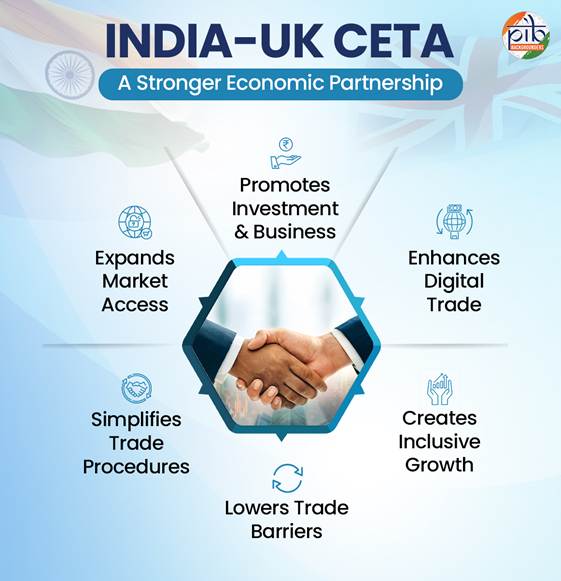
Today, on July 15, 2026, the India–UK Comprehensive Economic and Trade Agreement (CETA) comes into force. This landmark agreement along with several others that India has signed recently with the EU, EFTA countries, Oman and New Zealand and many more that are in pipeline, will widen Indian textile and apparel industry’s market access to important economies and provide a major boost to the export prospects by creating immense possibilities for this sector.
It is against this backdrop that Bharat Tex 2026, is being held from July 14-17, 2026 at Bharat Mandapam, New Delhi, assumes strategic importance. Far more than an exhibition, Bharat Tex has evolved into a global business platform where commerce, policy, technology and sustainability converge. The scale of the event itself reflects India’s growing importance in global textile trade. Bharat Tex 2026 is expected to bring together over 3,500 exhibitors, welcome more than 7,000 hosted international buyers from over 140 countries, and attract over 130,000 business visitors across the complete textile value chain. These figures are significant not merely because of their size, but because they demonstrate the increasing confidence of international markets in India’s textile ecosystem. Yet the true significance of Bharat Tex lies beyond these impressive numbers.
Unlike conventional trade fairs organized around individual product segments, Bharat Tex presents the complete textile ecosystem under one roof. Buyers can seamlessly engage with manufacturers of fibers, yarns, fabrics, apparel, home textiles, technical textiles, machinery, chemicals, accessories and emerging technologies. In an era where supply chain integration has become a competitive advantage, this comprehensive approach offers a unique value proposition.
For decades, the global textile industry competed on three defining parameters-cost, capacity and speed. The lowest manufacturing cost often determined the winning supplier. Production capacity decided sourcing volumes. Faster turnaround ensured repeat business. This model shaped global textile trade for nearly half a century. Today, that equation has fundamentally changed.
A fourth parameter has quietly become the most valuable currency in international trade-trust. Trust that a product’s origin can be verified. Trust that sustainability claims are backed by measurable action. Trust that supply chains can withstand geopolitical disruptions. Trust that factories comply with evolving environmental, social and governance standards. Trust that technology enables complete visibility from fiber to finished fashion.
In today’s marketplace, buyers are no longer simply purchasing products. They are investing in dependable partnerships. This shift is redefining global sourcing strategies. Across the world, fashion brands and retailers are reassessing their supply chains. Rising geopolitical uncertainties, stricter sustainability regulations and growing consumer expectations have encouraged businesses to diversify sourcing while reducing operational risks. Increasingly, they are searching not another low-cost destination, but manufacturing ecosystems that combine scale with resilience, innovation with compliance and competitiveness with credibility.
Few countries are as well positioned to respond to this transformation as India. India is among the rare textile-producing nations that possess a complete and integrated value chain- from natural fibers and man-made fibers to spinning, weaving, processing, garment manufacturing, technical textiles, home furnishings, handicrafts, machinery and advanced manufacturing technologies. This breadth provides global buyers with an unmatched opportunity to source across the value chain while working within a single integrated ecosystem.
The profile of international buyers has also changed dramatically. Today’s sourcing delegations include not only procurement professionals but also sustainability experts, compliance managers, product developers, innovation specialists and senior business leaders. Their objective extends beyond identifying suppliers; they seek strategic partners capable of delivering measurable environmental performance, ethical manufacturing, digital traceability and long-term reliability.
The timing of Bharat Tex 2026 is equally significant. India’s expanding network of trade agreements has opened new avenues for textile and apparel exports. These opportunities, however, also demand greater compliance with sustainability norms, due diligence requirements and digital transparency. Bharat Tex creates an important bridge between policy and practice, enabling exporters, buyers, technology providers and policymakers to engage in meaningful dialogue and translate opportunities into commercial outcomes.
Ultimately, Bharat Tex is important because it reflects a larger transformation underway in the global commerce. Every major shift in the international trade has been driven by a new source of competitive advantage. Yesterday, it was cost. Today, it is trust. India possesses the scale, diversity, entrepreneurial capability and integrated textile ecosystem to become one of the world’s most trusted sourcing destinations. Bharat Tex 2026 is where that confidence will be strengthened, partnerships will be forged, investments will be catalyzed and the next chapter of global textile trade will begin.
Because in the future of textiles, the greatest competitive advantage will not simply lie in the ability to manufacture more. It will be in the ability to inspire greater trust.
Bharat Tex 2026 reflects that fundamental shift in the global sourcing and demonstrates why India is uniquely positioned to lead the next era of textile manufacturing.
Disclaimer: The opinions and views expressed in this article/column are those of the author(s) and do not necessarily reflect the views or positions of South Asian Herald.
Related posts:
 U.S.–Bangladesh Trade Deal Offers Textile Relief, but Critics Warn Gains May Be Limited
 The Seven Corporate ‘No-Nos’ Standing Between India and Net Zero
 Why Bangladesh’s Pivot Toward Türkiye Could Redefine South Asia’s Geopolitical Landscape
 AAHAR 2026 Opens Amid Push to Turn India into a Global Food Processing Hub