Join WhatsApp Channel

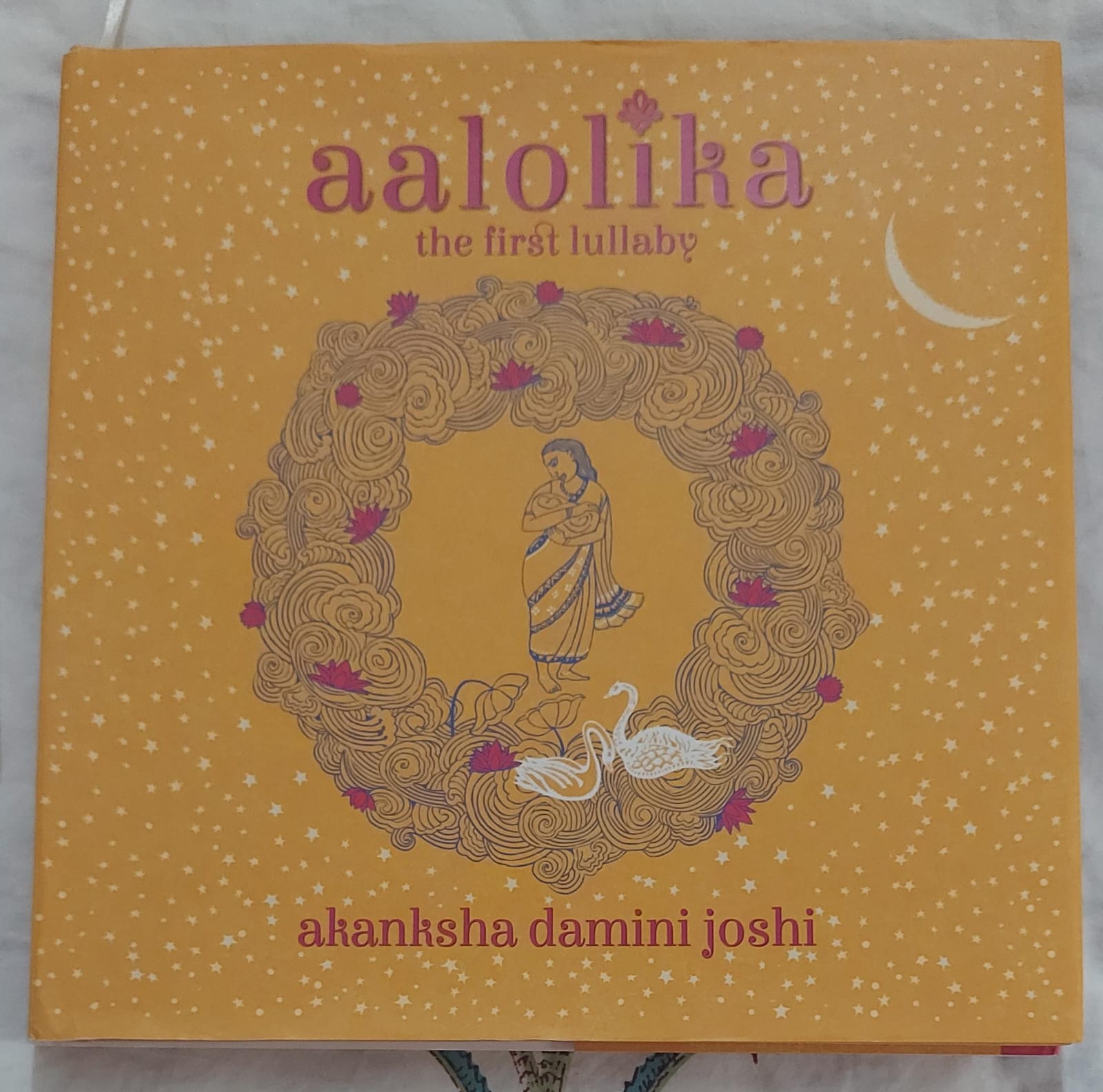
Aalolika- the first lullaby, is a beautiful book telling mythological tales in a simple narrative style with a deeply sonic quality. This collection of enchanting lullabies came to me for review and created a space in my heart forever.
The author, Akanksha Damini Joshi comes from the world of documentary film making and her feature length film, Hindu Nectar: Spiritual Wanderings in India, released in 2014, is a cinematic exploration of Hindu philosophy. This book marks the next chapter of her wandering. Through her tales, she has recreated the world in which our grandmothers told us fascinating night-time stories based on mythological texts.
Sometimes a baby Krishna asking Ma Yashodha for milk and her agitation with his constant demands comes up. Sometimes Mandodari the brave wife of Ravana surfaces, conquering her own fears and guiding her husband towards dharma. And at other moments, with the same soft, playful, almost magical undertone Akanksha narrates the enchanting story of ‘Shakti And the Jalebi Tandav’ which is about Shiva and Parvati and the land of Lallanwa, the guru of gurus of all the modern Jalebiwalas of Kashi.
While the storytelling format is simple and lyrical, what caught my attention was the sharp imagery the narrative created. I could see child Krishna’s twinkling eyes, hear the booming ‘HA HA HA’ of Madalasa after her child’s naming ceremony, visualize Yama’s sorrow at being hated by all and see mouthwatering jalebis in the Land of Lallanwa.
The design element of the book is beautiful. The text flows in aesthetically earth color pages and the photographs which accompany the stories are wonderfully shot. They take us back to village life and happy, simple times. The coffee table lustrous design format makes it a great light reading and also a good book for gifting.
The stories have a mix of serious meditative undertones and the fable like quality of teaching morals. References to the Purans, to Dharma, to the playfulness of Gods and to the power of Shakti create a happy blend of introducing Hindu mythology to young minds, along-with emphasizing the role of powerful feminine energy in our lives. Frequent references to female Goddesses and the power they hold over their male counterparts, give a mild feminist angle to the stories without making them overtly feminist. It comes naturally in the selection of stories and flows in line with the narrative.
One verse by Doolan Das, believed to have been born in the 17th Century, (a disciple of famous mystic, Jagjeevan Sahib around whom grew the Satnam Panth), stayed on in my mind.
Doolan says:
“This family,
These relations,
Are like Travelers
In a passenger boat
On a river.”
“People meet each other,
Travel together for a while;
But when the shore comes,
Each move
Their own way.”
The stories are a combination of Hindu mythology and philosophy and Akanksha explains that Aalolika is the Sanskrit word for the humming sound made to soothe a child to sleep. It is meant to create a state of meditative calm the mind can enjoy just before relaxing into sleep.
For this reason, the author has divided the book into three concentric mandalas or circles. The outer mandala is made of timeless stories of Gods and Goddesses of India. The second mandala, the meditation sutras are threads from the time-honored spiritual teachings of India. The innermost mandala is the photo art, which creates a sense of spirituality being a part of our everyday life.
I would recommend this book for an easy and peaceful reading, preferably as a light night-time reading either to your children or for yourself. It will create a sense of all being well with the world, of you being held and protected by a universe that is giving and one in which playfulness and innocence are well preserved.