Join WhatsApp Channel


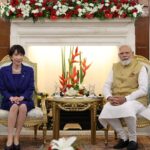
India and Japan sat down for their 16th annual summit in the first week of July with India hosting Japanese Prime Minister Takaichi Sanae for the occasion.
The India-Japan Summit took place in interesting times – where flux, upheaval and chaos are the norm. Multipolarity seems to be the game in town but without a visible order and no surety of the rules to play by.
Speaking at the G7 Summit in Evian, France, last month, Indian Prime Minister Narendra Modi underlined the need for “strong partnerships” given the interconnected world we live in. “But partnerships can succeed only when they are built on trust. Today, the most strategic asset is not minerals, technology, or markets – it is mutual trust. The trust that technology and supply chains will be used for global good, not as weapons.
The trust that development opportunities will not be limited to a few countries only. Trust that global institutions will fulfil the aspirations of all countries,” Modi had said. If asked about two years ago who these remarks could be aimed at, one could have safely assumed China. But today, coming on the back of Washington’s indiscriminate tariffs, blatant disregard for international law and unilateralism, what Modi said could as easily apply to the US.
This is where and why the India-Japan partnership becomes important. Bilateral trust between India and Japan seems particularly strong against the backdrop of how the US has slipped down the list of reliable partners for both India and Japan. Adverse global conditions in fact strengthen the logic for India and Japan to lean more on each other. The takeaways from the India-Japan summit were therefore not surprising — cooperation in advanced technology – AI, semiconductors and defense.
Energy was also on the talks table. With Takaichi admitting she was a protégé of former Japanese Prime Minister Shinzo Abe, who is credited with coming up defining the concept of the Indo-Pacific, there was a reinforcement of the idea during the Modi-Takaichi meet. Similarly, with the Quad which brings together US, Japan, India and Australia. Why this is important is simple: both India and Japan are in Asia, the US isn’t. Washington has also made it clear that its priorities are in the Western Hemisphere.
As some commentaries have pointed out, India and Japan bookend the Indo-Pacific – India on the western edge of the Indian Ocean and Japan in the opposite corner, along the Pacific. Both have much more stakes in the Indo-Pacific than the US and will have to do more together, in this context, to balance an aggressive and emboldened China. Bringing on board more like-minded Asian countries would be useful to showcase to Beijing that it isn’t only India and Japan who are wary of a unipolar Asia.
Disclaimer: The opinions and views expressed in this article/column are those of the author(s) and do not necessarily reflect the views or positions of South Asian Herald.