Join WhatsApp Channel

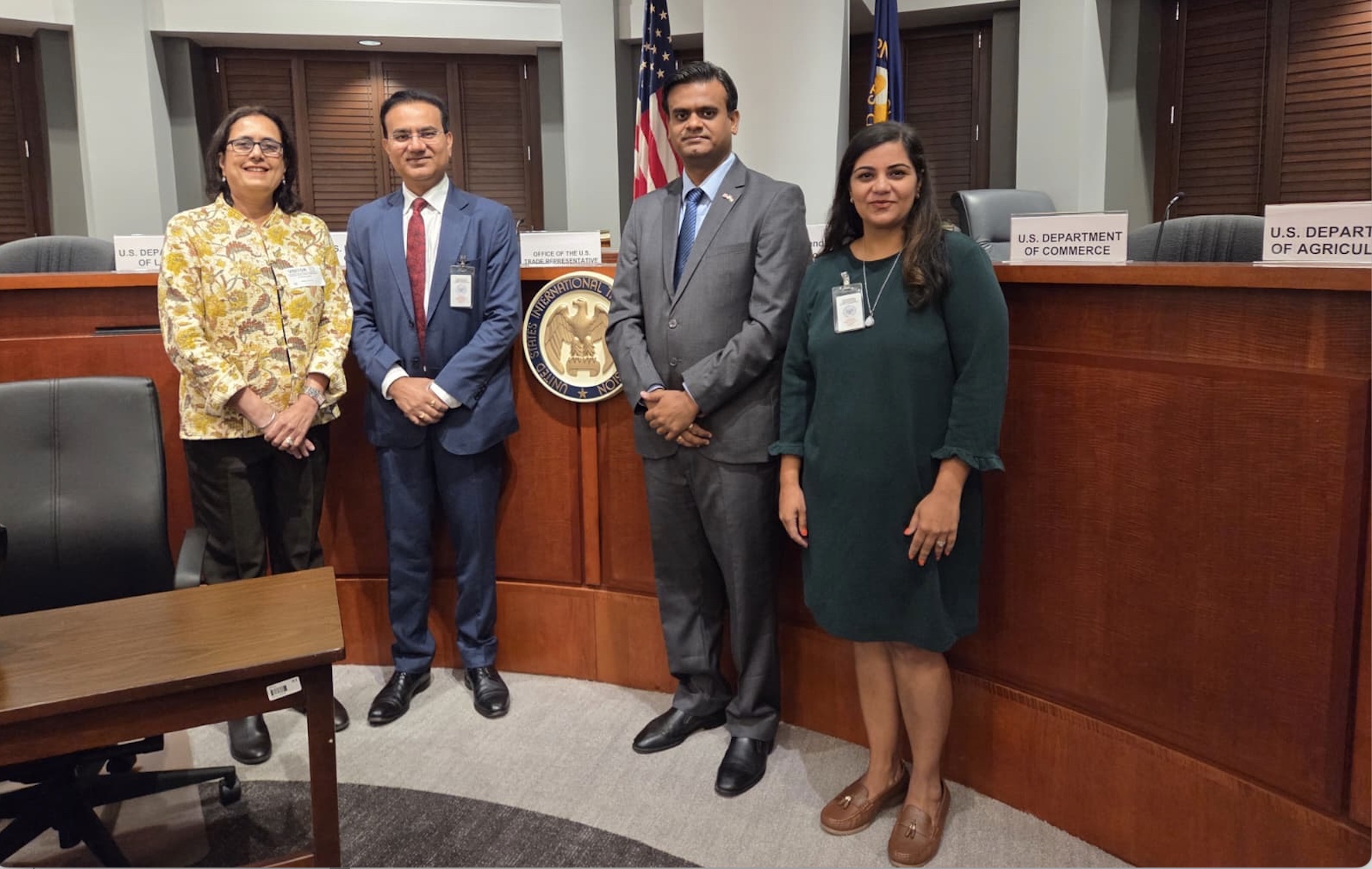
A hearing on “Section 301 – Failure to Impose and Effectively Enforce a Prohibition on the Importation of Goods Produced with Forced Labor” was held by the Office of the U.S. Trade Representative (USTR) from July 7 to 9, in Washington, D.C.
The hearing was part of the USTR’s investigation into whether India’s policies and practices related to forced labor warrant trade action under Section 301 of the Trade Act of 1974. Section 301 authorizes the U.S. government to investigate whether a foreign country’s policies or practices are unfair or restrict U.S. commerce.
India’s delegation included Dr. Brij Mohan of the Ministry of Commerce and Industry; Shreyans Gupta, First Secretary (Commerce) at the Embassy of India, representing the Agricultural and Processed Food Products Export Development Authority (APEDA); Poornima Shenoy of the Federation of Indian Chambers of Commerce and Industry (FICCI); and Shuchita Sonalika, Director and Head of North America at the Confederation of Indian Industry (CII).
Testifying on July 8, Sonalika said the hearing provided the Government of India and Indian industry an opportunity to present “factual and legal perspectives” on India’s framework for addressing forced labor and to respond to the findings cited in the USTR report.
Describing CII as India’s apex industry association, representing more than 10,500 direct members and over 365,000 enterprises through indirect membership across major sectors of the economy, Sonalika said the organization fully supports efforts to eliminate forced labor from global supply chains.
“Forced labor has no place in international trade, and responsible businesses have a shared interest in ensuring ethical sourcing and transparent supply chains,” she said, adding, “We would like to respectfully contest the findings of the USTR Report, and submit that the proposed 12.5% additional duty is not warranted, and that it would penalize a compliant industry without advancing the stated policy goal.”
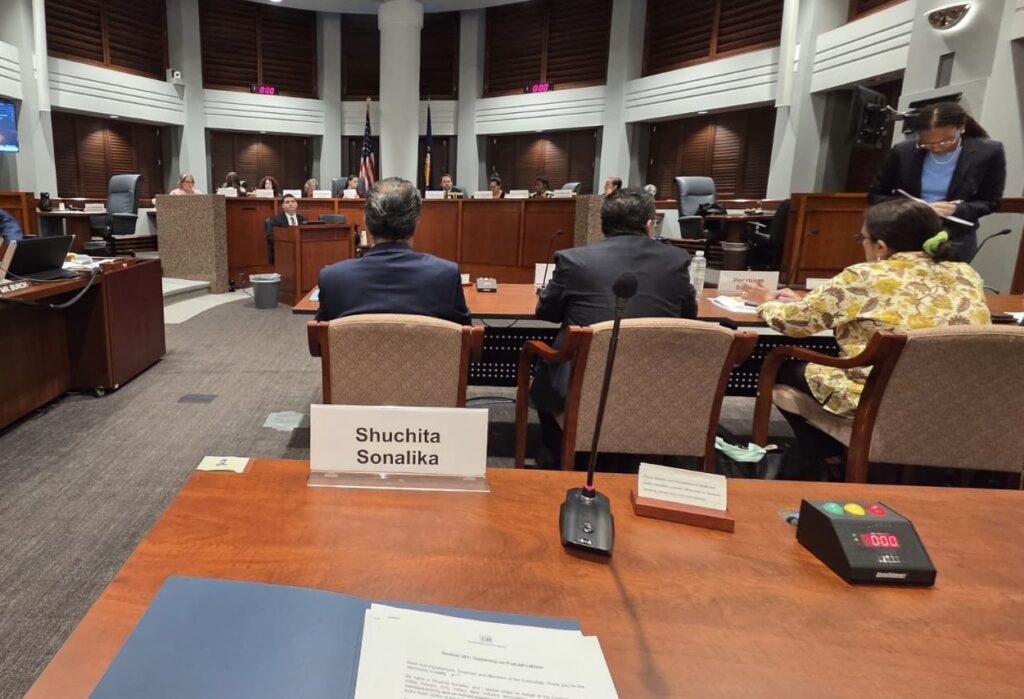
Sonalika said the hearing also allowed foreign governments, businesses, and industry organizations to present evidence and testimony supporting or opposing the proposed trade measures. On behalf of CII, she outlined three principal arguments.
First, she said India’s legal and institutional framework “explicitly prohibits” forced labor and includes enforcement mechanisms. Second, she said Indian industry is “firmly committed” to internationally recognized standards of responsible business conduct and supply chain compliance. Third, she argued that the evidence cited in the USTR report does not “substantiate the proposed tariff measures or demonstrate a basis for trade action under Section 301.”
Highlighting India’s legal framework, Sonalika said Article 23 of the Constitution of India “expressly” prohibits forced and bonded labor as a fundamental right enforceable through the courts. “This constitutional protection is reinforced by the Bonded Labor System (Abolition) Act, India’s modern Labor Codes, criminal penalties under the Bharatiya Nyaya Sanhita, and India’s ratification of the ILO’s core conventions on forced labor,” she said.
She also said Indian companies across multiple industries have incorporated “embedded prohibitions” on forced and bonded labor into their codes of conduct, supplier codes, and environmental, social, and governance frameworks, many of which align with the U.N. Global Compact principles and the International Labour Organization’s core labor standards.
“Our aluminum producers conduct formal Human Rights Due Diligence, with suppliers contractually bound to ensure work is entirely voluntary,” Sonalika said. “Our textile sector is among the most audited export industries subject to continuous audits by U.S. buyers and international certification bodies, with some mills adopting the YESS Standard for ethically sourced cotton.”
She further noted that none of India’s major sources of imported manufactured goods or production inputs appear on the list maintained under the U.S. Trafficking Victims Protection Reauthorization Act.
Sonalika also argued that the USTR report does not establish that India’s policy framework places a burden on U.S. commerce. She said the trade figures cited in the report’s appendix on cotton, rice, and tobacco do not demonstrate the connection between India’s regulatory framework and any alleged burden on U.S. commerce.
She added that India remains one of the fastest-growing destinations for U.S. investment and that bilateral trade has expanded significantly in both directions.
“We believe compliance-based cooperation, not punitive tariffs is the more effective path forward. Trade restrictions disrupt supply chains without addressing underlying issues; support for continued compliance does,” she said, adding that CII respectfully requests that no tariff or non-tariff measures be imposed on Indian industry and urged the USTR to continue engagement through the India-U.S. Trade Policy Forum.
Related posts:
 New U.S. Tariff Threat Casts Shadow Over India–U.S. Trade Talks
 India’s Revised Capital Gains Rules Could Raise Tax Outflows for NRIs
 Rep. Suhas Subramanyam Reintroduces Bipartisan ‘No Funds for Forced Labor Act’ Targeting IFI Projects Linked to Xinjiang
 Immigration Slowdown Begins Reshaping U.S. Economy