Join WhatsApp Channel

June 28 marks International Neonatal Screening Day, a day celebrating one of the remarkable yet often overlooked achievements in modern public health.
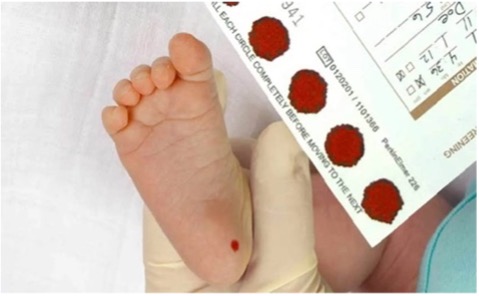
Every year, millions of babies around the developed world receive a simple test shortly after birth. It takes only a few drops of blood collected from a newborn’s heel. The procedure that lasts a minute or two, but the impact that last a lifetime.
This simple test is called Newborn Screening (NBS).
Many serious genetic, endocrine and metabolic disorders show no signs at birth. A baby may look completely healthy while silently developing a condition that could cause severe disability, developmental delay, or even death if left untreated. NBS helps identify these conditions before symptoms appear, allowing treatment to begin early—often preventing lifelong complications in babies.
A few drops of blood are collected on a special filter paper card, known as a dried blood spot (DBS) card, usually within the first two days of life can reveal conditions that would otherwise remain devastating for the child.
Since its introduction by Dr. Robert Guthrie in the 1960s, NBS has become one of the world’s major successful public health programs of the 21st century. Many countries now routinely screen newborns for numbers of conditions, giving children the chance to grow up healthy and reach their full potential.
However, in many parts of the world especially in low and lower-middle income countries, Nepal being one, newborns still do not have access to this life-saving program.
Every year more than half a million babies are born in Nepal. While the country has made significant progress in reducing child mortality, newborn health still remains a challenge. Many newborn deaths are linked to preventable causes such as infections, birth complications, and prematurity. Alongside these, there could be numerous rare but treatable genetic, endocrine and metabolic disorders that often goes undetected because there is lack of resources, infrastruture and nationwide newborn screening program in place in our context.
Imagine bringing home a seemingly healthy newborn, only to discover weeks or months later that the child has a condition that could have been treated from the very beginning. For many families around the world, newborns succumb their lives to treatable conditions. Newborn screening prevents this heartbreaking reality. Beyond saving lives, early diagnosis through NBS also protects families from emotional and psychological trauma, uncertainty, and the financial burden of long-term medical care.
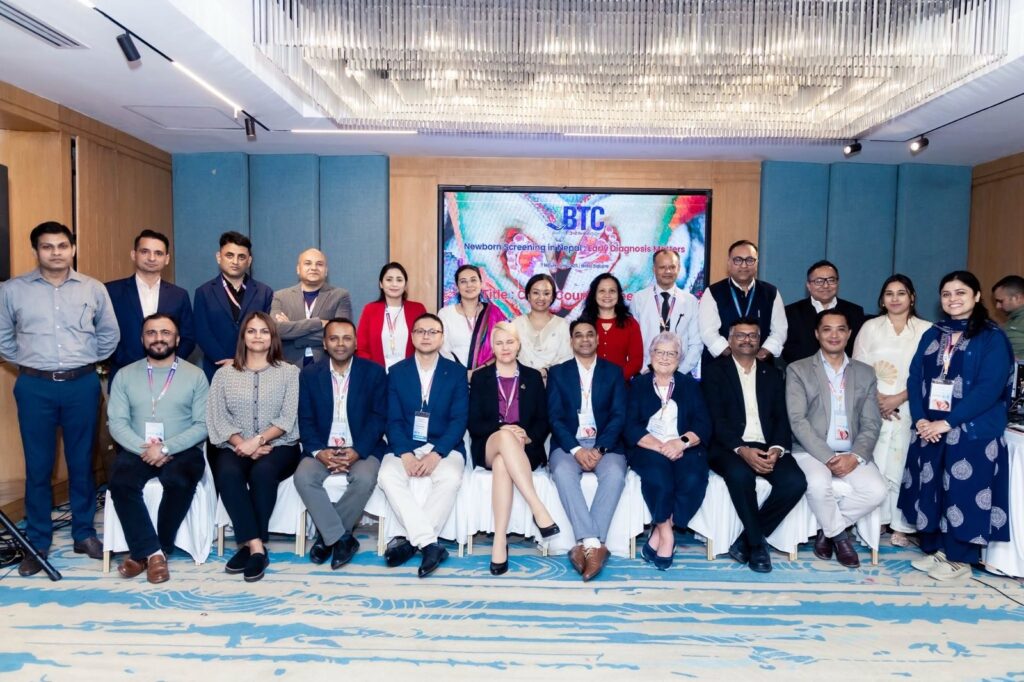
Recent pilot initiatives in Nepal have detected many treatable inherited conditions in newborns, and also demonstrated that NBS can be successfully carried out in our setting. Families have welcomed the opportunity to have their babies tested provided the cost of screening is free, and healthcare professionals have demonstrated that sample collection and follow-up are feasible.
Encouragingly, the government has initiated screening for selected disorders at the Paropakar Maternity and Women’s Hospital in Kathmandu, demonstrating a growing recognition of the significance of this program. Although this is a promising beginning, the journey ahead remains long, with substantial challenges to overcome before every newborn in Nepal can benefit from this life-saving program.
Nepal does not need to start big. Every successful national program started small. A practical approach could begin with a few high-volume hospitals screening for a small number of high-impact conditions. Nepal can start the program with screening for an easily treatable condition like congenital hypothyroidism, which is considered as one of the most preventable causes of intellectual disability in pediatric population. As laboratory capacity, trained personnel, and referral systems develop, the program could be gradually scaled-up to screen more treatable disorders, and expanded to reach newborns across the country.
As Nepal looks toward strengthening maternal and child health services, newborn screening deserves a place in that vision. The goal is simple: every baby born in Nepal, they too deserve a healthy start and a fair chance to life.
International Neonatal Screening Day is more than a date on the calendar. It is a reminder that scientific advances mean little unless they reach the children who need them most. It is also a reminder that behind every health statistic is a family hoping for a healthy future for their child. Because sometimes, the difference between disability and opportunity, between loss and hope, between life and death, comes down to something incredibly small but profoundly significant as a tiny drop of blood collected in the first days of life.
On this International Neonatal Screening Day, let us envision a future where every newborn deserves a healthy start and a fair chance to life, no matter where they are born.
Disclaimer: The opinions and views expressed in this article/column are those of the author(s) and do not necessarily reflect the views or positions of South Asian Herald.