 Join WhatsApp Channel

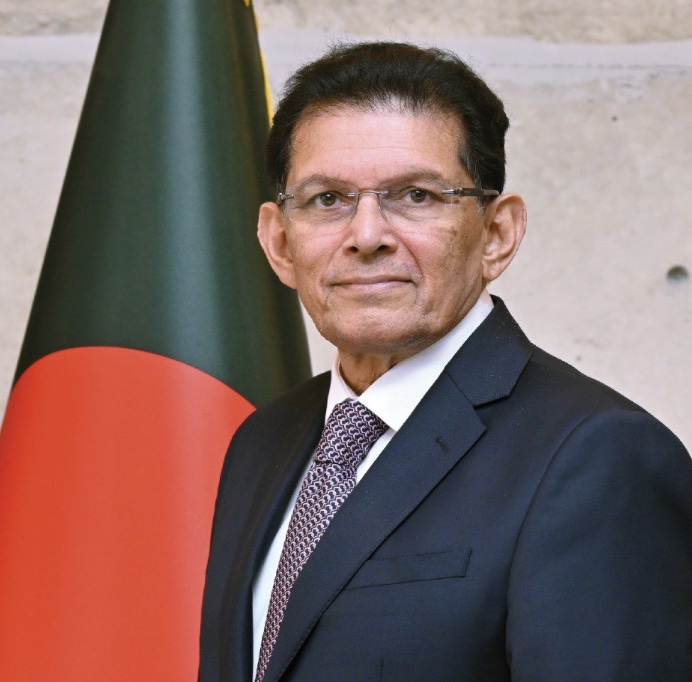
Bangladesh is still assessing China’s proposal to establish a trilateral economic corridor linking Bangladesh, Myanmar and China and has not yet taken a formal position on the initiative, Foreign Minister Khalilur Rahman said on June 27.
Speaking at a press briefing at the Ministry of Foreign Affairs in Dhaka, Khalilur said the government was carefully examining the proposal before making any decision. “The government is exploring China’s proposal on the corridor. We still have not taken any position,” he said.
“One of the most important issues for us is reducing transportation costs through the corridor,” he added.
Beijing formally proposed the development of the Bangladesh-Myanmar-China economic corridor during talks between Chinese President Xi Jinping and Prime Minister Tarique Rahman at the Great Hall of the People in the Chinese capital on June 26.
The proposed trilateral corridor is intended to strengthen regional connectivity, facilitate trade and improve multimodal transport links across the region.
Additionally, he said discussions regarding the proposed Teesta River Comprehensive Management and Restoration Project had advanced considerably and that a feasibility study would begin soon.
Khalilur further described the PM’s visit as a significant upgrade in Bangladesh-China relations, saying that the two countries had decided to elevate their partnership to the highest level, calling the move a major political milestone.
“China does not maintain the highest level of bilateral relationship with all countries. In Asia, only a handful of countries, including Thailand, Sri Lanka, Cambodia, Pakistan and Indonesia, enjoy such a partnership with China. Bangladesh has now joined that group,” he said.
According to the foreign minister, the move reflects increasing strategic importance of Beijing-Dhaka relations, and mutual trust between the two nations.
Responding to questions about the outcomes of Prime Minister Tarique Rahman’s visit to China, Khalilur stressed that the trip was aimed at setting the long-term direction of bilateral relations rather than securing immediate financial commitments.
“We did not go with a begging bowl. This visit was meant to set the direction of the relationship between the two countries. If this is aligned, the rest will follow in the future,” he said.
A total of 17 Memorandums of Understanding (MoUs) were signed during the visit. Thirteen were concluded following bilateral talks between PM Rahman and Chinese Premier Li Qiang, while an additional three were signed between the Bangladesh Investment Development Authority (BIDA) and Chinese business organizations. Another agreement was signed between the CCP and the BNP.
Related posts:
 Why Bangladesh’s Pivot Toward Türkiye Could Redefine South Asia’s Geopolitical Landscape
 Bangladesh’s Balancing Act: Delhi or Beijing?
 India’s Expanding Defense Ties with Europe and Bangladesh’s Strategic Balancing in South Asia
 Beyond a Courtesy Call: Paul Kapur’s Dhaka Visit and Bangladesh’s Rising Strategic Weight in South Asia
