Join WhatsApp Channel

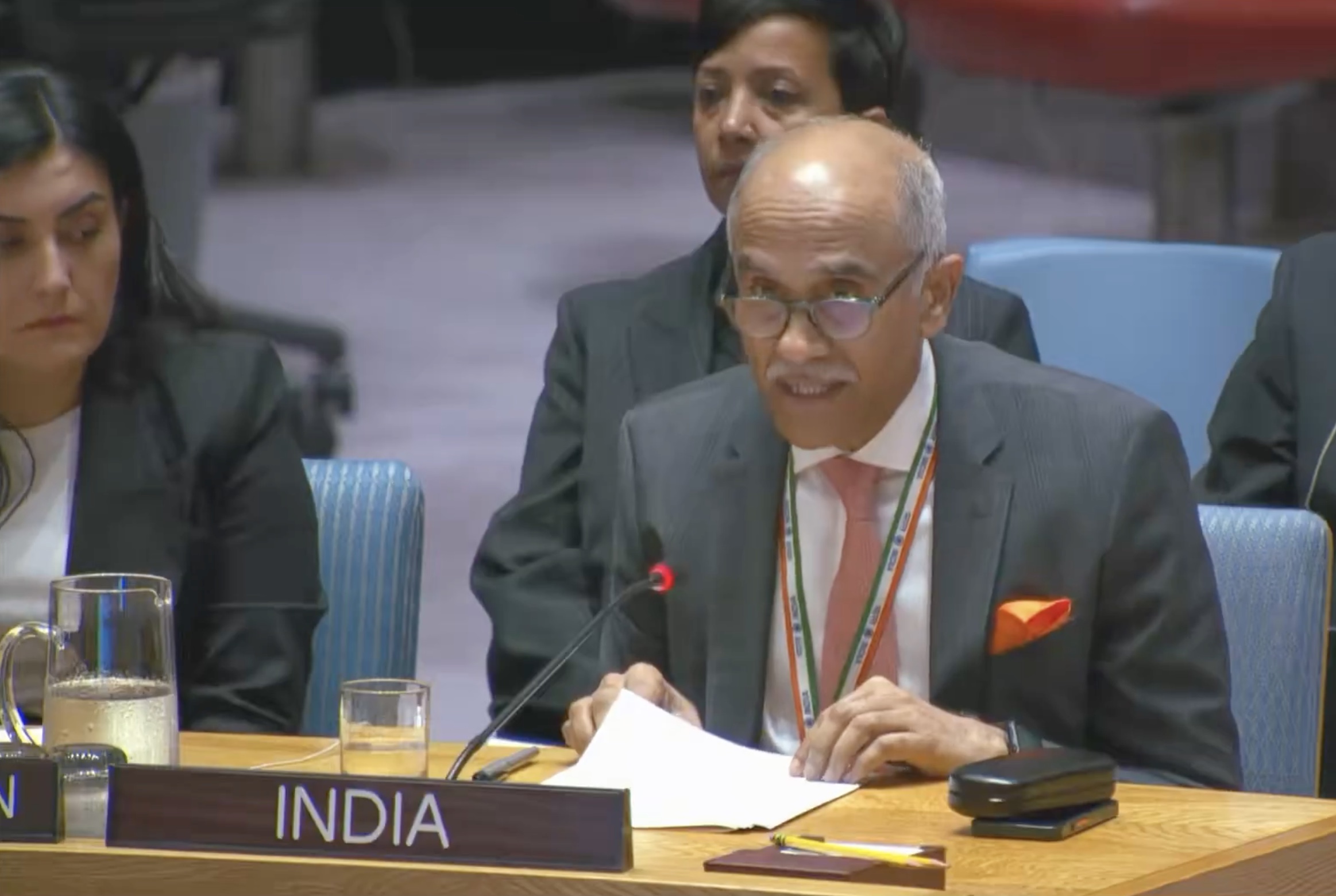
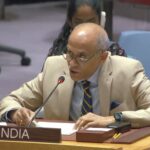
India’s Permanent Representative to the United Nations, Ambassador Harish Parvathaneni, reaffirmed India’s commitment to supporting peace, stability, and development in Afghanistan during a United Nations Security Council briefing on the situation in the country on June 8.
Addressing the Council during a briefing by the United Nations Assistance Mission in Afghanistan (UNAMA), Ambassador Harish emphasized India’s longstanding ties with Afghanistan and its continued support for the Afghan people through humanitarian assistance, development projects, healthcare initiatives, and educational programs.
“The proud people of Afghanistan have endured a lot in this century and the Government of India will continue to stand in favor of peace and stability so as to foster development and stability in this nation,” Ambassador Harish said. “Our participation in the Doha Working Group meetings and our strong bilateral development partnership stand testimony to this promise.”
Highlighting the historical relationship between the two countries, he noted that India and Afghanistan are “contiguous” neighbors whose civilizational ties span centuries.
“Our history of close cooperation continues to guide our modern-day relationship,” he said.
The Ambassador said India’s capacity-building and humanitarian assistance efforts have reached all 34 provinces of Afghanistan through more than 500 development partnership projects. These initiatives focus on healthcare, public infrastructure, and capacity building, while cooperation with UN agencies and organizations such as the Afghanistan Red Cross Society has been expanded to address the priorities of the Afghan people.
“We are focusing on healthcare, public infrastructure and capacity building. We are intensifying our cooperation with UN agencies as well as others such as Afghanistan Red Cross Society, in priority areas of the Afghan people,” he said, adding that visits by Afghan ministers to India last year helped facilitate planning and coordination to ensure assistance reaches intended beneficiaries.
The Ambassador expressed concern that while generations of Afghans have endured years of conflict, they are now facing neglect from the international community.
He outlined several recent humanitarian initiatives undertaken by India. In April 2026, India delivered three tons of specialized flood relief supplies, including kitchen sets, hygiene kits, tarpaulins, plastic sheets, and sleeping bags, to communities affected by flooding. India also recently supplied 33 tons of BCG and Tetanus and Diphtheria vaccines, along with related medical materials, to support Afghanistan’s child immunization program.
“It gives us great satisfaction to report that now Afghan children suffering from acute congenital heart diseases are being treated in India,” he said.
He further highlighted India’s support for maternal and child healthcare through the establishment of maternity clinics in the provinces of Paktika, Khost, and Paktia, as well as the modernization of the Indira Gandhi Institute of Child Health and the construction of oncology and trauma centers in Kabul.
The Ambassador thanked partner organizations, including UNICEF and the Afghan Red Cross Society, for their cooperation. He noted that plans are also underway to install advanced medical equipment across hospitals, construct a 30-bed hospital in Kabul, and establish a thalassemia center in Herat.
Reviewing India’s humanitarian assistance since August 2021, Ambassador Harish said the country has supplied more than 50,000 tons of wheat, 420 tons of medicines and vaccines, including anti-cancer drugs and treatments for vector-borne diseases, as well as 40,000 liters of pesticides.
Referring to the earthquakes that struck Afghanistan last year, he said India was among the first countries to respond, providing 60 tons of food assistance, 42 tons of relief materials, and 73 tons of essential medicines.
India has also partnered with the UN Office on Drugs and Crime to deliver 68 tons of medical supplies and 34 tons of social support materials for the rehabilitation of individuals struggling with drug addiction, he added.
Turning to education, the Ambassador said India’s scholarship and fellowship programs remain highly sought after among Afghan students. Since 2023, approximately 3,000 Afghan students, including 1,000 women, have benefited from these opportunities. He announced that an additional 1,000 scholarships will soon be offered for undergraduate and master’s degree programs.
India also continues to provide financial and logistical support to women-led Afghan self-help groups, he noted.
Recognizing the performance of Afghan cricketers in the recently concluded Indian Premier League, Ambassador Harish announced that India will host the Afghanistan national cricket team for a bilateral series.
“We hope that this will bring further happiness, encouragement and a sense of celebration to the people of Afghanistan. Sports have a rare power to lift a nation’s spirit; to provide shared moments of pride, hope and joy. We definitely believe that our Afghan brothers and sisters deserve this,” he said.
On economic ties, the Ambassador cited World Bank data showing that 43 percent of Afghanistan’s exports are destined for India, making it the country’s largest export destination. “By offering tariff free access for Afghan goods to Indian markets, we have operationalized a dedicated air freight corridor between India and Afghanistan,” he said.
He added that India continues to support Afghan traders through the issuance of long-term business visas at no cost.
Addressing the broader humanitarian situation, Ambassador Harish referred to the UN Secretary-General’s report, which highlighted worsening conditions due to the large-scale forced and involuntary return of Afghans under adverse circumstances.
He said the situation requires greater international attention and renewed efforts to address food security, healthcare, water access, housing, and other humanitarian challenges.
Noting that the Afghan economy is struggling to absorb large numbers of returnees, he said India is working with UN agencies and Afghan authorities to support housing, food, and other essential needs to facilitate reintegration.
“We also reiterate Secretary General’s call on Member States to uphold their international obligations in relation to protection, and ensure that returns are voluntary, safe, dignified and accompanied by sustained support for reintegration of returnees into communities,” he said.
The Ambassador also reaffirmed India’s support for UNAMA and its mandate, describing the mission as critical to advancing peace and stability in Afghanistan.
Responding to remarks made by Pakistan during the meeting that questioned UNAMA’s intentions and the accuracy of the UN Secretary-General’s report, Ambassador Harish said, “We would like to stress that support for multilateralism and the United Nations is not an ala carte menu.”
He further expressed concern over Pakistan’s military airstrikes in Afghanistan, stating that they have caused significant civilian suffering.
“We reiterate Secretary General’s deep concern at civilian casualties caused by airstrikes, cross-border firing and targeted killings as detailed in UNAMA reports,” he said. “We support the Secretary General’s call urging compliance with obligations under international law, including international humanitarian law and ensuring protection of civilians. We also support UNAMA’s earlier calls for investigation to ensure accountability, prevent recurrence and uphold victims’ rights.”
In his address, Ambassador Harish congratulated Colombia on assuming the Presidency of the Security Council and thanked Georgette Gagnon, Head of UNAMA and Deputy Special Representative of the Secretary-General for Afghanistan, along with other officials, for their briefings to the Council.
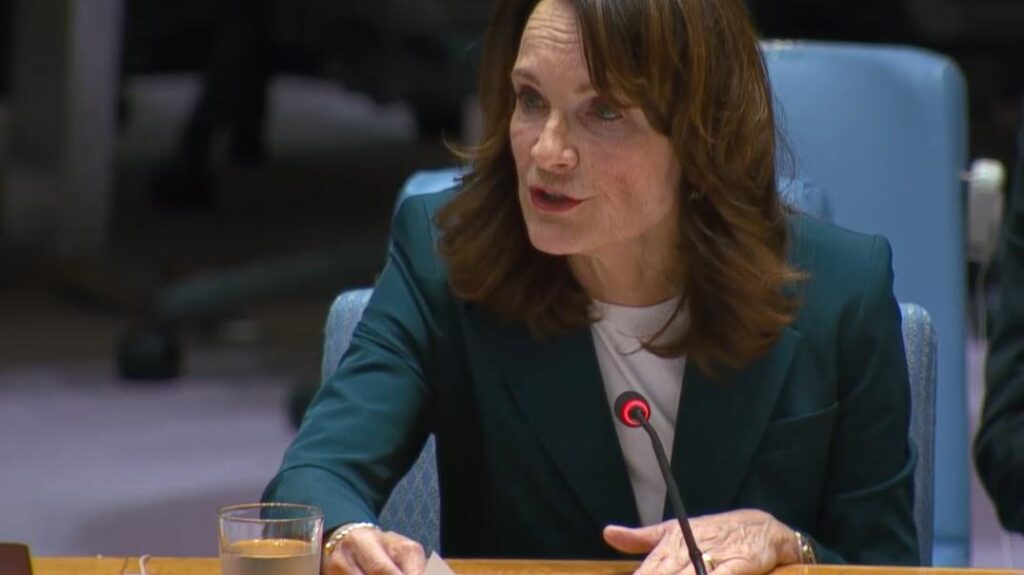
Gagnon said relations between Afghanistan and Pakistan continue to face challenges, citing ongoing “border closures, security incidents, and military signaling.” She noted that the consequences are already being felt, as highlighted in the Secretary-General’s report. According to Gagnon, border closures disrupt trade, limit market access, and drive up the cost of goods. “They also impede humanitarian operations and restrict access to vulnerable populations,” she emphasized.
She further stated that UNAMA remains committed to advancing the end state for Afghanistan endorsed by the Security Council. “Ongoing and constant dialogue is essential, together with principled and pragmatic engagement, even where progress towards the end state is incremental,” she said. “With strategic patience, coherent and coordinated diplomacy, and open dialogue, progress can be made in full support of the Afghan people.”
Related posts:
 India Calls for Peace, Stability, and Greater Humanitarian Support for Afghanistan at UN Security Council
 At UNSC, India Highlights Centuries-Old “Civilizational Relationship” with Afghanistan
 India Highlights Expanding Healthcare and Humanitarian Support for Afghanistan at UN Security Council Debate
 India Calls for ‘Zero Tolerance’ on Civilian Deaths at UNSC Debate