Join WhatsApp Channel

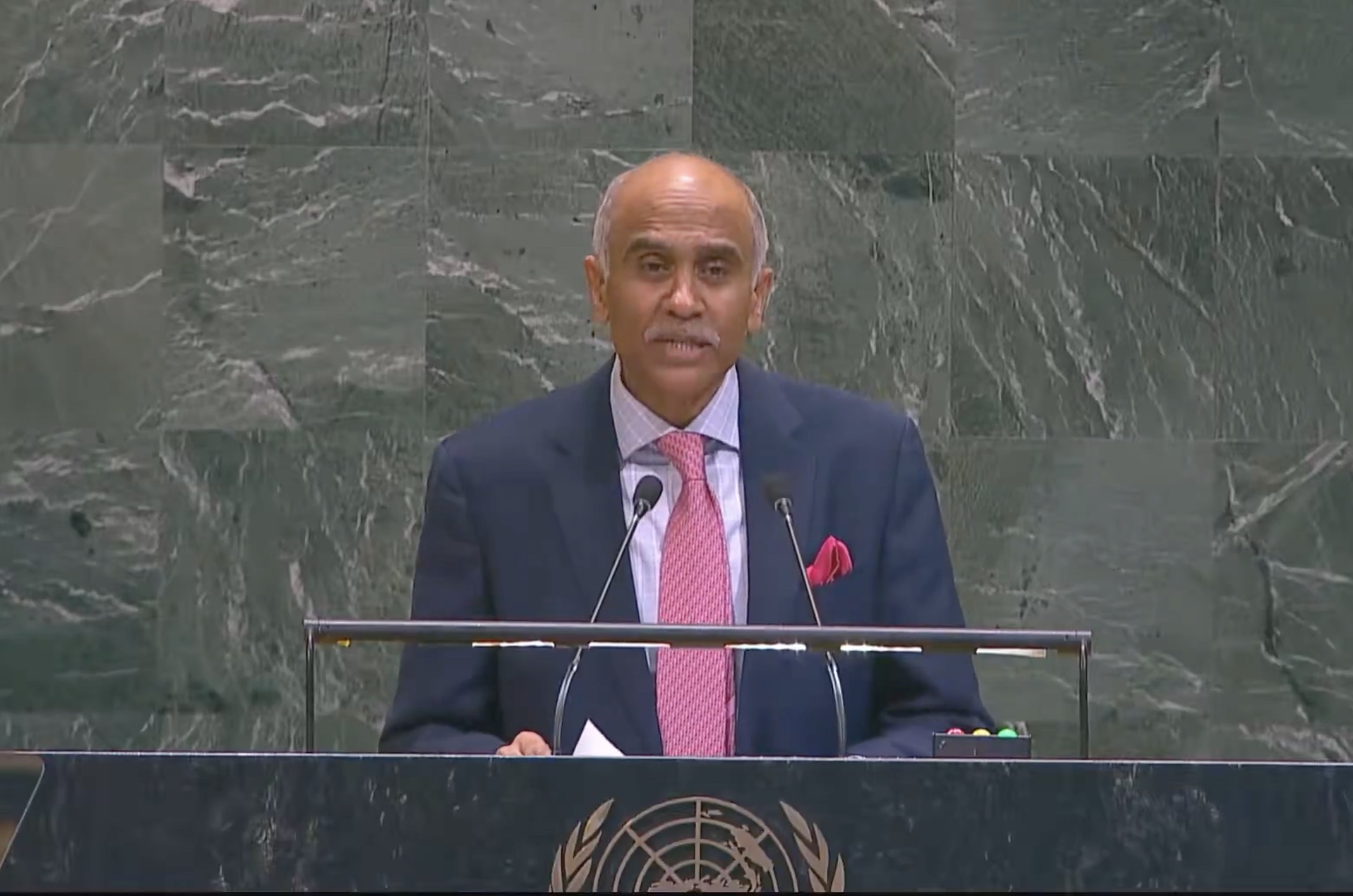
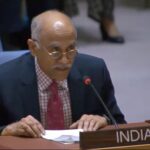
Permanent Representative of India to the United Nations, Ambassador Harish Parvathaneni, underscored the significance of the General Assembly’s consideration of the Security Council’s Annual Report, noting that the process holds particular “salience” because it is expressly mandated under the UN Charter.
Addressing the General Assembly plenary on the “Annual Report of the Security Council” on June 5, 2026, Ambassador Harish said the Security Council, as one of the principal organs of the United Nations, bears the “onerous responsibility” of maintaining international peace and security. In that context, he stressed that the discussion should not be viewed as a “purely procedural matter.”
Against this backdrop, the Ambassador highlighted three areas that, in India’s view, merit greater attention.
First, he said the presentation of the Security Council’s Annual Report to the General Assembly provides an important opportunity for the broader UN membership to assess and comment on the Council’s performance over the preceding year. He argued that the report should go beyond a factual summary and instead offer meaningful analysis, including an examination of shortcomings and areas where the Council could improve its effectiveness in carrying out its core mandate of maintaining international peace and security.
Second, Ambassador Harish noted that while the report follows an established format, its usefulness could be enhanced through the inclusion of additional substantive elements. Citing peacekeeping as an example, he said the current reporting structure does not adequately capture key aspects such as operational challenges, mandate reviews, and other practical considerations related to peacekeeping missions, despite their importance to the Security Council’s work.
Third, he observed that the General Assembly typically considers the Annual Report several months after the reporting period has ended. Given the rapidly evolving global landscape, he said, significant developments often occur during that interval. India therefore urged that the report be submitted earlier in the year so that discussions can take place in a more timely and relevant context.
The Ambassador also addressed remarks made by Pakistan, saying it had made an “unwarranted reference” to what he described as a matter “strictly internal” to India, namely the Union Territory of Jammu and Kashmir.
“Pakistan has decided not to spare this forum either from their characteristic misuse of august UN platforms for their divisive political interests,” he added. “Abuse of its presence on the Security Council by Pakistan, including through the circulation of several misinformed and misleading communications also testifies to this counter-productive approach. I would like to remind Pakistan that being a member of the UN Security Council is a huge responsibility. It is not a forum for peddling biased and false narratives.”
He further stated that he wished to make it “loud and clear,” that Jammu and Kashmir “was, is and will always remain an integral and inalienable part of India.” He said any claims to the contrary were “baseless, devoid of and inconsistent with historical facts,” adding that “empty rhetoric and hollow claims” by Pakistan would not alter that reality.
“In the interest of time of the wider UN membership, I would not delve any further into this,” he said.
Turning to the issue of Security Council reform, Ambassador Harish emphasized the need to make the body “fit-for-purpose” to address current and future global challenges.
He noted that the Council’s existing structure reflects the geopolitical realities of 1945 and argued that maintaining the status quo has hindered its effectiveness. He added that the limited reforms undertaken in the 1960s, which expanded only the non-permanent membership category, did not fundamentally alter the Council’s functioning.
“Expansion of both permanent and non-permanent categories is central to implementing real and meaningful reform,” he emphasized.
Ambassador Harish also congratulated the five countries elected to serve on the Security Council for the 2027-28 term: Austria, Kyrgyzstan, Portugal, Trinidad and Tobago, and Zimbabwe.
“We look forward to working with each of you,” he said, extending wishes on behalf of India.
Related posts:
 India Calls for Urgent UN Security Council Reform Amid Growing Global Fragmentation
 United Nations Has Lost Its “Foundational Focus,” Says India’s Envoy P Harish at UNSC Open Debate
 India Calls for Overhaul of UNSC Rules and Greater Transparency in Security Council Functioning
 At UN Security Council, India Affirms Jammu & Kashmir, Ladakh as Integral Parts of India, Criticizes Pakistan’s Conduct