Join WhatsApp Channel

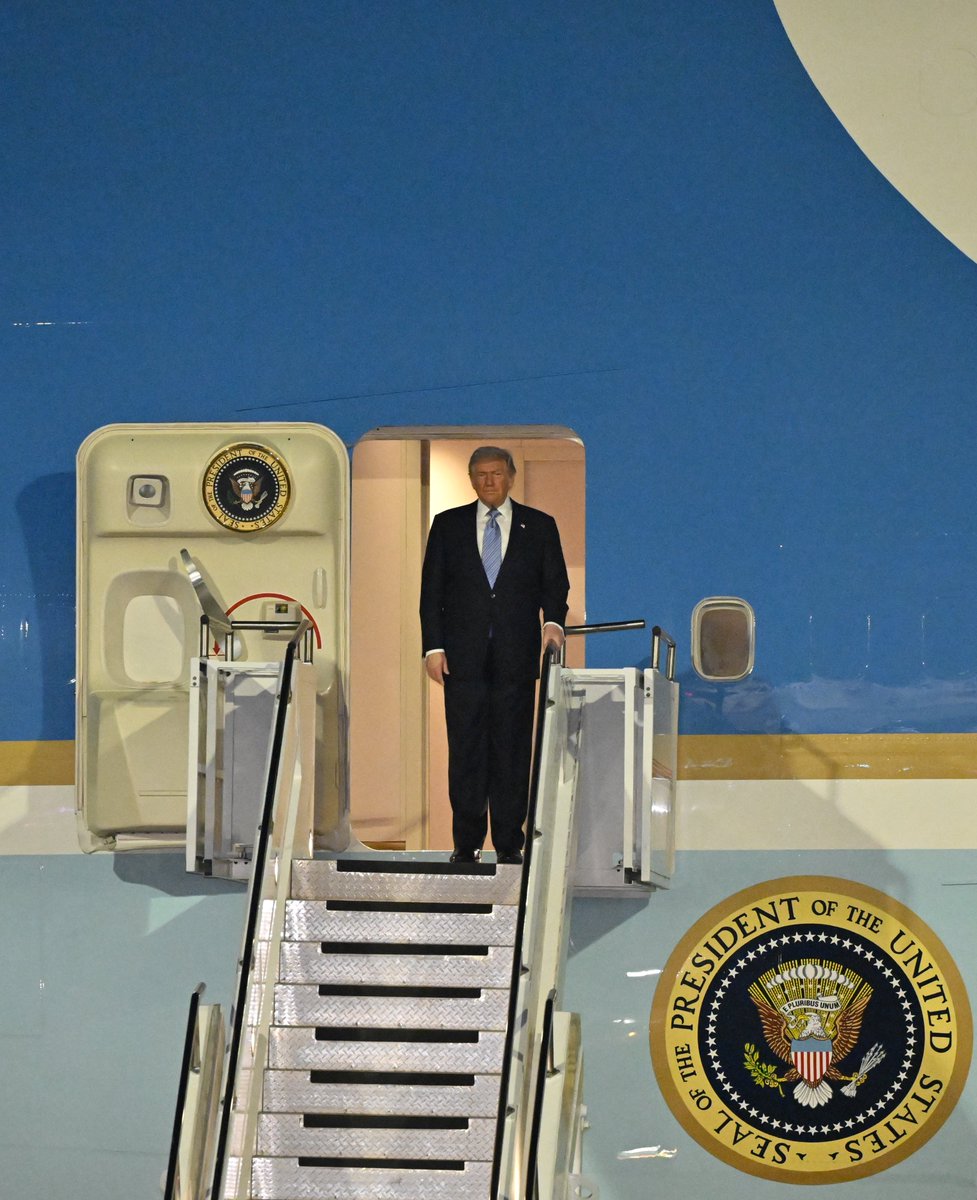
US President Donald Trump arrived in Beijing on May 13, for his first state visit to China since 2017, stepping into one of the most consequential diplomatic engagements at a time of deep global uncertainty marked by the Strait of Hormuz crisis, soaring energy prices, supply chain disruptions, and mounting geopolitical tensions triggered by West Asia war.
Trump was received at the airport by Chinese Vice President Han Zheng in a carefully choreographed welcome that underscored the significance Beijing attaches to the visit.
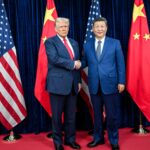
Over the next two days, Trump and Chinese President Xi Jinping are expected to hold extensive discussions covering trade, tariffs, Taiwan, technology restrictions, rare earth materials, regional security, and the rapidly escalating conflict in West Asia.
The leaders of the world’s two largest economies and military superpowers, whose decisions increasingly shape the global political and economic order are together to remove the elements which are straining their ties.
Together, the United States and China account for more than 40 percent of global economic output and dominate critical sectors ranging from manufacturing and finance to defense and advanced technology.
The outcome of the meeting has the potential to bring immediate consequences for markets, energy security, trade flows, and diplomatic alignments across the world.
Trump is scheduled to hold formal bilateral talks with Xi at the Great Hall of the People on Thursday, followed by a state banquet hosted by the Chinese leadership. Additional engagements, including a working lunch and cultural visit to the Temple of Heaven, are planned before the American delegation departs on Friday.
Earlier, trade tensions were expected to dominate the agenda when the visit was announced earlier this year, but it rapidly added more dimensions and elements to the summit, given the deteriorating security situation in West Asia, triggering new urgency and complexity to the discussions, exposing the vulnerability of economies across the world to escalating geopolitical instability.
The ongoing conflict involving Iran, triggered after joint US-Israeli strikes earlier this year, has pushed the region into prolonged instability. Tehran’s subsequent closure of the Strait of Hormuz, the strategic maritime passage through which nearly one-fifth of the world’s oil supply moves, has rattled international energy markets and revived fears of a global economic slowdown.
China remains particularly vulnerable to disruptions in the Gulf region, with nearly half of its crude oil imports transiting through Hormuz but has immense buffer stocks. Rising transportation costs and supply uncertainty have already placed pressure on Chinese manufacturing industries dependent on petrochemicals and industrial energy inputs.
Washington is expected to press Beijing to use its influence with Tehran to help de-escalate the crisis and secure the reopening of the waterway. Senior American officials have publicly called on China to play a more active diplomatic role in containing the conflict.
Beijing, however, has maintained a cautious approach. Chinese Foreign Minister Wang Yi has called for restraint and dialogue while simultaneously reiterating support for Iran’s sovereignty and opposing external military intervention. China, along with Pakistan, has also floated a five-point peace proposal aimed at promoting negotiations and preventing wider regional escalation.
Trade tensions between the two countries remain another central issue. The tariff confrontation that intensified during Trump’s earlier presidency severely strained bilateral economic ties, with American duties on Chinese imports at one point reaching 145 percent.
Although both sides later agreed to a temporary trade truce, economic mistrust has persisted. Despite tariff restrictions and supply chain diversification efforts by Washington, China’s trade surplus reached record levels last year, while the United States continued to remain one of Beijing’s largest export destinations.
The dispute has also expanded into strategic industries and critical resources. China has tightened controls over exports of rare earth materials, minerals essential for semiconductors, electric vehicles, advanced electronics, renewable energy systems, and military hardware. Beijing’s dominance in rare earth processing has emerged as a powerful geopolitical tool amid growing technological competition with the West.
American officials are expected to raise concerns over supply restrictions and broader market access issues during the summit. Discussions may also include agriculture exports, aviation deals, investment mechanisms, and industrial cooperation frameworks.
Trump has been accompanied by a high-profile business delegation that includes senior executives from major American corporations in technology, manufacturing, and aerospace sectors, highlighting the commercial importance attached to the visit despite political tensions.
Taiwan, as expected continue to remain one of the most sensitive and contentious subjects during the summit.
Relations between Beijing and Washington have sharply deteriorated following continued US arms sales and strategic engagement with Taipei. The Trump administration’s approval of a massive arms package for Taiwan drew strong condemnation from China, which views the self-governed island as an inseparable part of its territory.
Chinese officials reiterated ahead of the summit that Taiwan remains a “core interest” and warned against any external interference. Beijing has simultaneously increased military pressure around the island through frequent naval and air force exercises.
China has also repeatedly outlined what it describes as four non-negotiable “red lines” in relations with the United States, the Taiwan issue, democracy and human rights concerns, China’s political system, and its right to economic development.
Beyond the immediate agenda, strategic competition over artificial intelligence, semiconductor technology, military influence in the Indo-Pacific, and the future structure of the global order is expected to shape the tone of every discussion between the two leaders.
As Trump and Xi prepare for talks, governments, investors, and markets across the world will closely watch whether the summit produces cooperation, confrontation, or merely a temporary pause in tensions between the world’s two dominant powers.