Join WhatsApp Channel

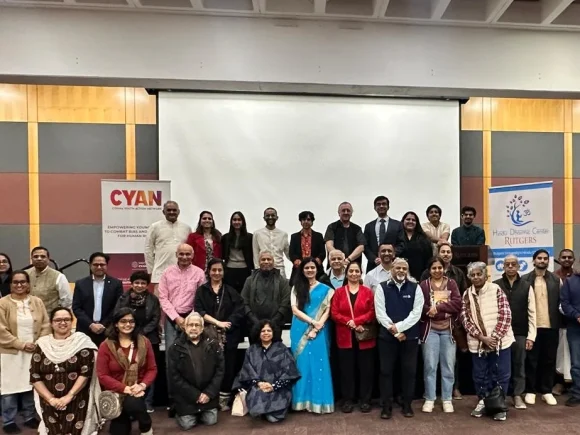
A seminar titled “Demystifying Hinduism: Clarity Through Scholarship,” organized at Rutgers University by the Coalition of Hindus of North America and its youth wing CoHNA Youth Action Network, in collaboration with the Rutgers Hindu Students Council and the university’s Hindu Chaplaincy, brought together more than 75 students, scholars, educators, and community members.
Held on April 30, 2026, the seminar featured academics whose work engages both lived traditions and scholarly inquiry, positioning the event among notable campus-based discussions on Hinduism.
“The invigorating presentations, the pointed questions, the energetic panel discussion, the food, and the enthusiasm of my fellow students, all made for a memorable day,” said Dhyey Ray, president of CYAN Rutgers and a senior in Biomedical Engineering. “I came away energized by the passion of the panelists and attendees, and with so much clarity on how to understand my faith and use it to guide important questions in life as I get ready to graduate.”
According to a statement from CoHNA, Lavanya Vemsani, professor of Indian History and Religions at Shawnee State University, examined representations of prominent Hindu women in academic texts, media, and popular culture. Her presentation discussed figures such as Savitri, Urvashi, Ganga, Satyavati, Kunti, and Draupadi, highlighting concerns about how these narratives have been interpreted.
“A common theme that Prof. Vemsani noted was the sexual objectification of these women and the use of reductive labels to diminish the individual potency of their stories. These distortions have a wide-ranging impact, especially on young Hindus and their understanding of their own history,” the statement noted.
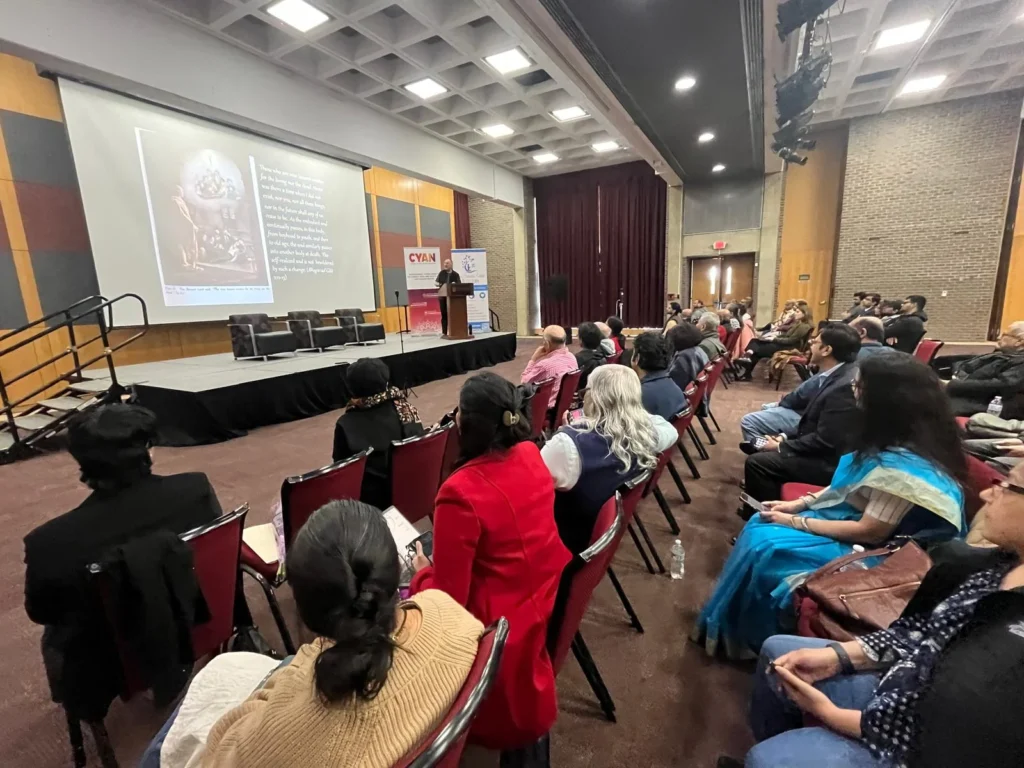
Jeffery D. Long, professor of Indian Philosophies at Elizabethtown College, presented on the historical influence of Dharmic traditions in the West. Referencing figures such as George Harrison, Julia Roberts, and J.D. Salinger, as well as cultural works including MAS*H and Star Wars, he traced how Hindu thought has intersected with Western cultural and intellectual life.
The seminar also included a session by Neil Desai, a high school history teacher, addressing how “Hinduphobia has manifested” in academic settings and its continued presence within educational institutions.
The event concluded with a student-moderated panel discussion that covered topics ranging from historical research and textual representation to issues affecting Hindu students, including caste, atheism, pluralism, misogyny, and menstruation.
“For over a year, the CYAN and HSC teams on campus have been working hard to create an authentic space where scholars and students could discuss and debate the Hindu faith,” said Shyam Kumar, a junior majoring in Political Science at Rutgers and vice president of CYAN. “I was thrilled to see the results at Demystifying Hinduism, where we created a unique and refreshing counterpoint to the discourse we normally hear about Hinduism.”
The statement noted that at a time when Hinduism is often characterized in simplified or limited terms within academic discourse, the seminar aimed to provide a more comprehensive and research-based engagement with Hindu philosophy, history, and cultural presence.
“The CYAN event at Rutgers was a direct response to what our youth members have asked for. Amid a growing pattern of academic Hinduphobia, it has become the norm to see non-Hindus framing the conversation about Hinduism, which results in the systematic misrepresentation, trivialization, or hostile framing of Hindu traditions within institutional scholarly settings,” said Hitesh Trivedi, Hindu Chaplain at Rutgers.
According to the statement, the seminar also reflected an effort by the Hindu community to engage more actively in academic discourse and representation. CoHNA and CYAN emphasized that fostering rigorous, accessible, and open scholarly dialogue is key to addressing concerns related to the study of Hinduism in academic institutions.
Related posts:
 CoHNA Youth Action Network Condemns Assault on Sikh Student at San Jose State University
 CoHNA Hosts 4th Annual Hindu Day of Advocacy at U.S. Capitol, Highlights Rising Hindu American Voice
 UC Berkeley Becomes First U.S. University to Recognize Hindu Heritage Month
 US Diplomat Participates in a Seminar Bridging Indian and Western Feminism in Chennai