Join WhatsApp Channel

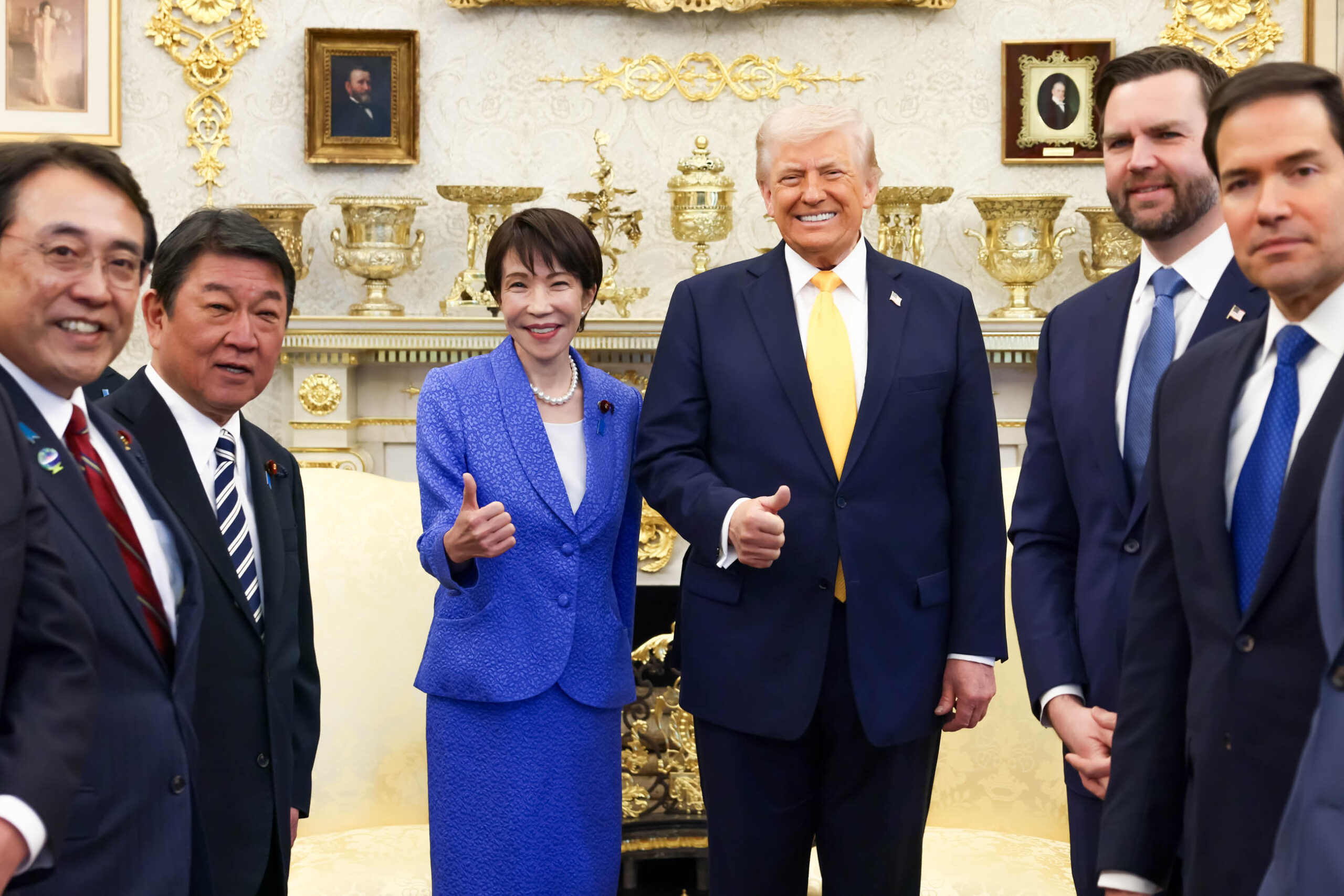
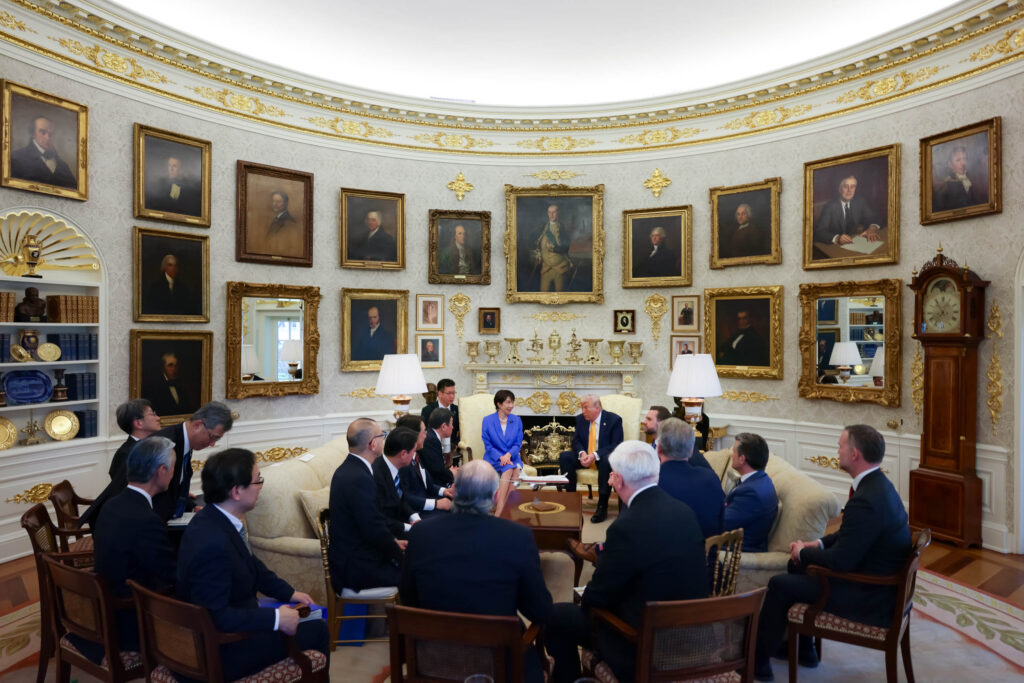
For a person who has shown herself quite adept in taking political risks, Prime Minister Sanae Takaichi gambled on another one by landing in Washington DC for her meeting with President Donald Trump. When Tokyo and Washington were putting together the summit agenda and logistics, there was nothing like a conflict in the Middle East that was expanding in scope by the day or the almost daily rants from Washington of allies not doing enough.
Rather if Takaichi was staying with her Washington trip it was to keep Japan and the Asia Pacific priorities active prior to President Trump’s planned summit with President Xi Jinping of China that was to take place towards the end of March. This has now been pushed back by a month by the White House with a war going on in a region that Beijing, at least officially, is not too comfortable with. The Indo Pacific, the South China Seas, Japan’s issues in East Asia and Taiwan were supposed to have been high on Prime Minister Takaichi’s mind.
The difficult political environment was deftly handled by the new Japanese Prime Minister who appeared to fob off media questions stressing that she had “clearly conveyed Japan’s position” on the legal difficulties of sending Maritime Self Defense Force ships to the Strait of Hormuz at the same time leaving the door open for Tokyo’s role in any diplomatic solution. Prime Minister Takaichi could not have asked for more when President Trump lavished praise on Tokyo for “stepping up to the plate,” a statement devoid of details.
“I believe that, based on statements that were given to us yesterday, the day before yesterday, having to do with Japan, they are really stepping up to the plate, yes — unlike NATO,” Trump remarked. And Prime Minister Takaichi was quite effusive in her praise of President Trump as well.
Given the current situation in the Middle East and the global security environment, we are facing extremely challenging circumstances. The global economy is also being significantly impacted,” she said. “I believe that you, Donald, are the only one who can bring peace and prosperity to the entire world.”
Prime Minister Takaichi may have left Washington in a thinking that she had played her cards well under the circumstances but the bottom line remains the same: of her country critically dependent on the Strait of Hormuz with about 75 percent of Japan’s oil imports passing through this narrow waterway even if the country may have a stockpile that could last some 250 days to wade through difficult times. It is pointed out that more than 1.5 million barrels of crude oil gets through the Hormuz, much of it from Saudi Arabia, Kuwait, Qatar and the United Arab Emirates.
The United States understands that Tokyo is limited in its ability to respond militarily to any situation in the Straits of Hormuz primarily because the country’s constitution prohibits any offensive role for its defense forces and hence limited to intelligence gathering. If Article 9 of the Constitution proscribes use of force or overseas combat missions for the Self Defense Forces, the 2015 Security Laws allows for limited collective self-defense but with a required proving an existential threat, an obvious ruling out of entry into active conflict zones.
It has been pointed out that Tokyo has operated only outside the tense waters of the Persian Gulf like in the Gulf of Oman and the Arabian Sea. There has been the suggestion from Washington that since Japan has some of the world’s most advanced minesweeping and mine detection capabilities, those could be put to use in the Hormuz. And Tokyo has indicated that it could be involved in minesweeping and escort operations but only after the cessation of hostilities but within the confines of its laws.
In the past Japan has been criticized for not getting involved in international issues even when its interests are impacted and instead resorting to Checkbook Diplomacy as it did during the First Gulf War of 1991 when it contributed a hefty US$ 16 billions as a part of a Coalition of the Willing, an amount that went barely noticed in all that hoopla that surrounded military hardware contributions.
About the only unexpected sideshow in the Takaichi-Trump meeting was a reference to Pearl Harbour when the American leader was asked to comment on why allies were kept in the dark to the February 28 operations against Iran. “One thing you don’t want to signal too much, you know, when we go in, we went in very hard. We didn’t tell anybody because we wanted it to be a surprise. Who knows better about surprise than Japan? Why didn’t you tell me about Pearl Harbour?” President Trump replied.
To this day the Japanese bombing of Pearl Harbour on December 7, 1941, evokes strong feelings in both sides of the Pacific. The air attack resulted in the loss of some 2500 American lives; led to the formal entry of the United States into the Second World War which led to the Tokyo fire bombings serving as a prelude to the dropping of atomic bombs on Hiroshima and Nagasaki that claimed an estimated 300,000 lives.
Commissions may have brushed aside a conspiracy theory that the United States knew that Pearl Harbour was going to happen but deliberately kept quiet to find an excuse to enter the war, but history buffs never fail a chance to debate.
Getting away relatively unscathed from a summit does not mean that Prime Minister Takaichi is off the hook permanently. As long as the Straits of Hormuz is in the news, America’s allies including Japan will be the focus of attention. And in the absence of any details of what transpired in closed door meetings or in a Joint Communique, Prime Minister Takaichi will have to answer her domestic critics and opposition parties who have a disdain for tearing down the existing constitution or moving in a hawkish path in international relations.
Disclaimer: The opinions and views expressed in this article/column are those of the author(s) and do not necessarily reflect the views or positions of South Asian Herald.