Join WhatsApp Channel

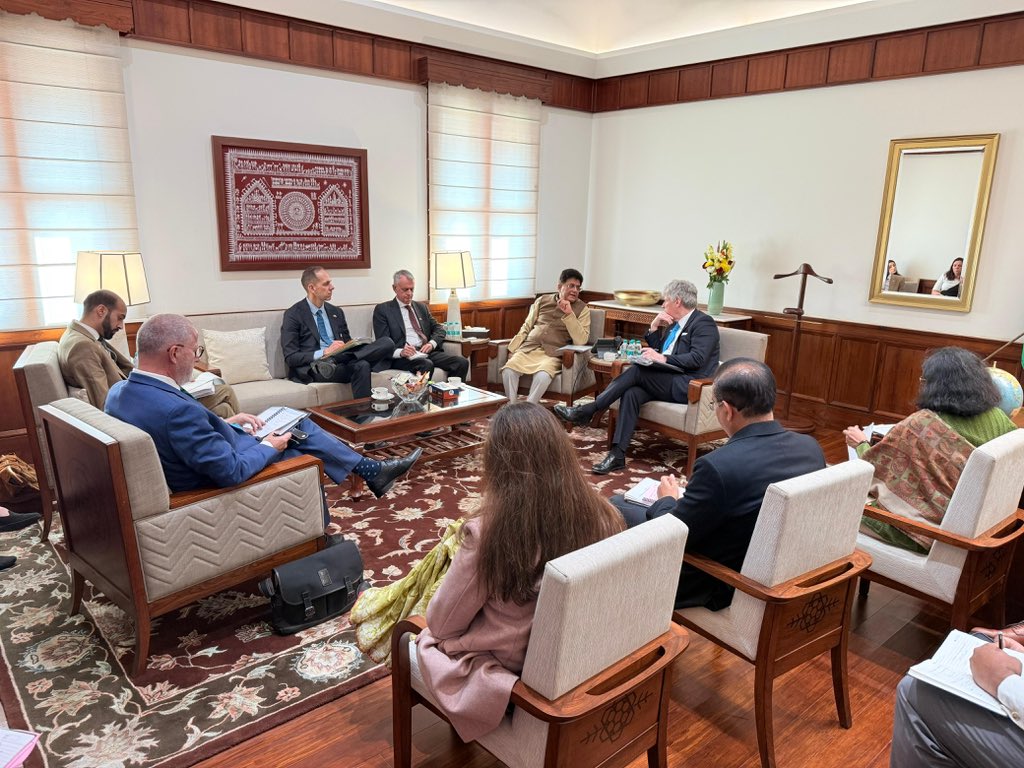
Canada is moving to deepen its economic and energy ties with India, citing growing opportunities in energy, critical minerals, and clean technology cooperation, according to Canadian Minister of Energy and Natural Resources Tim Hodgson.
“As Prime Minister Carney says, we are in the midst of a rupture, not a transition. That means we must move quickly to deepen and enhance partnerships in every corner of the globe and use the natural advantages and resources we have to build Canada Strong,” Hodgson said at the conclusion of his visit to India.
“As one of the largest and fastest-growing economies in the world, India is looking to us as a potential supplier of energy and minerals. I am pleased to work with India to build partnerships that advance bilateral trade and investment, global energy security, and the clean energy transition and generate revenue in Canada that we can use to pay for the public services we rely on. This is what being an energy superpower looks like,” he added.
Hodgson attended India Energy Week and met with leaders of major Indian energy companies as well as his Indian counterparts to explore ways to expand bilateral trade and investment. He is the third Canadian minister to visit India in recent months, following visits by Anita Indira Anand and Maninder Singh Sidhu. Canadian Prime Minister Mark Carney is also expected to travel to India in the coming months.
As Canada works to diversify trade and attract new investment to strengthen its economy, Hodgson said the government is placing emphasis on expanding engagement beyond traditional markets. “We are prioritizing broad engagement to maximize opportunities for our industries. That includes building new and enhanced relationships with Asian markets seeking long-term, reliable collaboration in energy and critical minerals,” he said.
Highlighting India’s growing energy needs, Hodgson noted, “As one of the world’s largest economies, India is expected to have the largest growth in global energy demand from now through to 2030—offering a significant opportunity for Canada to supply Indian partners and customers with world-class, low-cost, low-carbon Canadian resources.”
During India Energy Week, Hodgson relaunched the Canada-India Ministerial Energy Dialogue alongside Hardeep Singh Puri, India’s Minister of Petroleum and Natural Gas, and endorsed the Canada-India Ministerial Energy Dialogue Action Plan. Canadian officials described the move as a foundational step toward building a long-term, collaborative bilateral energy relationship. The dialogue is expected to serve as a platform for sustained discussions on joint energy projects, potential long-term supply agreements, joint ventures, business-to-business partnerships, and targeted investments.
Following the energy meetings, Hodgson also met India’s Minister of Mines, Piyush Goyal, in New Delhi. The two ministers agreed to formalize cooperation on critical minerals in the coming weeks. This includes plans for a high-level Indian government and industry delegation to attend the Prospectors & Developers Association of Canada Convention in Toronto in March 2026.
Officials noted strong alignment between India’s energy and industrial ambitions and Canada’s efforts to restart major energy and natural resource projects, including liquefied natural gas development and investments under the G7 Critical Minerals Production Alliance. Strengthening ties with India is seen as central to the Canadian government’s objective of doubling exports to non-U.S. markets by 2035.
Canada is positioning itself as a global supplier of conventional and clean energy as well as critical minerals, leveraging its natural resource base to build partnerships with major economies. Officials said Canada’s participation in India Energy Week reflects growing momentum in bilateral engagement and a shared interest in strengthening supply chains and promoting strategic stability for the benefit of both countries.
Related posts:
 India and Canada Renew Ministerial Energy Dialogue, Reaffirm Energy Security and Clean Energy Cooperation
 India, Canada Move to Fast-Track Trade Pact as New Delhi Pushes Strategic Collaboration in Critical Minerals, Clean Energy
 OFIC Urges Canada to Fast-Track CEPA Talks as British Columbia Trade Mission Arrives in India
 India–Canada Uranium Deal, Trade Talks May Advance During Prime Minister Carney’s Expected March Visit