The United Nations Human Rights Office has reiterated its concerns over what it describes as “severe” human rights violations against the Uyghur population in Xinjiang, also known as East Turkestan, despite ongoing international scrutiny of the region.
In an interview, UN Human Rights Office spokesperson Liz Throssell said the Office continues to monitor developments in Xinjiang and stands by the findings of its 2022 assessment, which documented widespread violations that may constitute crimes against humanity. She noted that the UN’s most recent visit to the region took place in 2022 and that concerns remain regarding limited access and the risk of reprisals against individuals who engage with the organization.
Throssell said several laws and policies identified as problematic remain in effect, while reports of arbitrary detention and large-scale incarceration continue to emerge. She added that many families still lack information about the fate and whereabouts of detained relatives.
According to Throssell, the last official visit to Xinjiang was conducted in 2022 by former UN High Commissioner for Human Rights Michelle Bachelet.
Advertisement
She said the UN Human Rights Office continues to raise individual cases with Chinese authorities, urging the release of those arbitrarily detained and seeking clarification regarding missing persons. The Office is also advocating for the implementation of recommendations outlined in its 2022 report, as well as those issued by other UN human rights mechanisms.
Throssell emphasized the importance of ensuring accountability and providing effective remedies and justice for victims of documented human rights violations.
The UN’s continued engagement on the issue comes amid sustained international concern and growing pressure on China over its treatment of Uyghurs and other ethnic minority communities in the region.
The Uyghurs are a Turkic-speaking Muslim ethnic group primarily residing in the Xinjiang Uyghur Autonomous Region in northwestern China. With an estimated population of around 12 million, they maintain a distinct cultural, linguistic, and religious identity closely linked to Central Asia.
In recent years, Xinjiang has drawn significant international attention amid allegations of mass detention, forced assimilation, cultural suppression, and widespread human rights violations. The United Nations and several human rights organizations have reported evidence of arbitrary detention and systemic abuses, with some assessments suggesting the situation may amount to crimes against humanity.
The Chinese government rejects these allegations, stating that its policies are aimed at counterterrorism, de-radicalization, and maintaining social stability.
Arslan Hidayat is an Australian-born Uyghur activist whose roots trace back to East Turkestan – a region internationally recognized as the Xinjiang Uyghur Autonomous Region in northwestern China. He argues strongly over terminology, saying: “Xinjiang means ‘new territory’ and is a colonial label used by the Chinese regime.” He adds that Uyghurs prefer the historical name East Turkestan.
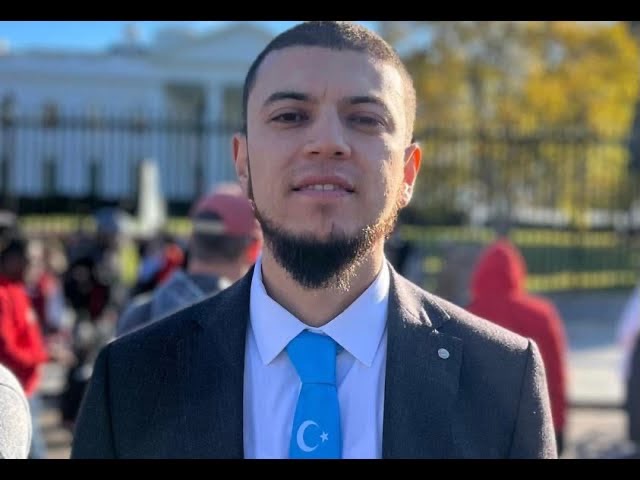
He refers to the East Turkestan Islamic Republic established in 1933 in Kashgar and the Second East Turkestan Republic formed in 1944 in the Ili region, both of which were later dissolved and incorporated into modern-day Xinjiang under Chinese control. Many Uyghur activists describe the region as “Chinese-occupied East Turkestan,” reflecting their belief in historical sovereignty. Hidayat also alleges that China is carrying out what he describes as genocidal policies and digital authoritarianism, saying: “The regime is literally exterminating the Uyghur people.”
Hidayat says he was born and raised in Sydney, Australia. His parents migrated from East Turkestan in the early 1980s, and he spent parts of his childhood visiting the region with his family.
His activism became deeply personal in 2018 after his first father-in-law — a well-known Uyghur comedian often described as the “Jim Carrey” of the Uyghur community — was taken into a detention camp. Although he was released after ten months, Hidayat says: “I never heard from him again.” He adds that members of his second wife’s family were also detained, including both parents and two brothers.
He says his activism began after the 2009 Urumqi violence but was initially limited due to restricted communication and political pressure. It intensified during the mass detention campaigns in the following years.
Hidayat later co-founded Talk East Turkestan, an English-language podcast focused on Uyghur issues. He has interviewed figures such as Adrian Zenz, Sean Roberts, and Imam Omar Suleiman.
In 2021, he moved to the United States and joined the Campaign for Uyghurs in Washington D.C. In early 2024, he joined Justice For All, where he led the Save Uyghur campaign.
He describes the situation in Xinjiang as deeply systemic. During a 2014 visit, he says he witnessed forced relocations tied to residence permit issues. He refers to China’s Hukou system, which restricts where people can live, work, and access services.
He describes widespread surveillance, including monitoring of electricity usage, CCTV facial recognition, and household movement patterns. According to him, even small actions, such as using a VPN, growing a beard, wearing a hijab, having relatives abroad, or receiving religious messages can lead to arrest.
He says detentions have affected not only political or religious figures but also ordinary civilians, including teachers, athletes, scholars, and even Communist Party members. Many were labeled “extremists” without evidence and sent to so-called “re-education centers,” which human rights groups describe as detention and indoctrination facilities.
Hidayat says communication with the outside world is extremely limited. Access to platforms such as Google, YouTube, and Instagram is blocked, and online accounts are tied to personal identification systems.
He argues that the international community often underestimates the situation, viewing Xinjiang as a “black box.” According to him, this silence enables continued repression.
He calls for stronger international action, saying: “What we need is consistent international pressure – legal accountability, accurate reporting, and advocacy.”
He also stresses the emotional weight of the issue, saying: “We are a people with a rich culture and deep history. We simply want to live in dignity and freedom.”
He adds: “It may sound like a miracle, but we still have hope.”