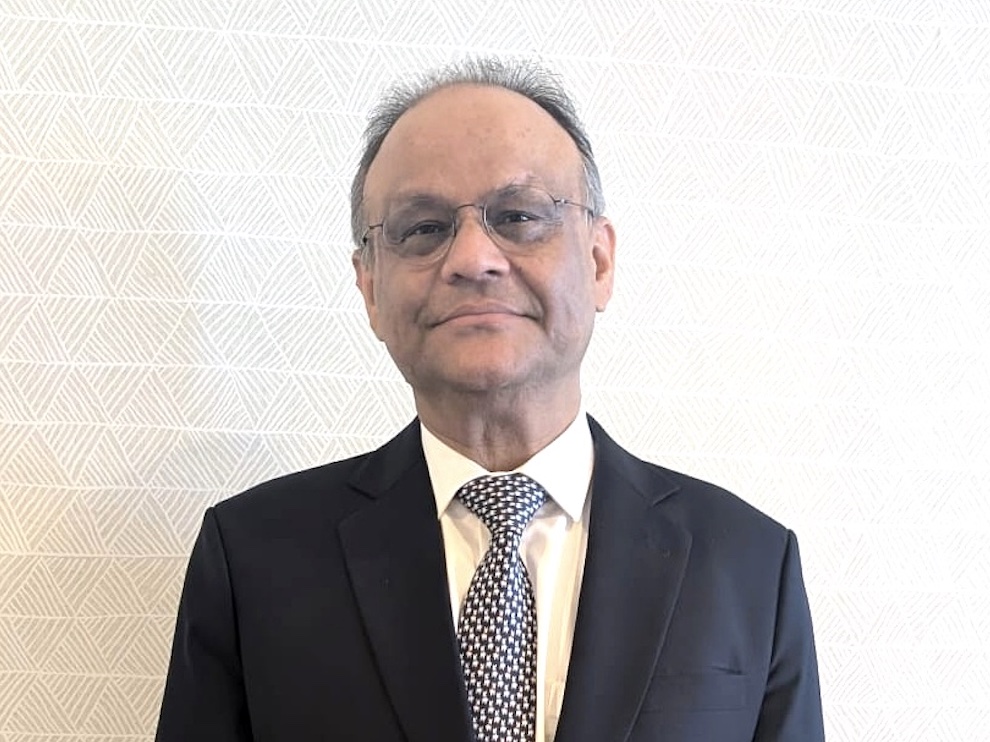
During his first visit to Western Australia as High Commissioner of India to Australia on July 31, 2026, Nagesh Singh spoke exclusively with South Asian Herald in Perth about the remarkable pace of the Australia–India partnership, the evolving role of the Indian diaspora, and the opportunities shaping the next chapter of bilateral relations.
The conversation also offered a glimpse into the philosophy that has guided his journey as a diplomat, one he summed up in three simple words: “Life is beautiful.”
Having arrived in Australia only a few months earlier, Singh said he expected to find a strong bilateral relationship. “I knew there was a relationship that was developing politically, economically, in defense and security, and through people-to-people connections. But what surprised me was the pace at which it is growing. Even in the remotest parts of this country, there is a human connect, either through the diaspora or through Australians who have some connection with India. That was the most positively surprising part.”
For Singh, those human connections are only one dimension of a partnership increasingly underpinned by shared democratic values and strategic interests.
Advertisement
“India and Australia share a lot. We are both democracies. We are multicultural, multiethnic societies. We believe in the rule of law,” he said.
Those common values, he added, naturally draw both countries together as they navigate an increasingly complex geopolitical environment.
“As the world becomes a more complicated place, like-minded countries are getting together not against anybody else, but for ourselves and for our friends through partnerships so that we can address the pressing challenges of our times,” he said.
Those challenges, he noted, include climate change, healthcare, resilient supply chains, maritime security, and maintaining open waterways for global trade.
“No one country can solve them alone.”
The Quad: ‘A Force for Good’
Singh also spoke about the Quad, emphasizing its role as a partnership of democracies united by shared values and common objectives. “The Quad is a grouping of democracies who have common values and common objectives,” he said.
Noting that it is sometimes viewed primarily through a security lens, Singh pointed instead to its work in healthcare, education, digital public infrastructure, disaster resilience, and development. “It’s not a military alliance. It’s not directed against anyone.”
Calling the Quad “a force for good,” Singh said its work ultimately focuses on improving people’s lives, both within member countries and across the wider Indo-Pacific.
Diplomacy Is a Team Sport
Asked what he hoped to achieve during his tenure, Singh resisted measuring diplomacy through individual milestones. “You sow a seed, and maybe your fourth successor from now might see the results,” he said.
He pointed to the Comprehensive Economic Cooperation Agreement, the newly announced Australia–India Sports Roadmap following Prime Minister Narendra Modi’s recent visit to Melbourne, India’s hosting of the 2030 Commonwealth Games, and its aspiration to host the 2036 Olympic Games as areas he hoped to see progress during his tenure. Drawing on the example of the Australia–India uranium supply agreement, Singh observed that some diplomatic achievements take years, sometimes even decades to come to fruition.
Then, he turned the credit elsewhere. “They do more work. I’m there just to take credit,” Singh said.
“My face becomes visible because of my designation, but all the hard work is done by the team.”
It was a moment that reflected a recurring theme throughout the conversation: diplomacy, in Singh’s view, is less about individual recognition than the collective effort of those working behind the scenes.
When the conversation turned to his own journey, Singh was asked what advice he would give himself if he could return to his first day in the Indian Foreign Service.
Without hesitation, he smiled, “Life is beautiful.”
“There are so many happy things waiting ahead.” He acknowledged that every diplomatic career inevitably includes difficult moments.
“There will be challenges down the road where everything looks dark and dreary.”
“But don’t worry. The sun shines.”
Reflecting on the lessons of a lifetime in diplomacy, Singh encouraged his younger self to embrace the journey rather than measure success by extraordinary achievements.
“Enjoy the journey.”
“Enjoy the experiences.”
“Enjoy the people you meet.”
“It’s a beautiful journey.”
His reflections offered a personal glimpse into the human side of a profession often associated with protocol and geopolitics.
A Message to Young Indian Australians
On younger Indian Australians who engage with India primarily through social media rather than community or High Commission events, Singh’s message began with citizenship.
“Be good Australians, because if you are good Australians, you will do the biggest service to the mother country,” he said.
Singh also spoke candidly about the opportunities and risks of social media. “Social media is a very useful tool, but it can also misguide you,” he said, encouraging young people to verify what they read against trusted and conventional sources of information.
Celebrating Both Identities
As India prepares to celebrate its 80th Independence Day, Singh’s message to the diaspora centered on confidence, contribution and belonging. He encouraged Indian Australians to embrace both their Australian identity and their Indian heritage.
“Celebrate your Indianness. Celebrate your Australianness.”
“It’s not mutually exclusive,” he said.
He encouraged Indian Australians to see themselves as a bridge between the two countries rather than feeling torn between them.
“When you contribute to this great country which has given you a home, you contribute to India–Australia relations.”
He added that India’s diplomatic missions deeply value the support and affection shown by the diaspora and remain committed to serving the community.
“We do make mistakes sometimes,” he acknowledged candidly.
“But we are here to serve you.” “We want to do our job well.” “So be patient with us and keep the channels of communication open.”
Closing the conversation on a note of gratitude, Singh thanked the Indian diaspora for its contribution to Australia and to the bilateral relationship. “Thank you to the diaspora for being here. They are a big asset,” he said.