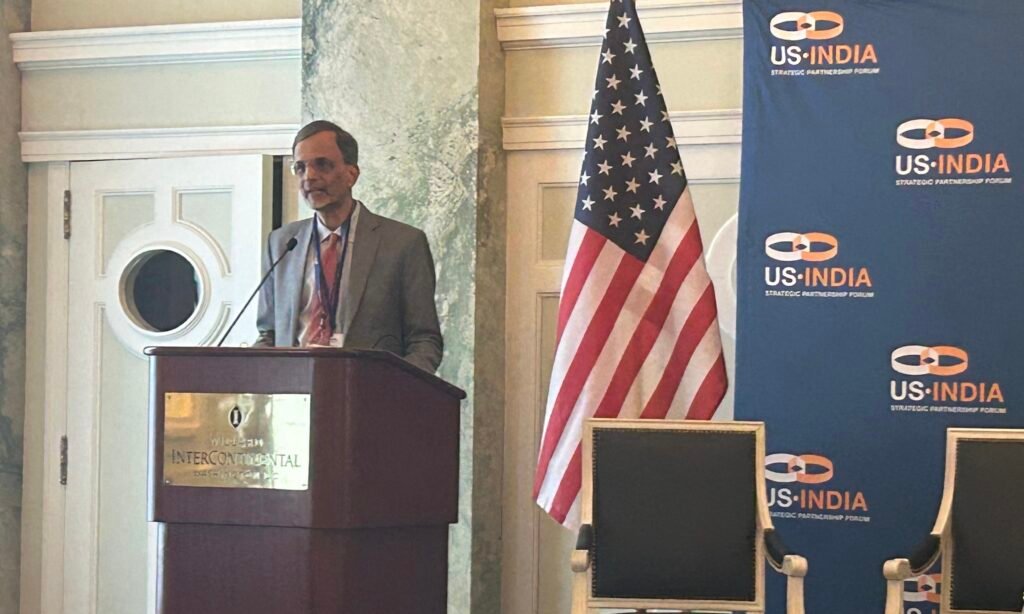
While the global economy grapples with a “scarcity of growth,” India enters the 2026–27 financial year anchored by resilient domestic demand and a strengthening macroeconomic backdrop.
According to India’s Chief Economic Adviser V.A. Nageswaran, the country’s fundamentals remain solid, even as rising global uncertainty – from energy shocks to trade disruptions – poses risks to growth in the year ahead.
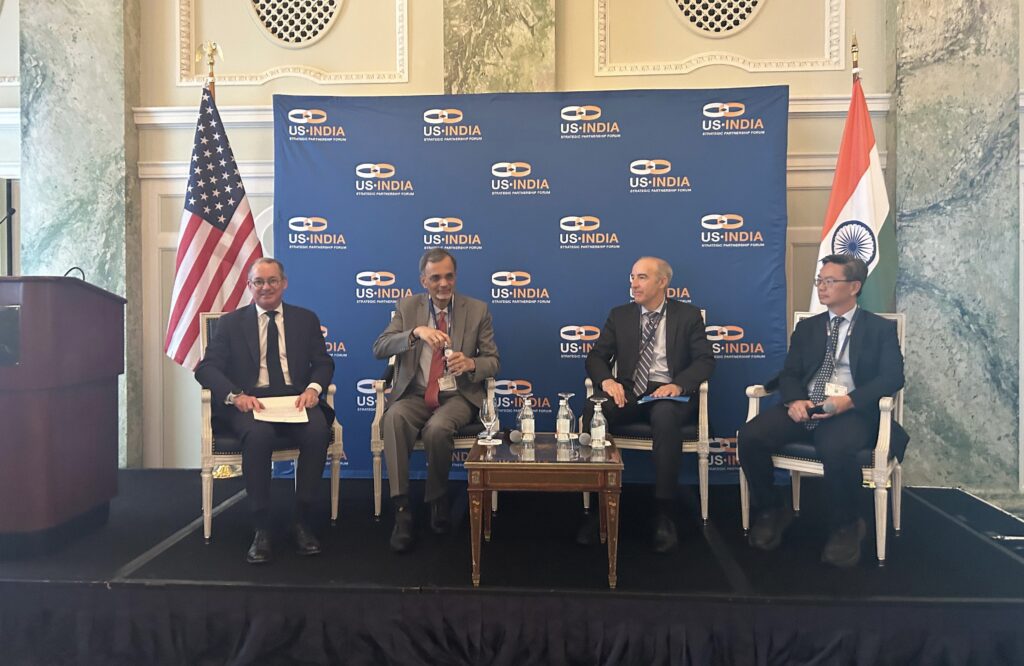
Speaking at US-India Economic Forum 2026 hosted by the US-India Strategic Partnership Forum (USISPF) at the Willard Intercontinental in Washington, D.C. on April 15, he emphasized that India’s recent performance stands out in a weak global environment. “India has enjoyed seven plus percent real GDP growth, and that’s a very big achievement in a world where growth has become scarce,” he said.
He noted that India is entering the year from a strong macroeconomic position, but cautioned against complacency. “We are entering into this situation with a very solid macroeconomic backdrop.” The government’s 6.5% growth forecast, he said in response to another speaker, had been described as “on the conservative side.” “I wish you were right,” reflecting both optimism and caution amid heightened uncertainty.
Advertisement
At the same time, he warned that global instability remains a key challenge. “We shouldn’t underestimate or understate the wide range of uncertainty that pervades,” he said, pointing to ongoing geopolitical tensions and their economic spillovers.
Nageswaran outlined how external shocks are transmitted to India’s economy through multiple channels, including energy prices, trade disruptions, logistics costs such as freight and shipping delays, and potential pressure on remittances from Indian workers in the Gulf. “He estimated that “somewhere around five to $10 billion could be expected” in losses if disruptions persist with the escalating conflict between the U.S. and Iran, which has impacted the Gulf nations and blocked a key shipping artery in the region, the Strait of Hormuz.”
Despite these headwinds, he expressed confidence in India’s external stability. “Financing it is not a problem. There are enough foreign exchange reserves,” he said, while acknowledging the need to manage currency stability and sustain capital inflows.
He also highlighted India’s evolving position in global trade and investment flows, noting that the country remains open to foreign goods and services and is strengthening its role in global value chains. “China, plus one, is back on track with these trade agreements in place and India’s competitive advantages in terms of labor costs, deregulation… making India once again an important partner for many of your businesses.”
The U.S.–India Innovation Engine
The forum also highlighted deepening people-to-people economic and technological ties between India and the United States, particularly through investment and global capability centers.
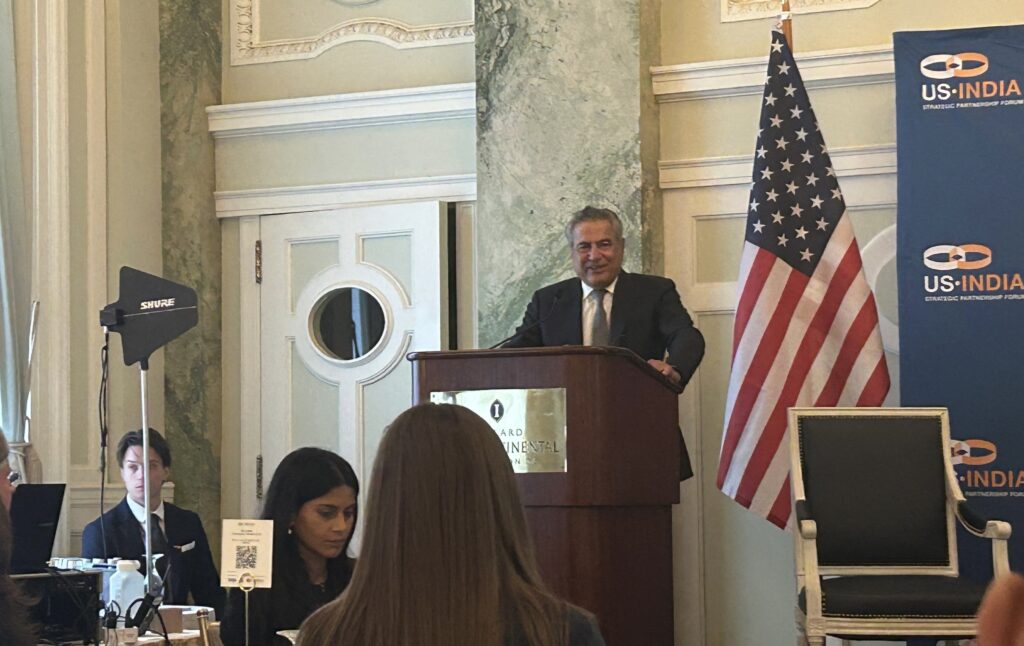
Robert Thomson, SVP & Global Head of Government Affairs at Visa said India has become central to the company’s global operations. “India is not only one of our most important markets, it’s a global engine of innovation.”
The executive noted Visa’s long presence in India, adding that the company has operated in the country since 1980, with its first general purpose credit card issued in 1981.
He emphasized that innovation developed in India is increasingly being deployed globally. Bengaluru was described as Visa’s largest global site, housing a major development center where products and solutions are designed for worldwide use.
About 15% of Visa’s global workforce is now based in India, and the company has created over 5,000 jobs in the country over the past six years, Thomson said.
Mukesh Aghi, president and chief executive officer of USISPF, underscored that the relationship has moved far beyond simple trade.
“We are seeing the U.S. companies’ investment in India going up. We’re seeing more global capability centers being set up,” Aghi said.
US FDI equity inflows into India nearly doubled to $7.8 billion during April–December 2025, up from $3.73 billion in the same period the previous year, according to the latest data released by the Department for Promotion of Industry and Internal Trade.
Aghi noted that the relationship “from the economic… geopolitical… [and] people to people… goes on.”