India has criticized the revised Elements Paper circulated by the co-Chairs of the Intergovernmental Negotiations (IGN) on United Nations Security Council reforms, arguing that the document fails to accurately reflect the views of a majority of member states and does not adequately represent the current state of discussions.
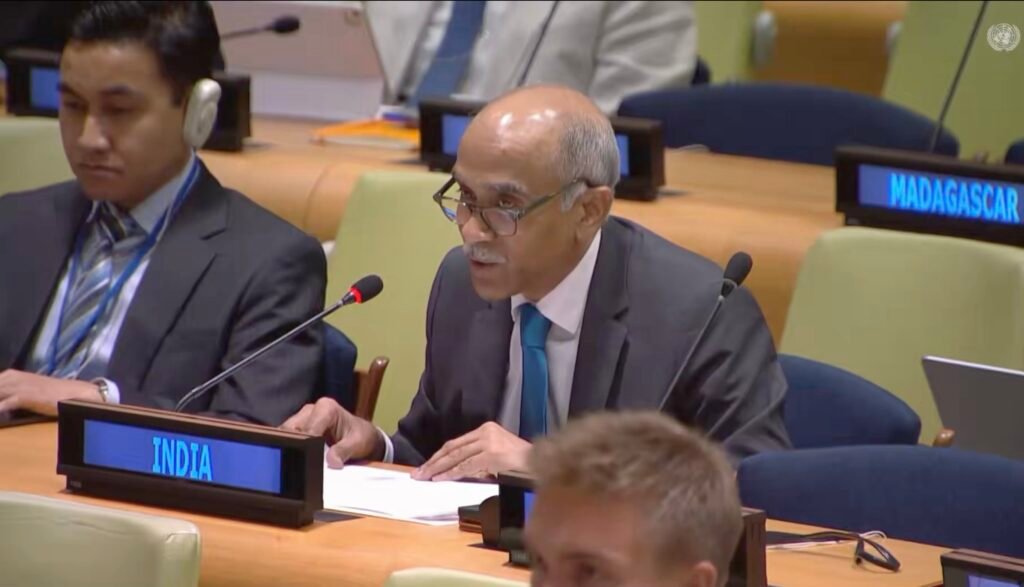
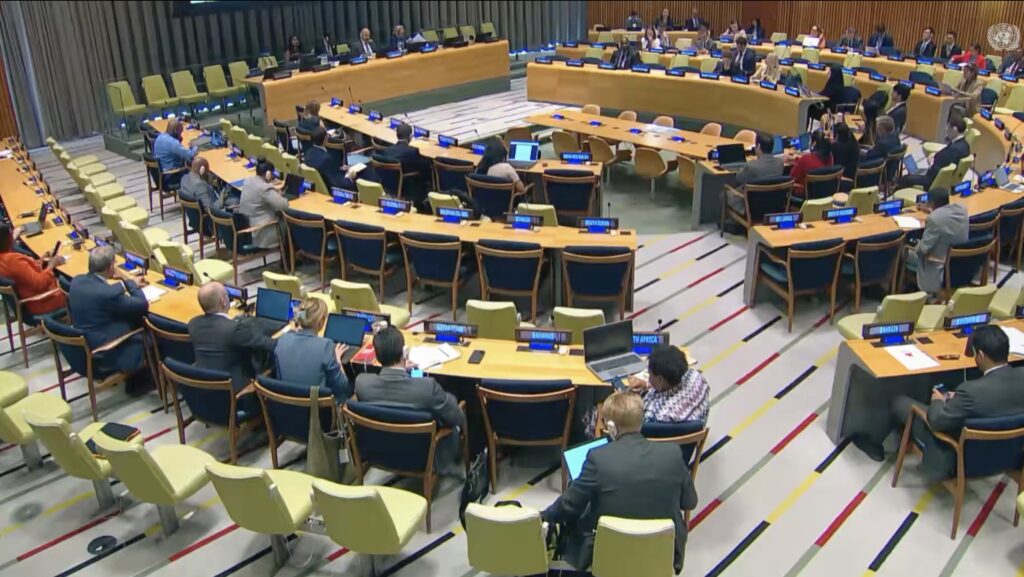
Speaking at the IGN meeting on Security Council reforms held on June 15, 2026, in the Trusteeship Council Chamber at the United Nations Headquarters in New York, India’s Permanent Representative to the United Nations, Ambassador Harish Parvathaneni, said “In our view, it neither captures the overall state of play accurately nor accounts for the overwhelming sentiments of a majority of member states, not unlike similar Elements Papers of the last two years at least.”
The Ambassador noted that the Elements Paper, circulated on June 10, characterizes developments within the IGN process and across the five key negotiation clusters based on the co-Chairs’ interpretation.
The revised document, titled Revised Co-Chairs Elements Paper on Convergences and Divergences on the Question of Equitable Representation on and Increase in the Membership of the Security Council and Related Matters, was presented as an assessment of discussions during the 80th session of the General Assembly. The co-Chairs said it seeks to identify areas of common ground while also highlighting issues where differences remain.
Advertisement
In his remarks, Ambassador Harish said India fully aligned with statements delivered by the Permanent Representatives of St. Vincent and the Grenadines on behalf of the L.69 Group and Japan on behalf of the G4 grouping.
Outlining India’s concerns, he said the paper does not clearly define what constitutes areas of convergence and divergence. While convergence should ordinarily reflect the view of a majority of member states, he argued that the criteria used in the document appear ambiguous and dependent on the co-Chairs’ interpretation.
He also noted that General Assembly Decision 62/557, which established the framework for the IGN process, calls for achieving the widest possible political acceptance based on member state proposals. Ambassador Harish said the decision does not refer to “bridging proposals,” a concept discussed in the Elements Paper.
Another concern raised by India relates to the paper’s reference to expanding the permanent category through a Fixed Regional Seats proposal. According to Ambassador Harish, this concept appears only in the current Elements Paper and lacks broader recognition within the negotiation process.
India further questioned the paper’s suggestion that additional discussions are needed on the concept of permanency. Ambassador Harish argued that the UN Charter already clearly distinguishes between permanent and non-permanent members of the Security Council, leaving little room for ambiguity.
He also said the document understates support for expanding permanent membership by describing it as backing from “a significant number of delegations” rather than acknowledging that a majority of member states have expressed support through national statements and group affiliations, including the L.69, G4, and CARICOM.
On non-permanent membership, India argued that portraying support for expanding two-year seats as a convergence reflects only part of the discussion, as many member states link such expansion to broader reform measures.
Ambassador Harish cautioned against using the principle that “nothing is agreed until everything is agreed” as a means of delaying progress, arguing that it risks preserving existing inequities within the Security Council.
He also emphasized that while the General Assembly operates on the principle of sovereign equality, the Security Council functions differently under the UN Charter. India’s support for expanding permanent membership, he said, is intended to make the Council more balanced, equitable, and representative of contemporary global realities.
During his remarks, Ambassador Harish urged the co-Chairs to move the process toward text-based negotiations, a standard practice in other UN negotiations. He called for the development of a negotiating text with clearly defined milestones and timelines to facilitate more focused and outcome-oriented discussions.
The Ambassador expressed hope that the co-Chairs would take its concerns into account and revise the Elements Paper accordingly. The country also reaffirmed its commitment to working with member states and negotiating groups in support of meaningful and comprehensive reform of the UN Security Council.