As the world navigates a phase of intense geopolitical uncertainty in the last few months, marked by wars, supply chain disruptions, and an energy crisis, the G7 Summit assumes greater importance than merely being a gathering of advanced economies.
It has become a strong platform where emerging powers shape the future of world order and global governance. For India, participation in the G7 and successful partnerships with world powers reflect its growing strategic importance and its ability to engage with other member nations while safeguarding its national interests.
Prime Minister Narendra Modi’s outreach at the G7 underscores India’s policy of strategic autonomy. Despite diplomatic differences with Canada over the past two years, New Delhi has continued to engage through dialogue rather than confrontation. The G7 provides an opportunity to reset relations based on mutual respect, rule of law, and shared democratic values.
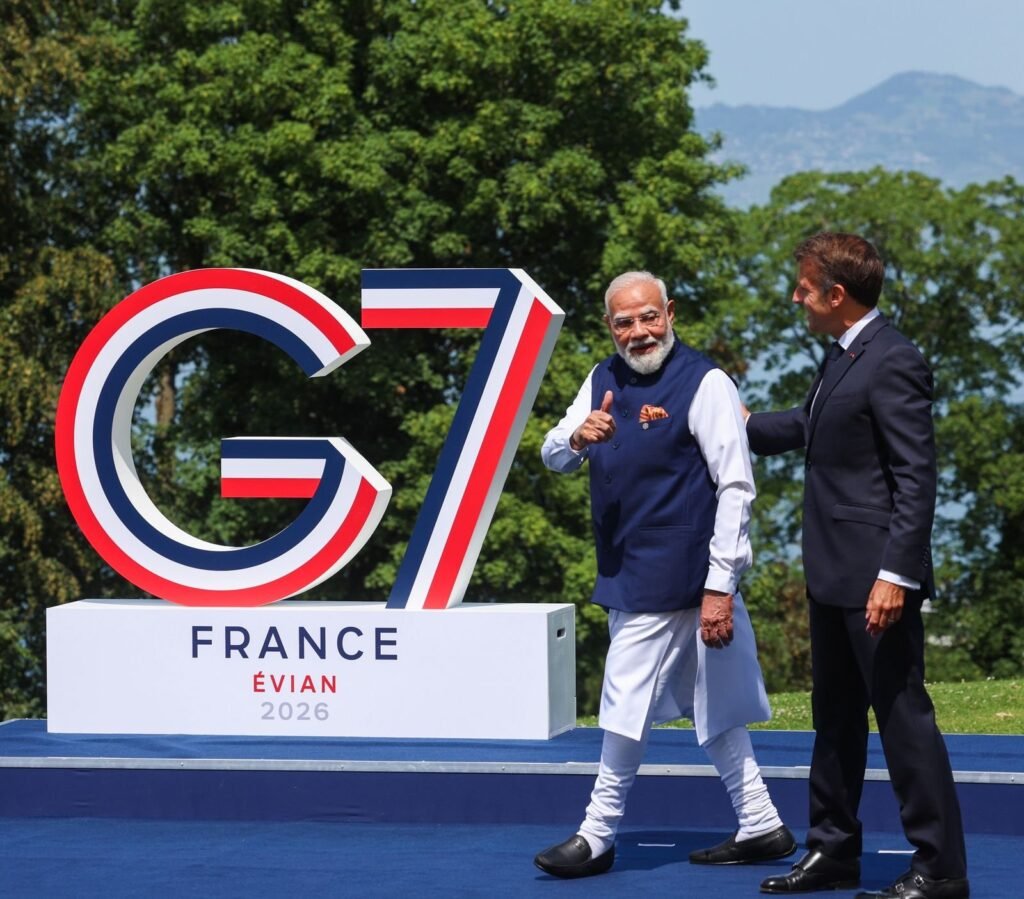
PM Modi held a meeting with his Canadian counterpart Mark Carney on the sidelines of the G7 Summit in Evian, France, on June 16. Both Prime Ministers reaffirmed their commitment to building a forward-looking strategic partnership, according to an official release. Both sides also reviewed and expressed satisfaction with the progress in negotiations towards a Comprehensive Economic Partnership Agreement (CEPA), which is expected to be completed in 2026. This again establishes India’s relentless efforts to secure strategic and economic partnerships with world powers despite the geopolitical and diplomatic challenges.
Advertisement
India’s relationship with the United States has entered into a new era of global partnerships due to the bonhomie between Prime Minister Narendra Modi and President Donald Trump. Cooperation in defense, technology, critical minerals, semiconductors, artificial intelligence, and the Indo-Pacific has expanded significantly. On the other hand, India has also continued to maintain its independent foreign policy by preserving ties with countries across the Global South and major powers alike.
The summit also highlights India’s growing partnerships with Europe, Japan, Australia, and other democracies. From resilient supply chains to clean energy, climate finance, digital public infrastructure, and maritime security, India has emerged as a key player on the world stage by making substantial contributions to global solutions rather than merely remaining an idle participant.
The current geopolitical landscape has been primarily shaped by conflicts in Europe and the Middle East, strategic competition in the Indo-Pacific, and disruptions to global trade. In this scenario, India is positioning itself as a bridge between developed and developing nations. Its voice carries weight as the nation combines economic growth, democratic legitimacy, and credibility in the ranks of emerging economies under the able leadership of PM Modi.
India’s diplomacy is no longer reactive. It is proactive, multi-pronged, and interest-driven, driven by strategic partnerships and trade deals with some of the major economies in the world. For instance, by engaging the G7, BRICS, the Quad, or the G20, New Delhi seeks to maximize its opportunities while avoiding rigid bloc politics.
The significance of the G7 for India is therefore not about mere participation. It is about influence. India’s presence reflects the recognition that major global challenges—from economic security to climate action and technological governance—cannot be addressed without India’s active participation.
As global power balances continue to evolve, India’s diplomatic strategy will be judged not by choosing sides but by building partnerships, protecting national interests, and contributing to a more stable, inclusive, and multipolar international order.
Disclaimer: The opinions and views expressed in this article/column are those of the author(s) and do not necessarily reflect the views or positions of South Asian Herald.