Join WhatsApp Channel

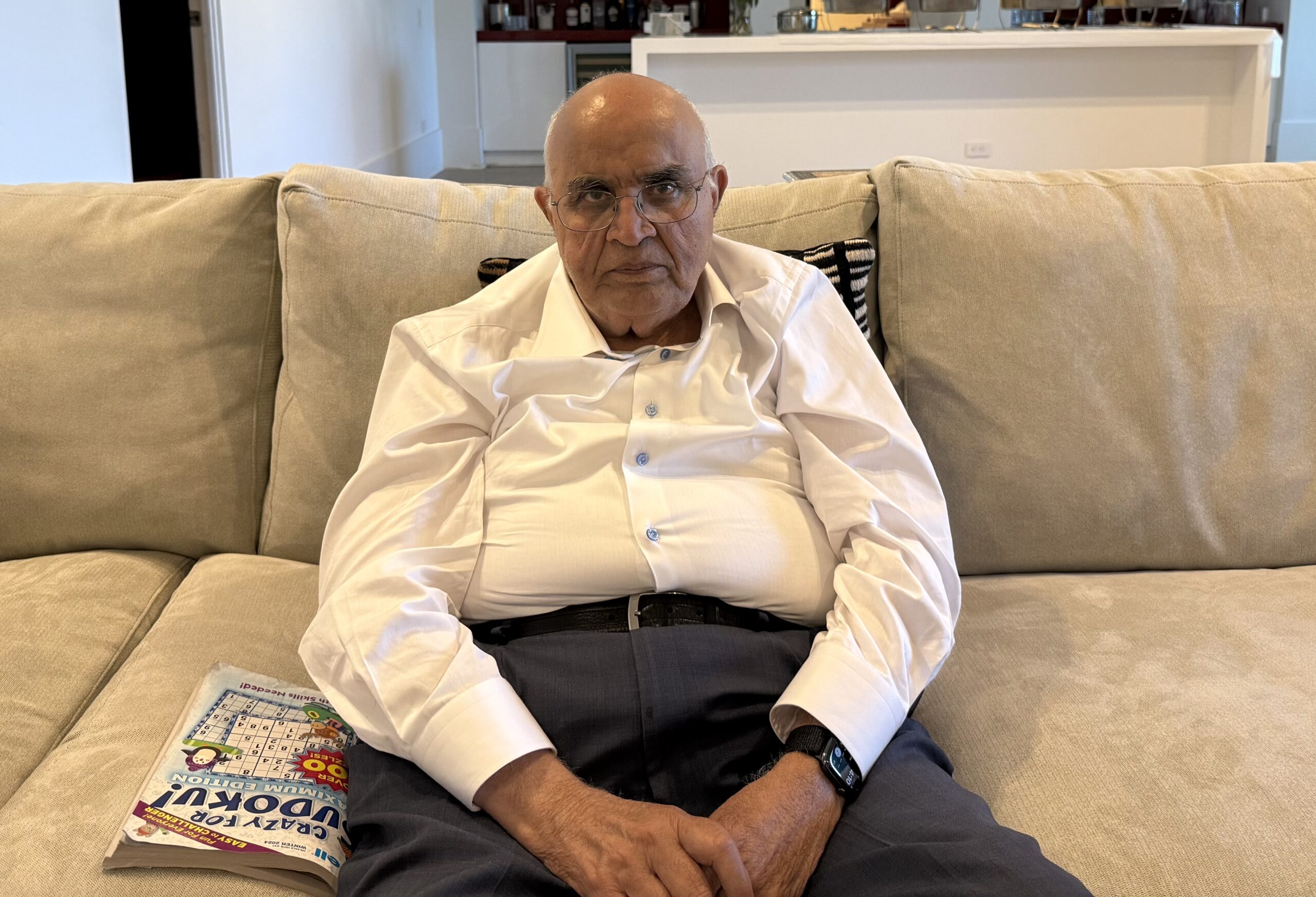
Kanwal Rekhi is widely regarded as one of the pioneers of Indian American entrepreneurship in Silicon Valley. From humble beginnings in Kanpur, India, he went on to become the first Indian American founder and CEO to lead a venture-backed company, Excelan, to a NASDAQ listing. A co-founder of The IndUS Entrepreneurs (TiE), Rekhi has spent decades mentoring entrepreneurs, investing in startups, and strengthening innovation ecosystems in both the United States and India.
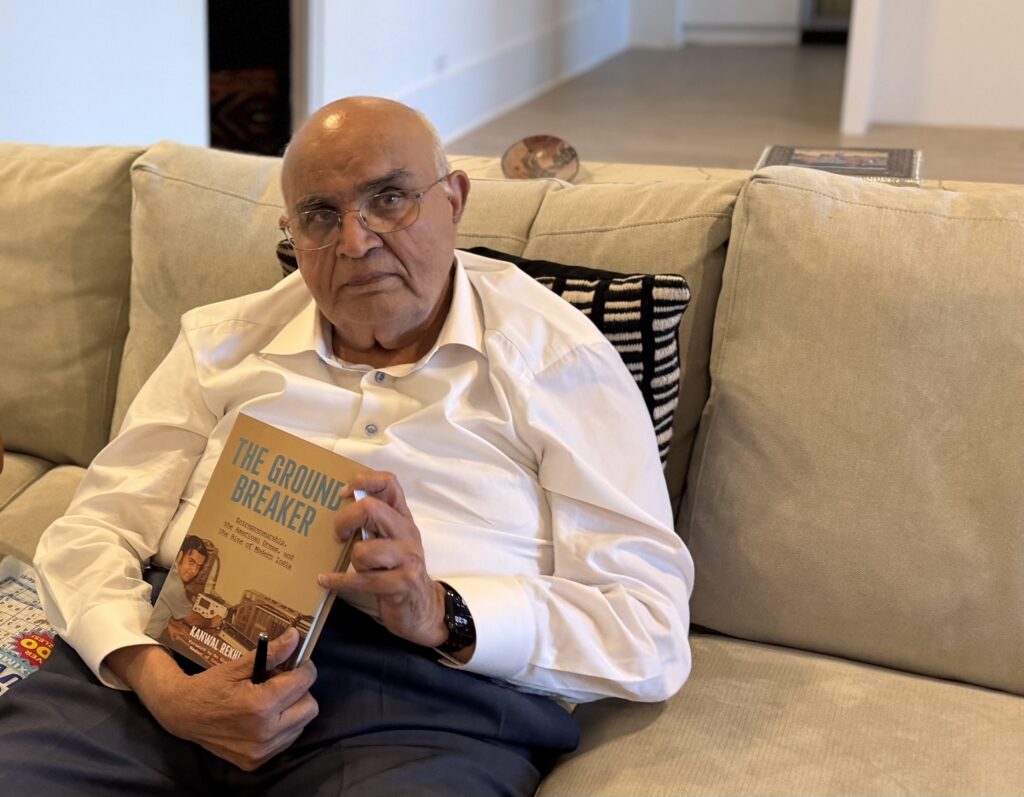
During a visit to Washington D.C., for the launch of his new book, “The Groundbreaker: Entrepreneurship, the American Dream, and the Rise of Modern India,” Rekhi spoke to South Asian Herald in an exclusive interview on June 3, 2026, about his personal journey, the evolution of TiE, the contributions of Indian Americans, immigration, and his vision of helping create 10 million entrepreneurs in India by 2047.
Your new book, The Groundbreaker: Entrepreneurship, the American Dream, and the Rise of Modern India, explores themes of innovation, opportunity, and transformation. What inspired you to write this book, and what key message do you hope readers take away from it?
The book project was initiated by my filmmaker son, Ben Rekhi. When he was growing up, he knew me simply as his father and was not fully aware of my professional journey. Once he went to college, he began reading about me and hearing stories from others. He was surprised by how many Indian Americans knew who I was and encouraged me to tell my story. He felt there were many aspects of my journey that people did not know about. Ben was the driving force behind the project and helped me find the resources needed to bring the book to life.
Can you talk about your trip to DC?
I have been on a book tour since mid-December. We covered 13 cities in India and then launched the U.S. tour in Dallas. Since then, we have visited New York, Atlanta, San Francisco, Los Angeles, and Chicago, and now we are in Washington, D.C. D.C. is a special place because it is the nation’s power center. I have known Congressman Ro Khanna for more than 20 years through our connections in Silicon Valley, and he will be the chief guest at my book launch in Washington on June 4.
You grew up in a lower middle-class family in Kanpur, earned admission to Indian Institute of Technology (IIT) Bombay, pursued higher education at Michigan Technological University, and went on to become the first Indian American founder and CEO to take a venture-backed company public on the NASDAQ. Could you share your journey from India to becoming one of Silicon Valley’s most accomplished entrepreneurs?
I grew up in Kanpur and attended a Hindi-medium school, so I was not very proficient in spoken English. However, I was strong in mathematics and written English, which helped me gain admission to IIT Bombay. My years at IIT were transformational. Over four years, I improved my English-speaking skills and broadened my horizons.
When I graduated in 1967, job opportunities in India were limited, so I decided to pursue a master’s degree at Michigan Technological University. After graduation, I worked in New Jersey but was laid off within seven months. I then moved to Florida, where I experienced two more layoffs. It was a difficult period, and the economy was struggling. Around that time, I met my pen pal, who later became my wife. We were married for 54 years before she passed away last year. Together, we moved to Silicon Valley in 1971, where I found a stable job and began building a future for my family.
In the early 1980s, after realizing my career advancement opportunities were limited, I decided to start a company in the computer networking industry. The company eventually went public in 1987. I transitioned from engineer to entrepreneur and then to CEO largely on my own, without mentors or role models. That journey forms an important part of my book. At the same time, Indian Americans were becoming role models for aspiring entrepreneurs in India, many of whom looked to our experiences as they launched their own ventures. Today, I remain active as a mentor, investor, and advocate for entrepreneurship around the world.
You were one of the co-founders of The IndUS Entrepreneurs (TiE), which has played a significant role in fostering entrepreneurship and mentoring business leaders worldwide. What inspired you to establish TiE, and how has its mission evolved over the years?
When India began economic liberalization in the early 1990s, new opportunities emerged. In 1991, the Indian Consulate in San Francisco invited a group of successful Indian professionals in Silicon Valley to meet visiting bureaucrat N. Vittal. He encouraged us to consider starting businesses in India as the country was undergoing significant transformation. That meeting led to the formation of a dinner group of about 20 people who met regularly to share experiences and discuss challenges. During those conversations, we realized that many of us had traveled very lonely entrepreneurial paths without mentors, role models, or support systems.
We decided to create an organization that would help the next generation of entrepreneurs through mentorship, networking, and guidance. That idea became TiE in 1992. From the beginning, we maintained a singular focus on entrepreneurship. We deliberately kept politics, religion, and cultural differences out of the organization. Our message was simple: if you want to become an entrepreneur and succeed globally, TiE is here to support you. Today, TiE has more than 60 chapters across the United States, India, and other parts of the world, and it continues to have a significant impact on entrepreneurship globally.
Indian Americans have emerged as leaders across a wide range of fields, including technology, business, medicine, academia, and public service. How do you view the contributions of the Indian American community to the growth and success of the United States?
The Indian American community has had a remarkable impact on the United States. I would not say it is entirely unique because other immigrant communities, such as Jewish Americans, have also made extraordinary contributions. However, Indian Americans have done exceptionally well both for themselves and for the country. They have also served as an important bridge between the United States and India, helping transfer ideas, values, knowledge, and innovation between the two countries. The startup ecosystems in both nations are deeply connected today. Organizations such as TiE have played a meaningful role in fostering those connections and contributing to this broader transformation.
You have spoken about your vision of helping create 10 million entrepreneurs by the time India celebrates 100 years of independence in 2047. Could you elaborate on that goal, why entrepreneurship is central to India’s future, and how you assess the country’s progress toward becoming a developed nation by 2047?
India has made tremendous progress, but poverty remains a major challenge. The most effective way to address poverty is through wealth creation, and in countries without vast natural resources, entrepreneurship is one of the most powerful drivers of wealth creation.
Entrepreneurs create value through innovation, problem-solving, and company-building. In many ways, I view them as modern economic freedom fighters. India also faces the challenge of creating meaningful employment opportunities for its large youth population, and entrepreneurs play a critical role in generating innovative and productive jobs.
Investments in institutions such as the IITs will deliver extraordinary returns. Going forward, public policy should focus on creating an environment that encourages entrepreneurship at scale. I often hear that about 10,000 new companies are formed every month in India. That is encouraging, but why not aim for 50,000 or even 100,000? To achieve that, India should continue liberalizing policies, offer incentives that encourage investment, and make itself even more attractive to global investors.
As an immigrant who later became a naturalized U.S. citizen, you have experienced firsthand the opportunities and challenges of the American immigration journey. How do you assess the current state of immigration in the United States, and what changes, if any, would you like to see in the future?
It has been interesting to watch the evolution of the immigration debate in America. When I arrived in 1967, the country was very welcoming. The 1965 Immigration and Nationality Act had recently removed national-origin quotas, opening new opportunities for immigrants. In fact, after receiving my student visa, I was invited by the U.S. Embassy in Delhi to attend an orientation session, with all expenses covered. That would be difficult to imagine today. When I applied for my Green Card in 1969, I received it within a few months. The process was much simpler than it is now. The only qualification then was to have a Master’s Degree from America.
I do not believe the entire country is opposed to immigration. Rather, there are segments of the population that are concerned about the pace of change and wish to reverse certain trends. At the same time, immigrants, including Indians, have contributed significantly to America’s economic growth and innovation.
I hear concerns about Indian have not assimilated but those are not new. Throughout American history, different immigrant communities, including Germans, Irish, Italians, and others, faced similar questions. Assimilation has always been a gradual process. My sense is that the United States has had a love-hate relationship with immigration throughout its history.
Having worked closely with generations of entrepreneurs in Silicon Valley and having founded and supported numerous startups yourself, what advice would you offer to young entrepreneurs in the United States who aspire to build successful and impactful businesses?
I always encourage people to give entrepreneurship a serious try. Having a job is fine, but a job alone is not a guarantee of security. I was laid off three times early in my career, and those experiences taught me important lessons. My advice is to have confidence in yourself and be willing to take calculated risks. There should be no shame in pursuing entrepreneurship, even if a venture does not succeed. Failure is often part of the learning process.
Do not let others decide whether entrepreneurship is right for you. Give yourself the opportunity to try, learn, and grow. Ultimately, only you can determine whether that path is meant for you.
(This interview has been edited for length, brevity and clarity)
Related posts:
 10th TiE Global Summit Set to Kick Off in Jaipur with Focus on Technology, Growth, and Sustainability
 TiE Boston’s Young Entrepreneurs Academy Receives $105,000 Grant From Cummings Foundation
 Silicon Valley VC Expands Investments in India, Champions Women Entrepreneurs and U.S.-India Ties
 Caught in the Crossfire: How Trump’s Immigration Crackdown Is Reshaping the Indian American Dream