Join WhatsApp Channel

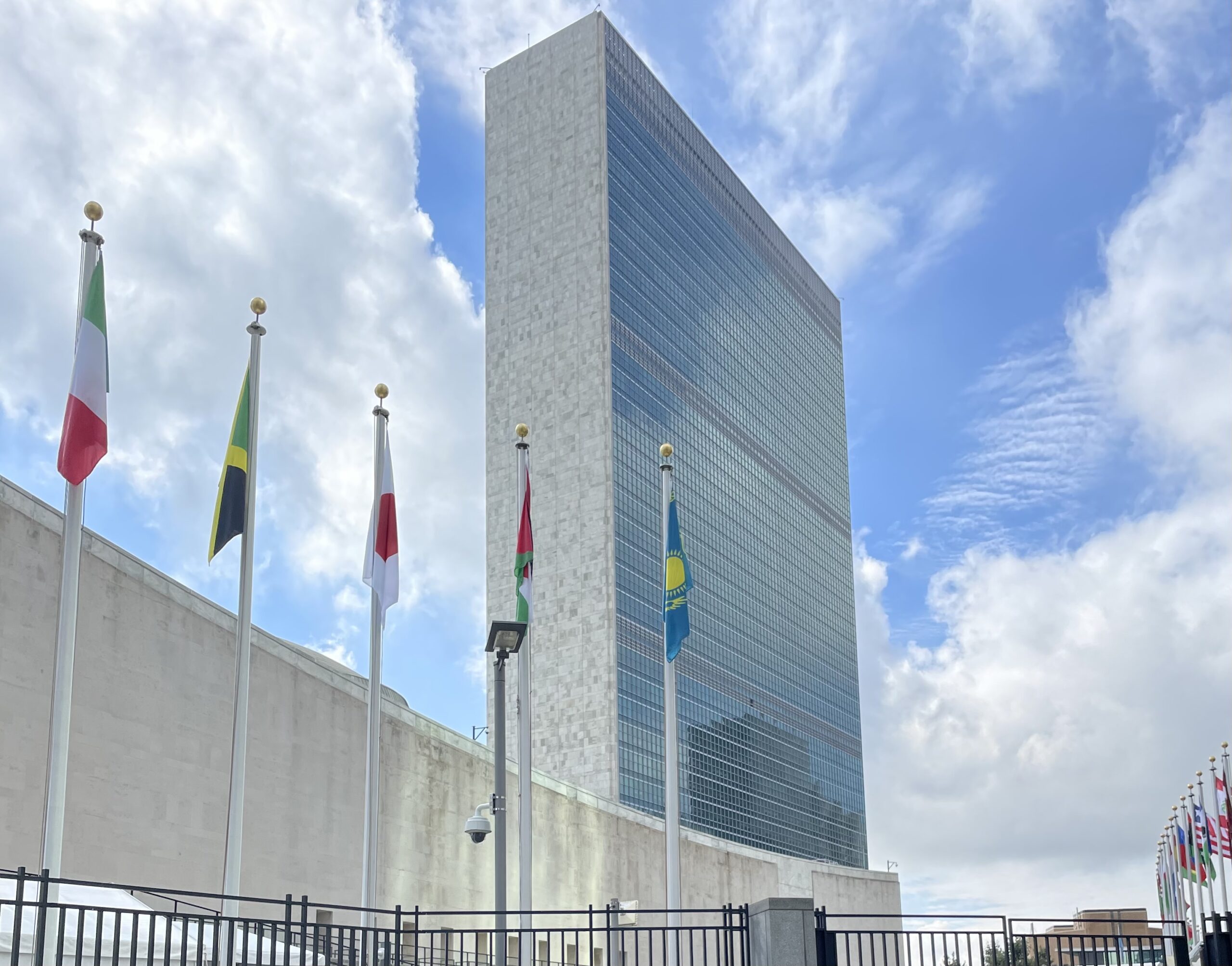
The next Secretary-General of the United Nations will inherit an organization straddling two distinct realities. The first is the world that gave rise to the United Nations in 1945, when governments emerging from two devastating wars recognized that security depended on rules, institutions and collective action. The second is the world taking shape today, i.e., one that is multipolar, fragmented, and increasingly resistant to any single center of power.
Bridging these worlds will be the defining challenge for the next Secretary-General. This task extends beyond reforming the UN bureaucracy, balancing its budget or mediating the next conflict. The fundamental question is whether the United Nations can remain the central institution of international cooperation when the global system itself no longer has a clear center.
Opportunity in fluidity
For three decades following the Cold War, the international system operated within a broadly unipolar framework. That era has now ended. China’s rise has reshaped the balance of power, while Russia has challenged the post-Cold War security architecture. India is asserting greater strategic autonomy, and middle powers have more room to maneuver. Developing countries, for their part, are demanding a stronger voice in institutions that were largely designed without their participation.
Yet what is taking shape is not a neatly defined multipolar order. Countries are increasingly aligning themselves issue by issue. They may cooperate with Washington on security while trading with Beijing, rely on Russia for energy or arms while defending Ukraine’s territorial integrity, and simultaneously seek Chinese infrastructure, Indian markets, European technology, and American investment.
This fluidity presents an opportunity for the United Nations. The organization should avoid becoming an instrument of any particular bloc. The United States and its allies emphasize preserving the rules-based international order, while China and Russia contest significant aspects of it. Many countries in the Global South seek to avoid having either position imposed upon them, preferring to retain sovereign control.
The United Nations’ principal advantage lies precisely in its independence from all of them. It can sustain dialogue between Washington and Beijing when they cannot reach agreement; foster cooperation between India and China despite their rivalry; keep Russia engaged in diplomacy despite its confrontation with the West; and enable smaller states to negotiate with great powers rather than simply accept their decisions.
The United Nations’ future may therefore depend less on imposing solutions than on maintaining a shared diplomatic space for competing powers.
The need for adaptation is particularly urgent in the Security Council. Its five permanent members continue to reflect the distribution of power at the end of World War II. Meanwhile, India has become one of the world’s most consequential states, Africa’s 54 countries lack a permanent seat, and Brazil remains excluded from permanent representation.
This is no longer merely a matter of fairness. It is also a question of effectiveness. An institution that does not reflect contemporary power structures will find it increasingly difficult to claim legitimacy.
The Secretary-General cannot compel Security Council reform. However, the office can help transform the process from an annual diplomatic ritual into sustained negotiations, advancing greater representation while preserving the Council’s capacity to act.
The same principle applies more broadly to the Global South. Developing countries are increasingly rejecting a system that invites them to participate only after the rules have been established. Current disputes encompass climate finance, debt, trade, technology, development, and artificial intelligence. The United Nations must do more than assure these countries that their voices will be heard. It must establish mechanisms through which they can influence outcomes.
However, the Global South should not be regarded as a single geopolitical bloc. India and Brazil have distinct interests, as do Indonesia and Nigeria. Gulf states also have their own strategic calculations. The future of multilateralism will therefore depend on coalitions formed around overlapping interests rather than permanent camps.
That principle should guide the next Secretary-General. The United Nations cannot eliminate geopolitical rivalry, but it can manage it.
Climate change, artificial intelligence, food security, pandemics, nuclear risks, migration and humanitarian emergencies all present opportunities for cooperation among governments that differ on broader issues. Countries need not agree on everything to cooperate on specific matters.
War will remain the most significant test. When permanent members of the Security Council are in conflict, the United Nations’ room for maneuver is substantially constrained. Nevertheless, the organization retains resources that others cannot readily replicate, including humanitarian agencies, peacekeeping operations, diplomatic channels, neutral venues and international legitimacy.
The objective should not be to supplant great-power diplomacy, but rather to ensure that it does not displace the United Nations.
Administrative reform is also important. The United Nations must reduce duplication and focus its limited resources where they can have the greatest impact. However, a smaller bureaucracy will not automatically make the organization more relevant. Reform should strengthen the United Nations’ distinctive comparative advantage of universality.
Only a universally representative organization can credibly convene governments across geopolitical divides, coordinate humanitarian action, uphold international law and establish frameworks to address transboundary challenges.
That requires a different conception of the secretary-generalship. The traditional role of providing a global moral voice remains important, but it is insufficient. The next Secretary-General must also serve as the world’s chief diplomatic bridge builder. The officeholder must understand Washington without representing it, engage Beijing without serving it, recognize India’s growing influence without advancing its ambitions, and expand the Global South’s influence without reducing global politics to a North-South contest.
The most significant achievements may be those that remain unseen, such as a crisis discreetly averted, a diplomatic channel maintained, a humanitarian agreement secured or a compromise reached.
The United Nations cannot recreate the conditions of 1945 or restore the post-Cold War era. The question is whether multilateralism can adapt to today’s distribution of power or whether international fragmentation will hollow it out.
Translating universality
The United States can convene its allies, China can build partnerships, India can champion independent decision-making and regional organizations can represent their members. However, none can credibly claim to represent the international community as a whole. The United Nations can.
The next Secretary-General must translate that universality into a strategic approach. The objective is not to diminish the world’s multipolarity but to make it more manageable. The ultimate measure of success will be whether the United Nations can become an institution that the world’s competing powers cannot afford to do without.
Disclaimer: The opinions and views expressed in this article/column are those of the author(s) and do not necessarily reflect the views or positions of South Asian Herald.
Related posts:
 ‘We see it in citizens across the world peacefully choosing their future — from Ghana to India to South Korea’ says President Joe Biden during his UNGA Address
 Khalilur Rahman Assumes United Nations General Assembly Presidency
 Minister Jaishankar Calls Reform a Measure of Commitment to the United Nations
 United Nations@80: Legacy, Challenges, and Future Directions