Join WhatsApp Channel

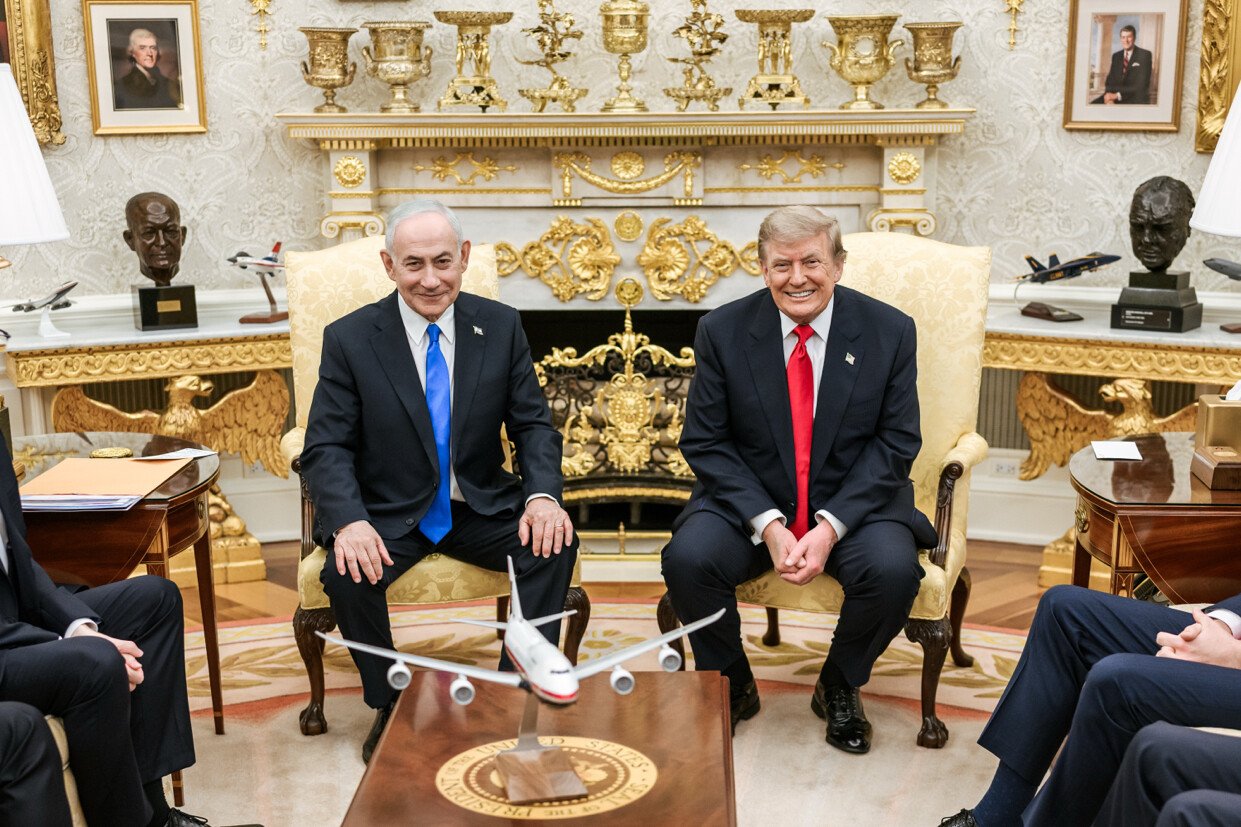
It is not a question of a war in different time zones of Washington and Tel Aviv. It is a conflict that is pegged to the political fortunes of two leaders and parties that have implications beyond either October 27 or November 3. The Prime Minister of Israel Benjamin Netanyahu has rarely hidden his disappointment that Washington pulled the plug early and did not play the game till the finish. And at a time when nearly everyone was wondering what the objectives of the war with Iran was, the Israeli leader came straight out and said that the “central mission” is to rid the regime in Tehran and that this was “within reach.”
“The regime is now faltering. It is weaker than ever. It is fighting for its survival… I am confident in our ability to remove this threat once and for all – in other words, to topple this regime. That is the central mission that still lies ahead of us, but it is close. It is not impossible. It is within reach,” Netanyahu recently said adding “It is no coincidence that they are not attacking us. They are attacking everyone except us. They know our strength, the force of our blows and our determination.” Political analysts see the comments two ways: a military victory giving the Israeli leader a bump in the polls, but a regime collapse in Iran significantly boosting his chances at the hustings.
There is no doubt that one reason why Prime Minister Netanyahu keeps hammering away at Iran is to keep up his tough image– that he alone can deliver the goods for the Jewish state on the security front. But critics have argued that his desire to keep the conflict prolonged is so that he is able to divert attention from other domestic issues such as corruption charges and trials. A recent survey by Israel Democracy Institute showed 74 percent of Jewish Israelis expressing trust in the Prime Minister to manage the war properly as opposed to a mere 16 percent among Arab Israelis.
But the high rate of support, some maintain, does not translate into political fortunes. In fact analyst Dahlia Scheindlin has been quoted in The Times of Israel saying that after the last summer’s war with Iran (June 2025), the Prime Minister and his coalition “did not get the boost that everybody was expecting and, in fact, got no boost at all… I would be very cautious of predictions jumping to the conclusion that this is going to give him another term, although I recognize that many people will assume that.”
On the other side, Republicans in the United States are hoping for the conflict in the Middle East will end soon, anytime before the mid-terms of November 3 so that something could be politically salvaged out of a difficult situation. Leaving aside the conventional wisdom of the President’s party at the receiving end in the mid-terms, the leadership as well as the rank and file in the Grand Old Party are convinced that the Iran war is not helping, if anything only hurting those up for re-election by way of high prices at gasoline pumps and an uptick at supermarkets. Together with the latest tariff war against Canada have made matters only worse.
For an administration and a President that have long been against endless wars, regime change initiatives and nation building exercises, seven months into the war with Iran, the exit strategy seems elusive. Officially the Republicans are putting on an optimistic face of coming away victorious on November 3, but there is a sinking feeling that the majority in the House of Representatives is in jeopardy with the Senate also in play. The name-change and tariffs game with Ottawa have not helped matters especially in an apprehension of Senate races in border states like Maine, Alaska and Michigan. And the fear extends also to Ohio where the international line is water- drawn through Lake Erie.
It remains to be seen the extent to which Vice President JD Vance’s contention that the current hostilities should not even be called a “war” as “ active combat operations” have ended is going to be taken on face value given that the United States and Iran are at it actively in the last several days, the Central Command targeting some 60 sites in Iran and the latter retaliating against American assets in the Gulf. One assessment is that the Vice President’s latest definition of the goings on is of an administration trying to push the conflict to the sidelines and making it look as an occasional firefight. The conflict still cannot take away the fact 18 American service personnel have died and some 800 injured.
“When you ask when will this end, you’re asking me a question like when will the Iranians stop shooting at ships? I think the reality is I don’t know the answer to that question. You would have to ask the Iranians,” Vice President Vance said adding “ What I will say is that we have to remember why are we doing this? Number one, it’s so that Iran never has a nuclear weapon.” For a person who was said to be an initial sceptic of the war, the Vice President did not mention the shifting rationales of the war that quickly moved on to regime change and keeping the sea lanes in and around the Strait of Hormuz open.
Disclaimer: The opinions and views expressed in this article/column are those of the author(s) and do not necessarily reflect the views or positions of South Asian Herald.