A new U.S. congressional research report is urging Washington and New Delhi to treat the succession of the Dalai Lama not simply as a question of religious freedom, but as an emerging strategic test of U.S.-India cooperation in the face of expanding Chinese influence across the Himalayas and the wider Indo-Pacific.
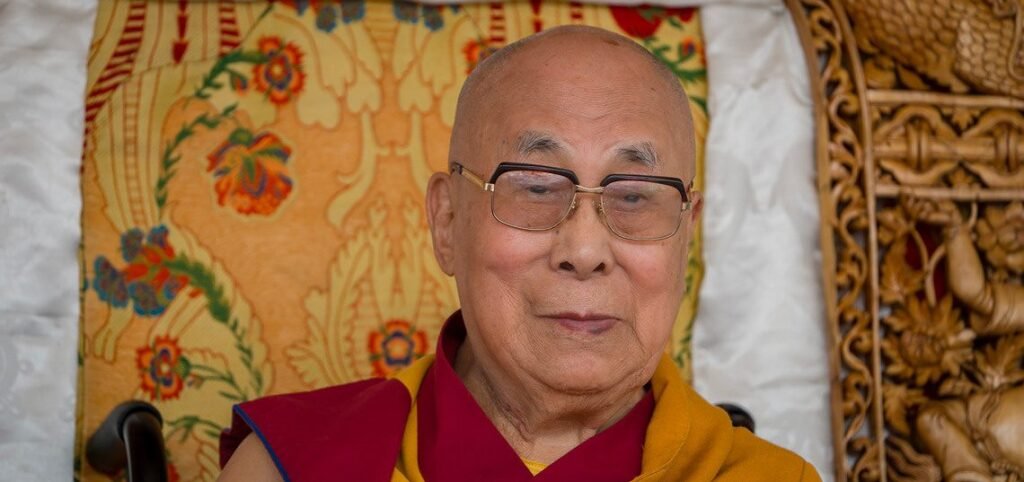
The contracted research report prepared for the U.S.-China Economic and Security Review Commission’s (USCC) Research Working Group, argues that the succession of the 14th Dalai Lama, who turned 91 in July, is “already a geopolitical event.” In July 2025, he vested exclusive authority for identifying his successor in the India-registered Gaden Phodrang Trust, a decision Beijing immediately rejected.
The report was commissioned to support the USCC’s deliberations, and its release does not necessarily constitute endorsement of its conclusions by the Commission or individual commissioners.
China is expected to name its own candidate. The report warns that Beijing could then seek to establish what it calls a “One Dalai Lama” framework, using diplomatic and economic pressure to persuade other governments to recognize a Chinese-backed successor. Such a strategy could transform a religious succession into a wider contest over legitimacy, sovereignty and geopolitical influence.
Advertisement
For India, the stakes are immediate. It hosts the Dalai Lama, the Central Tibetan Administration, the Gaden Phodrang Trust and the world’s largest Tibetan exile community. The monasteries and senior religious figures expected to play central roles in the succession process are also based in India. Any succession process conducted independently of Beijing, the report argues, will therefore depend heavily on Indian political and territorial space.
For Washington, that makes India the “center of gravity” of the coming contest.
“Beijing has made clear that it intends to control the succession process, making this a geopolitical contest with important implications for the United States and India,” USCC Chair Randy Schriver said in a statement accompanying the report.
The report’s most consequential recommendation is therefore not directed at Tibet alone. It calls for the Dalai Lama’s succession to be placed explicitly on the U.S.-India bilateral agenda through a quiet, senior-level contingency-planning channel, supported by intelligence sharing on Chinese influence operations. Where formal government-to-government coordination proves difficult, it recommends Track 1.5 and Track 2 consultations involving American, Indian and Central Tibetan Administration participants.
That proposal reflects what the study describes as a significant trust deficit between Washington and New Delhi.
“DC is in the dark about what India will do when the time comes,” a former senior Indian security official told the report’s authors. The report says the principal alignment gap is between Washington and New Delhi, while Sikyong Penpa Tsering, the elected head of the Central Tibetan Administration, described Washington and Dharamshala as already being “on the same page” on succession planning.
The gap is striking because broader U.S.-India strategic cooperation has deepened amid shared concerns over China. Yet Tibet has largely remained compartmentalized. India has traditionally treated the issue as a sensitive matter closely connected to its management of relations with Beijing, while Washington has legislated extensively on Tibetan rights and succession without developing a dedicated bilateral mechanism with New Delhi.
The report argues that both countries now have compelling reasons to change that approach.
For India, Tibet is directly connected to territorial security. China claims Arunachal Pradesh as “South Tibet,” while Tawang, birthplace of the Sixth Dalai Lama, has been discussed as a plausible location connected to a future reincarnation search. The report warns that if a successor were identified in Arunachal Pradesh, Beijing could respond with diplomatic pressure, economic coercion and heightened military activity along the Line of Actual Control, potentially forcing New Delhi to defend both its territorial position and the integrity of the Tibetan religious process.
In December 2022, around 300 People’s Liberation Army soldiers attempted to seize a ridge near Yangtse in the Tawang sector, according to the Commission report. The Chinese troops were armed with clubs and spiked rods. Indian and Chinese soldiers clashed and dozens were injured before the two sides disengaged. The report describes it as the first serious confrontation between the two armies since the deadly Galwan clash of 2020.
The Tibetan Plateau also carries wider strategic significance. Ten major rivers originate there, providing freshwater to more than a billion people across South and Southeast Asia. China has 193 dams operating or under construction on the plateau, according to the report, while the region holds substantial lithium, copper and other critical mineral reserves. Chinese infrastructure across the plateau also supports People’s Liberation Army capabilities along the Himalayan frontier.
The implication is that Tibet’s religious, territorial, resource and security dimensions can no longer be neatly separated.
There is also a civilizational dimension for India. Tibetan Buddhism’s intellectual foundations emerged from India’s historic Buddhist centers. The report argues that Beijing’s efforts to “Sinicize” Tibetan Buddhism and expand Chinese Buddhist diplomacy abroad challenge not only Tibetan religious autonomy but India’s historical standing as Buddhism’s ancestral home.
At the same time, the report identifies important vulnerabilities on the Indian side. It says India has no standing Tibet succession doctrine, no inter-agency planning process and no single governmental point of contact. India’s Tibetan exile population has also fallen by more than 40 percent since 2009, from 110,228 to roughly 60,000–65,000, weakening the institutional base of monasteries, schools and settlements that could become critical during a prolonged succession contest.
Chinese influence operations constitute another concern. The study says Beijing’s Tibet-related outreach in India has expanded beyond traditional political networks into state media, elite and academic engagement, digital campaigns and AI systems with documented pro-CCP outputs. Although the report finds these efforts have not yet gained decisive traction among the wider Indian public, it warns that the succession could produce a far more intense information contest.
USCC Vice Chair Mike Kuiken said Beijing is seeking to ensure that “New Delhi, Dharamshala, and Washington each misread the others,” arguing that the United States, India and other democracies should clearly state their support for the religious process authorized by the Dalai Lama before Beijing announces its own candidate.
For U.S.-India relations, that may be the larger strategic message of the report. Convergence on China will matter far less if Washington and New Delhi have not prepared to act together when their interests intersect during an actual crisis. The report argues that Washington should acknowledge the political and strategic costs India has absorbed by hosting the Tibetan leadership for more than six decades, while India would benefit from moving beyond managing Tibet almost exclusively through the prism of its bilateral relationship with China.
The Dalai Lama’s succession could therefore become an important new test of the U.S.-India partnership in the emerging Asian order. It will show whether two democracies with different geopolitical risk calculations can coordinate early enough to prevent Beijing from setting the terms of the contest.
The report concludes with a caution for Washington that no amount of U.S. legislation or diplomatic signaling can substitute for a genuine partnership with New Delhi built around shared contingency planning. It further adds that any delay in U.S.-India coordination could give Beijing a strategic advantage in shaping the outcome.