Join WhatsApp Channel

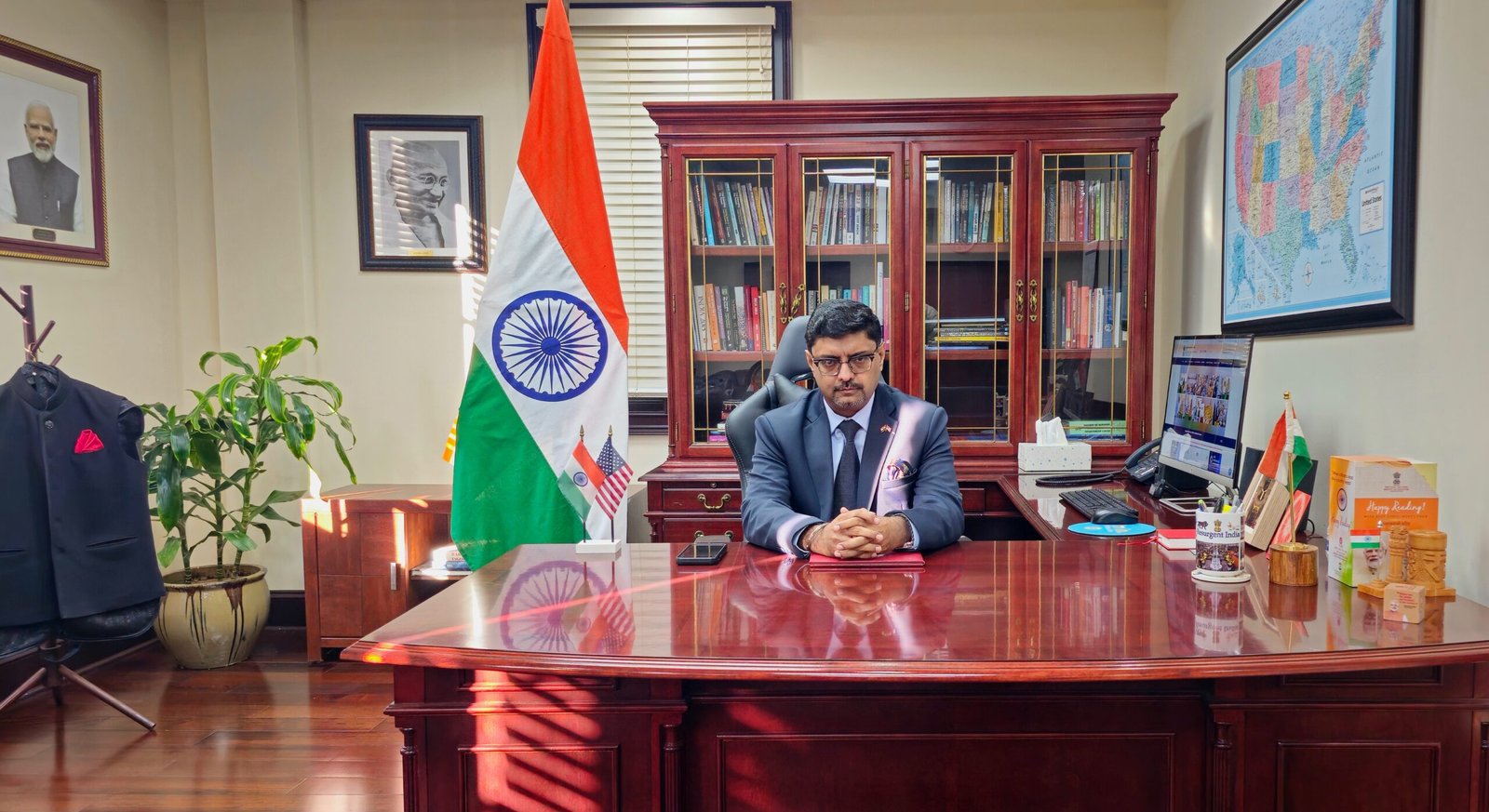
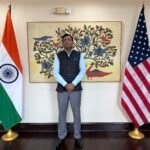
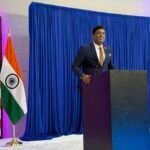
Three days after taking office on August 26, 2026, India’s Consul General in Atlanta, Dr. Sumit Seth, a trained physician, outlined his key priorities for the mission, including consular services, economic engagement, education and stronger connections with the Indian diaspora across the Southeast.
In his first exclusive interview since assuming the role, Dr. Seth spoke with South Asian Herald on August 29 about the growing potential of the India-Southeastern United States partnership, lessons from his previous diplomatic assignment in Central America and how his background in forensic medicine has shaped his approach to diplomacy.
What are your key priorities as Consul General of India in Atlanta?
My first priority is consular delivery. It may not be seen as the most glamorous part of diplomacy, but it is probably the part that touches people’s lives most directly.
This Consulate has issued more than 20,000 passports and processed over 8,000 OCI cards. Behind every one of those numbers is a person or a family. For us, a passport may be one more file, for somebody else, it may determine whether they can travel for a wedding, take up a job, visit a parent or deal with an emergency. I want that interaction with the Consulate to be predictable, efficient and humane.
The second priority is economic. Indian investment in the Southeast has already crossed $12 billion, while the region imports more than $19 billion worth of goods from India. I see the Southeast as one of India’s most important gateways into the United States, and I intend to treat it that way. The Consulate should be a connector between companies, state governments, chambers, investors and entrepreneurs.
Education is another area where I see enormous possibilities. Nearly twenty universities from across the Southeast recently sat down with our Ambassador Shri. Vinay Kwatra for a substantive conversation. For me, the important part begins after the roundtable. I would like to convert those conversations into joint research, student and faculty mobility, technology partnerships and stronger institutional links with India.
And then there is the Indian diaspora. Our responsibility does not stop at metro Atlanta. It extends to communities in Georgia, Florida, Alabama, Mississippi, Tennessee and South Carolina, as well as Puerto Rico and the U.S. Virgin Islands. I firmly believe that a Consulate General must leave its own ZIP code if it is to do full justice to the purpose for which it was established.
In Panama, as Ambassador of India I organized much of my work around five Ts—Traditions, Trade, Technology, Tourism and Talent. It was a simple framework, but it kept us focused. I intend to carry that compass with me in Atlanta, while adapting it to the opportunities of this region.
How do you assess the importance and future potential of the India–Southeast U.S. partnership?
I think the Southeast is one of the most exciting and perhaps with the most potential energy in the matrix of the India–U.S. relationship.
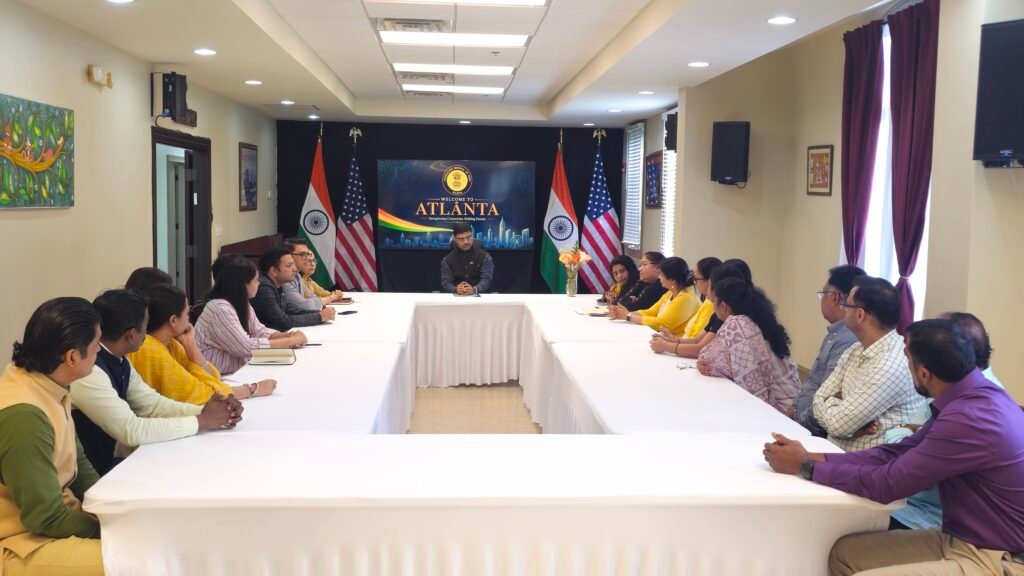
Just consider the geography. The world’s busiest airport and one of America’s fastest-growing container ports are in the same state. Indian companies such as Novelis and Birla Carbon have substantial roots here. Global companies such as UPS, Delta, Coca-Cola, Home Depot, AGCO and Intercontinental Exchange are headquartered in this region. Add to that world-class universities, a strong innovation ecosystem and a large and increasingly confident Indian-American community.
Then look at the larger arithmetic. India and the United States have set themselves the goal of taking bilateral trade to $500 billion by 2030 under Mission 500.
But $500 billion will not be created in Washington and New Delhi alone. It will be built transaction by transaction in Savannah, Greenville, Nashville, Tampa, Birmingham, Atlanta and many other places across America. That is where a regional Consulate has a very practical role to play.
Education is another opportunity I feel strongly about. India has opened the door for foreign universities to establish campuses in India. I would be delighted if, during my tenure, we could encourage institutions from the Southeast to seriously explore that possibility. Even beyond campuses, there is tremendous room for joint degrees, research partnerships and collaboration in emerging technologies.
And this year gives our region an unusual diplomatic moment. Atlanta will host the G20 Foreign Ministers’ Meeting on October 30–31, while the G20 Leaders’ Summit will take place in Miami on December 14–15. Both are within our consular jurisdiction.
I see these not simply as events on a diplomatic calendar, but as opportunities. We should use them to deepen India’s engagement with political leaders, businesses, universities, technology networks and the wider community in this region.
The potential is already there. Our job is to convert potential into partnerships.
How would you characterize India’s relations with Panama, Costa Rica, and Nicaragua?
They are three very different countries, and that is precisely what made the assignment so interesting.
Panama is, in many ways, a logistics nation. Its Canal sits at one of the great arteries of world commerce. India’s links with Panama also go back well over a century, including the presence of Indians during the great periods of infrastructure construction there.
What I saw during my tenure was a relationship becoming much more ambitious. President José Raúl Mulino’s government clearly sees India as an important long-term partner. Foreign Minister Javier Martínez-Acha made a five-day visit to India in July and spoke very clearly about Panama’s aspiration to become a major gateway for Indian trade and investment into Latin America. We also saw greater parliamentary engagement and growing interest in maritime cooperation, logistics, education and technology.
Sometimes economic diplomacy becomes visible in very ordinary ways. When I launched three new Royal Enfield models in Panama City earlier this year, I saw it as more than the launch of three motorcycles. An Indian brand designed and manufactured in India was competing confidently in a Latin American market. That says something about how the India story has changed.
Costa Rica is different. It is a country India should learn from as well as partner with. A nation that abolished its army and invested heavily in education, biodiversity and clean energy has made some remarkable choices. Our engagement there included capacity-building through ITEC, scholarships, technology and pharmaceuticals, but I always felt the relationship had considerable room to grow in innovation and knowledge partnerships.
Nicaragua is where India’s development partnership has perhaps been most tangible. India has supported projects in power transmission and healthcare and has supplied medicines over the years. We also signed an umbrella agreement in Managua for Quick Impact Projects covering areas such as roads, community centers, education, healthcare and sanitation.
One development I found particularly interesting, especially as a doctor, was Nicaragua becoming the first Spanish-speaking country to recognize the Indian Pharmacopoeia. It may sound technical, but such decisions can ultimately improve access to affordable, quality medicines.
So, if I had to put it very simply: Panama was about connectivity, Costa Rica about knowledge and sustainability, and Nicaragua about development partnership. But in all three, the common thread was trust.
What areas did you prioritize in Panama?
Five things. I called them the five Ts so that my team and I could never lose the thread: Traditions, Trade, Technology, Tourism and Talent.
On talent, we increased scholarship opportunities available to Panamanians. I have always believed that scholarships are among the most durable investments a country can make in a relationship. A young person who spends time studying in India does not return merely with a degree. They return knowing India. That relationship can last for years.
On trade, we tried to make Indian brands physically visible in Panama. Panama is a dollarized and open economy, but it is also a logistics and re-export hub. That makes it an interesting market in itself and, potentially, a platform for Indian companies looking towards Latin America.
Traditions were equally important. For International Day of Yoga, for example, we took yoga to the archaeological setting of Panamá Viejo. I wanted Indian culture to be experienced outside diplomatic halls. If diplomacy happens only in boardrooms and ballrooms, it mostly reaches people who are already engaged.
On technology, we tried to connect Indian capabilities with Panamanian institutions in practical areas. And on development cooperation, we moved the Quick Impact Projects initiative from an umbrella framework towards specific projects designed to produce visible benefits in local communities.
Tourism, of course, runs in both directions. India is still not sufficiently understood in Latin America as a tourism destination, and Latin America remains under-explored by Indians. There is considerable room to change that.
But if you ask me what decision I am personally most satisfied with, it was geographical.
We refused to be an Embassy that lived only in Panama City.
We travelled. We went to the provinces. We met universities, local authorities, communities and businesses outside the capital. At the end of my assignment, the Panamanian Foreign Ministry spoke of our expanding cooperation across science, technology, innovation, health, education and energy.
I think some of that breadth simply came from showing up.
What were the most valuable lessons from your previous assignment?
I would probably take five lessons with me.
The first is that a small mission with a clear focus can outperform a much larger mission without one. We were not a big Embassy. The five Ts gave us a filter. Every invitation, every proposal and every rupee had to answer a simple question: does this advance one of our priorities? If it did not, we learned to say no.
The second is that presence matters. You cannot conduct all diplomacy from behind a desk. Sometimes the number of kilometers you travel matters more than the number of notes verbale you send. People remember that you came to their town, visited their university or sat across the table from their business community.
Third, language is not a courtesy, it is access. I have an advanced diploma in Spanish, and speaking the language changed my experience of Latin America. It changed the conversations I could have and, more importantly, what people were willing to tell me.
“Hablar el idioma es abrir la puerta,” to speak the language is to open the door. I would say that to any young diplomat.
Fourth, diplomacy compounds slowly. A surprising amount of what we do gives its return after we have left. A scholarship student, a parliamentary friendship group, a business introduction, a project in a small community the real value may become visible years later. You have to be comfortable investing in relationships whose full results may belong to your successors.
And the fifth lesson is really a doctor’s lesson: prevention is better than cure.
Build the relationship before you need it. Because on the day you urgently need a relationship, it is already too late to begin building one.
You became India’s youngest forensic pathologist at 26 before joining the IFS. What inspired the transition?
The slightly unusual part of my story is that the desire to become a diplomat actually came first. Forensic medicine came later, and for a while the two ambitions lived quite happily together.
I studied medicine at Maulana Azad Medical College and subsequently specialized in forensic medicine at Lady Hardinge Medical College in Delhi. I completed my postgraduate qualification before celebrating my twenty-sixth birthday and became, at that time, the youngest postgraduate in forensic medicine in India.
Between 2000 and 2005, I worked as a forensic surgeon and was involved in more than two hundred homicide cases, including the Phoolan Devi murder case. I also taught medical students.
During that period, I wrote Review of Forensic Medicine, initially as a short revision book for students. It has somehow survived both medical examinations and market forces and reached its eighth edition this year. I am particularly pleased that students still tell me they read it just before examinations, which may or may not have been what their professors intended.
But forensic medicine is, in a sense, a discipline that arrives after the event. You reconstruct what happened after the outcome can no longer be changed.
I realized that I wanted to work at the other end of the timeline. To build relationships, prevent misunderstandings and create possibilities before events become irreversible.
Medicine taught me the dignity of serving one person at a time. Diplomacy offered me another scale of public service.
So, I appeared for the Civil Services Examination and joined the Indian Foreign Service in 2005. Twenty-one years later, I have never regretted that decision.
Although I should confess that I still read forensic medicine for pleasure. My family finds this slightly perplexing.
How has your medical training shaped your approach to diplomacy?
In very practical ways. Not poetic ones.
The first is history-taking. Every medical student is taught that if you ask the right questions and listen carefully enough, much of the diagnosis is already in the history.
Diplomacy also rewards the ability to speak, but medicine disciplines you to listen. I have found listening to be the scarcer skill.
Second is diagnosis before prescription. Whenever you arrive in a new country or a new assignment, there is a temptation to arrive with a program already written. I prefer to spend the first weeks listening and understanding what already works, where the gaps are and what people actually expect from us.
That is exactly what I am doing in Atlanta now.
Third is triage. A Consulate is sometimes an emergency room and a family clinic at the same time. A passport renewal is important. A citizen stranded in distress, or a family dealing with a death abroad, is urgent. Both deserve attention, but they require very different responses. Knowing the difference and building systems around it is essentially triage. That is also why our emergency contact operates around the clock.
And lastly. it is the forensic habit of evidence. Forensic medicine makes you rather particular about facts, documentation and chain of custody. You verify before you assert. That habit has served me very well in negotiation, drafting and, frankly, in reading the news.
Medicine also gave me a continuing professional interest in health diplomacy. During my posting at India’s Permanent Mission in Geneva, I worked on issues involving the World Health Organization.
Now I find myself in Atlanta, home to the Centers for Disease Control and Prevention, in a country where Indian pharmaceuticals already play an important role in healthcare.
I would very much like to explore what more can be done between India and the Southeast in healthcare, pharmaceuticals, research and health technology.
Sometimes coincidences deserve to be taken seriously.