Join WhatsApp Channel

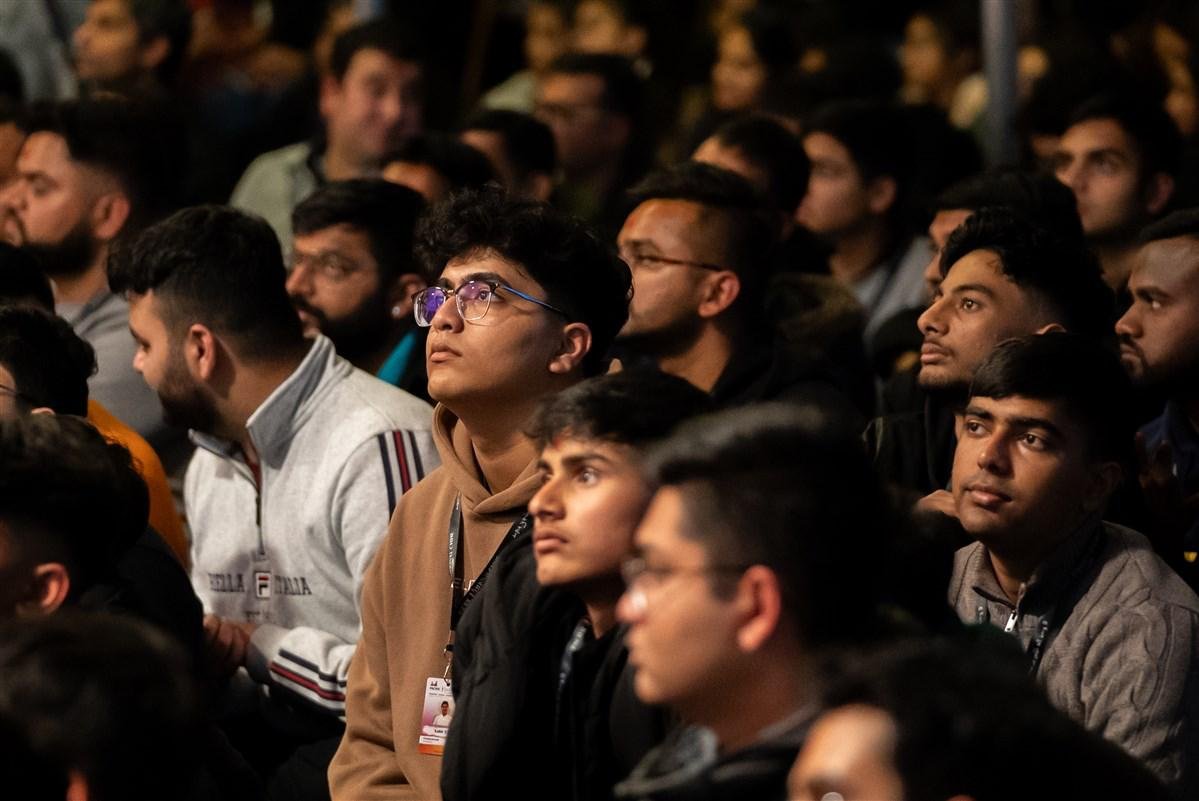
Ask Australians what’s gone wrong lately and you’ll get a familiar list. Phones. Social media. Cost of living. Politics that seems designed to split us into teams. We reach for these because they feel true, and in fairness, each is at least partly to blame.
But there’s a number buried underneath these roadblocks that should stop us cold. In a 2025 report on young Australians, researchers found that 43% of people aged 15 to 25 feel lonely. More than two in five. And for many, this isn’t a fleeting feeling: one in seven have felt that way for at least two years straight, and persistently lonely young people were over seven times more likely to experience high or very high psychological distress.
And this isn’t only a youth problem. Nearly one in three Australian adults say they’re lonely too, and researchers now put the health toll of chronic loneliness on par with smoking up to 15 cigarettes a day.
So, we name the usual culprits, and COVID sits near the top of the list. But what if the phones, the politics and everything in between are symptoms, and the disease is something quiet and ancient? Let’s zoom out and work backwards.
The thing we built that we weren’t built for
For almost all of human history, people did not live the way most of us live now. We lived in dense, overlapping, multigenerational groups, from the cavemen through to your great-great-grandparents: extended family, neighbors, elders, children, the whole noisy web of people who knew your name and your business and showed up whether you wanted them to or not.
The model most of us now treat as the pinnacle of success, a nuclear family behind its own front door, self-sufficient and private, is in evolutionary terms brand new. The Industrial Revolution rearranged how we earned a living, and as people moved into cities for work, it rearranged how we lived. We adopted this arrangement in a relative heartbeat and marketed it as progress. And while it is progress in many ways, it also quietly removed something we’d leaned on for tens of thousands of years: the constant, ambient presence of community.
A man interviewed for a recent New York Times piece on faith wanted community so badly he fantasized about hosting barbecues for his apartment block. Eight months later, he still hadn’t knocked on a single door. That ache of craving connection, and having nowhere obvious to go and get it, is the real story underneath the loneliness statistics. We didn’t lose the need for community. We lost the structures that used to hand it to us implicitly, before we’d even thought to ask.
You can watch those structures vanish in the data. Formal volunteering in Australia fell from 36% of adults in 2019 to 26.7% by 2022, a loss of roughly 1.86 million people, accelerating a decline that had been underway for a decade. Fewer clubs, fewer congregations, fewer weekly reasons to sit in a room with people you didn’t pick but came to rely on anyway.
A trend nobody predicted
Here’s where the story takes an unexpected turn. For decades, the sharpest people studying religion in the wealthy world agreed on the trajectory: down. Every generation a little less religious than the last, in a slow drift toward a secular future. The phenomenon even had a name, the “Great Dechurching,” and by some estimates 40 million people left their churches in America alone.
And then, around 2020, it stopped. Recent Pew Research Center data shows the long decline in religious identification has stalled for the first time in a generation. This is not evidence of a revival. But a downward slide that demographers had treated as a law of nature has paused, and that pause is worth a closer look.
The most interesting finding isn’t that some young people are drifting back toward faith. It’s why. The answer is rarely a bolt of theological conviction. What people describe instead is practical: they want to be accountable to something larger than their own preferences, a home-cooked meal when they’re sick rather than a comment thread. They want the community and the sense of purpose that the rest of modern life had quietly stopped supplying.
So, people aren’t necessarily rediscovering belief. They’re rediscovering belonging. For eons, the two arrived bundled together, whether you ordered them that way or not.
Enter BAPS
Which brings us back to that paddock near the Western Sydney Airport. If you set out to design an institution from scratch to answer the exact problem the loneliness data describes, intergenerational, structured, weekly, built entirely on people showing up for one another, you might land on something that looks a lot like BAPS.
BAPS Swaminarayan Sanstha is a Hindu socio-spiritual organization that has been part of Australian community life for more than three decades. Across the country it has grown to 19 temples and 84 centers where families gather each week for prayer, learning and service. Its members are no monolith: children and seniors, students and professionals, families who arrived last year beside families born here. And they are part of a wider shift, with Hinduism now Australia’s fastest growing religion and one of its youngest, having grown 55.3% to 684,002 people at the 2021 Census.
What holds all those different people together isn’t a demographic. It’s an idea, and BAPS puts it in five words: in the joy of others lies our own.
And it isn’t abstract. Everything BAPS does in Australia runs on volunteers, with no paid staff behind its community programs, only individuals and families who give their time because they believe service is worth giving.
In the Hindu tradition this kind of service has a name, seva, but the impulse will be familiar to any Australian. It’s the same one behind the volunteer service, the Saturday-morning footy coach, the neighbor who leaves a casserole at the door when someone down the street is unwell. BAPS doesn’t claim to have invented that spirit. It simply offers a framework for it: a standing, organized, intergenerational home for people who want to serve and don’t know where to start.
That ethos is taking physical shape too, most visibly at a new 25-acre cultural precinct near Sydney, with mandirs and centers in cities across the country.
What the loneliness data was really asking
Look again at the numbers we started with. The 43%, the 1.86 million vanished volunteers, the friendships worn down to twenty minutes a day. They were never really a story about phones, or lockdowns, or urbanization. They were a story about subtraction, about taking community away faster than we put it back.
We tend to file religion under belief, a question of what you can or can’t bring yourself to accept about the universe. But almost nobody in this research came back for the metaphysics. They came back for the Sunday night. For the people who’d notice if they didn’t show. For somewhere to put the part of themselves that wants to be useful to somebody.
That reframing is what’s buried in the data. We keep treating loneliness as a personal failing, something to fix with more willpower, one more resolution to reach out. But the man who dreamed of barbecues for his building had all the will in the world, and it still left him alone. Wanting was never the missing piece. What we lost was the structure that used to carry it, and no resolution rebuilds that on your own.
BAPS is that structure put back, though a structure is only scaffolding until people fill it. What fills this one is five words long: in the joy of others lies our own.
The cure for feeling unseen, it turns out, is not being seen. It is turning up for someone else and letting yourself be counted on. You don’t have to arrive believing anything. You just have to turn up, and keep turning up, until the people in the room stop being strangers. And it isn’t a theory. It’s happening in Australia every week, in a BAPS temple or center with its doors open, for anyone who wants back in.
Disclaimer: The opinions and views expressed in this article/column are those of the author(s) and do not necessarily reflect the views or positions of South Asian Herald.
Related posts:
 Loneliness is an incubation period for mental illness, says Sadhguru Jaggi Vasudev
 Gujarat Chief Minister Applauds BAPS Akshardham’s Heritage and Volunteer Service
 BAPS Swaminarayan Sanstha Marks America250 Honoring South Asian Americans
 Over 45,000 People Participate in 100 BAPS Charities Walks Across the United States