Join WhatsApp Channel

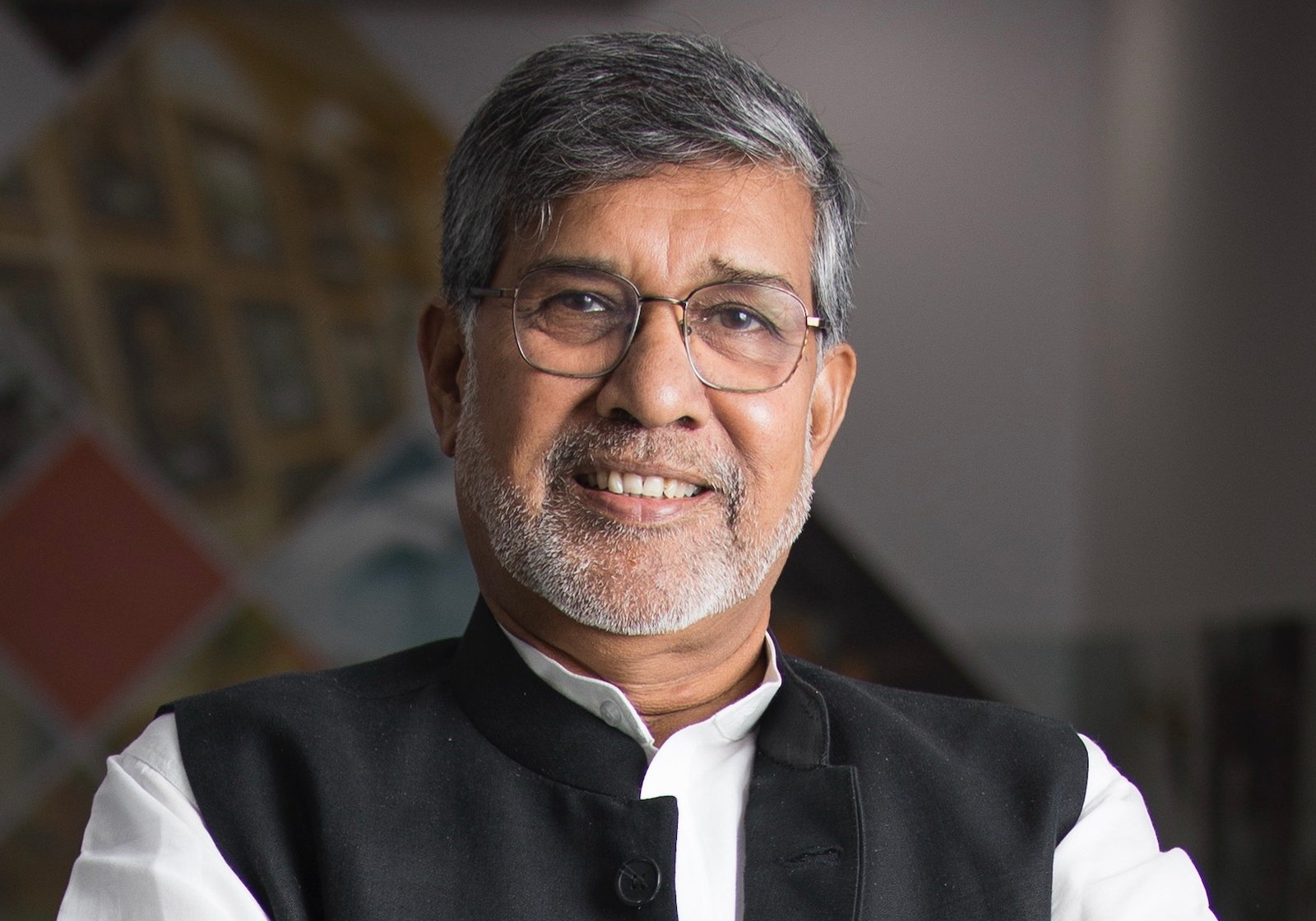

Nobel Peace Laureate Kailash Satyarthi has spent more than four decades fighting child labor, trafficking and exploitation, building a global movement around the rights and dignity of children. From rescuing bonded laborers in brick kilns to mobilizing millions through the Global March Against Child Labor, his work has consistently sought to turn moral conviction into concrete action.
His new book, Karuna: The Power of Compassion, builds on that journey, arguing that compassion should not be understood merely as an emotion or an act of kindness, but as a transformative force capable of confronting systemic injustice.
In this exclusive interview with South Asian Herald, Satyarthi reflects on the experiences that shaped his understanding of compassion, the continuing fight against child labor and why he believes today’s young generation could become the driving force behind a more compassionate and just world.
Compassion as a Force for Social Transformation
For Satyarthi, compassion has been the thread running through five decades of activism. His work with children and marginalized communities showed him that suffering was often rooted in deeper sociocultural, political and economic injustices.
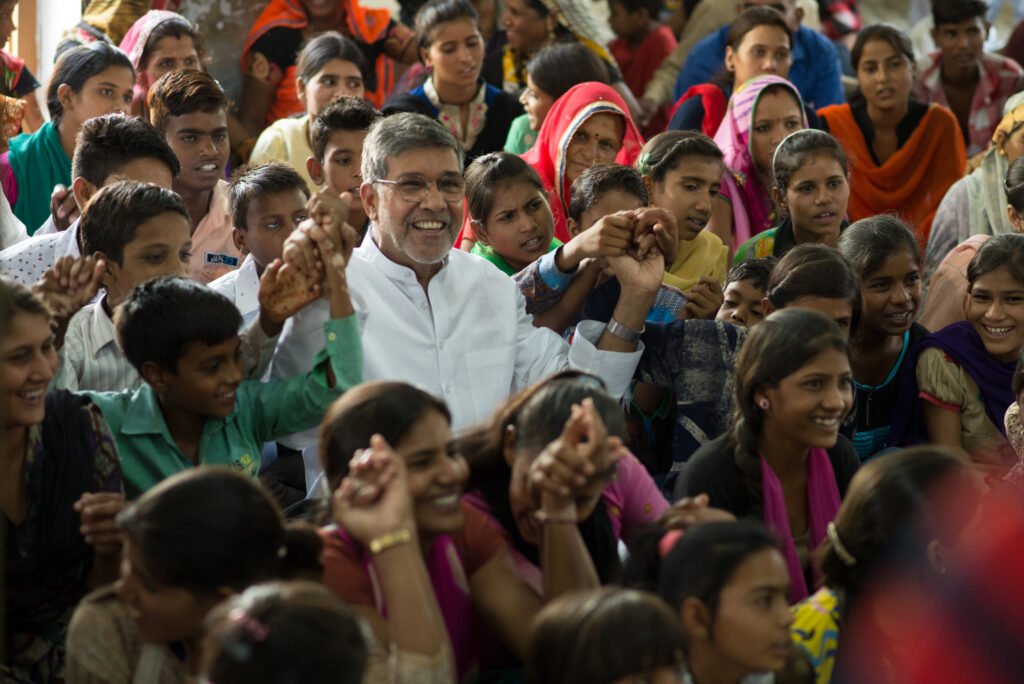
“This was never a shift, compassion has been the driving force behind every success and every failure across my work,” he says.
The Global March Against Child Labor reinforced his belief in compassion as a force for structural change. Millions participated despite having no personal connection to child labor, marching for children they had never known.
“What was unique was that millions of people who participated in the Global March were not motivated by politics or ideology,” Satyarthi says. They were driven by “the spark of compassion.”
For him, compassion is not simply a feeling. “It is the dynamic and disruptive force borne from feeling the suffering of others as one’s own that drives mindful action to end that suffering.”
His message is ultimately one of hope. “Compassion is not something we have to acquire, it is innate and part of our biology and our shared humanity.” What society needs, he says, is to rediscover it and practice it.
The Rescue That Defined a Life
The philosophy behind Karuna is rooted in personal experience. When Satyarthi was 27, a sickly man arrived at his door and collapsed after pleading, “Babuji, please save my daughter.”
The man and his wife had been enslaved in a brick kiln for 17 years, and their 15-year-old daughter was at risk of being sold to brothel agents. Satyarthi faced a choice: write about the suffering or act upon it.
“I chose to act,” he recalls.
With friends, he went to the kiln and helped rescue 36 men, women and children. Despite resistance, evidence survived and a habeas corpus petition was eventually filed in the Delhi High Court.
But it was the children’s first experience of freedom that stayed with him.
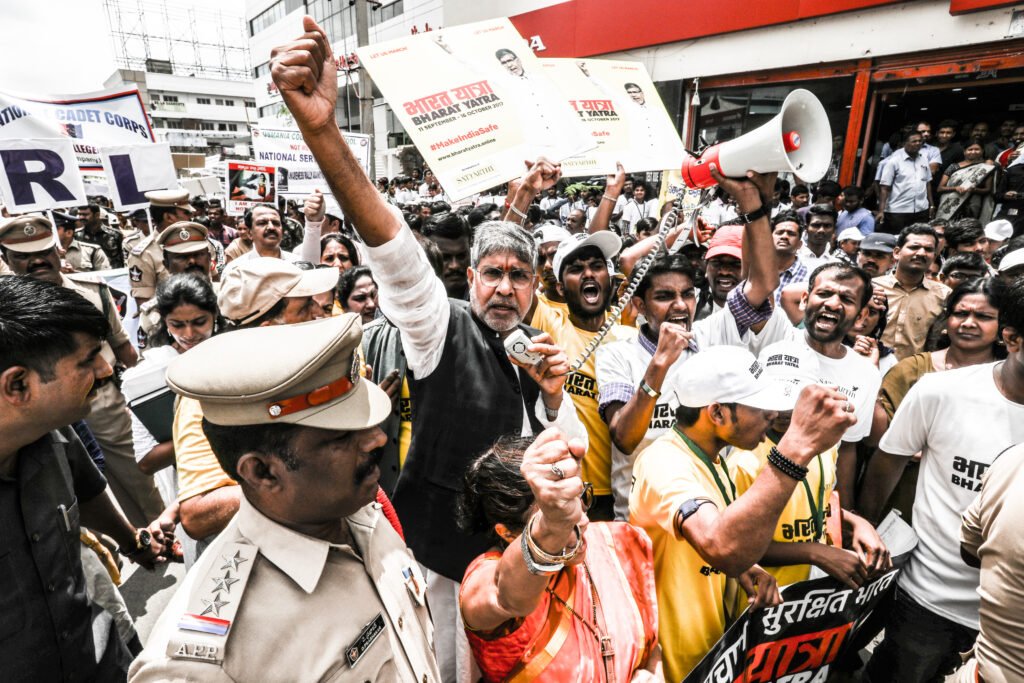
“Having grown up inside that kiln, they had never known an ordinary street,” he recalls. “In that moment, watching the children leap about like frogs released from a bucket, completely free, I could see God in their joy.”
That rescue became the seed of Bachpan Bachao Andolan. In the decades since, Satyarthi says, more than 140,000 men, women and children have been freed from bondage and trafficking.
The Question That Began the Journey
Satyarthi traces the origins of his activism to an even earlier moment. On his first day of school in Vidisha, at five and a half, he saw a boy his age polishing shoes outside the school gate.
When he asked the boy’s father why his son could not attend school, the answer stayed with him: “There are people like you who are born to go to school. We are born only to do this kind of work.”
“I had been taught that God created all human beings equal. I could not understand why one child was expected to study while another was expected to work.”
“I did not have the language to describe what I felt, but I knew something was deeply wrong,” he says. “Looking back, I now recognize that moment as the spark that ignited my life’s journey.”
From the Global March to the Fight Ahead
The Global March Against Child Labor travelled 80,000 kilometers across 103 countries and involved more than seven million people. Its impact helped lead to the International Labour Organisation’s adoption of Convention 182 in 1999, the first international law against the worst forms of child labor.
Satyarthi sees progress as evidence that change is possible. “Child labor is not inevitable. It falls the moment we choose, collectively, to make children our priority.”
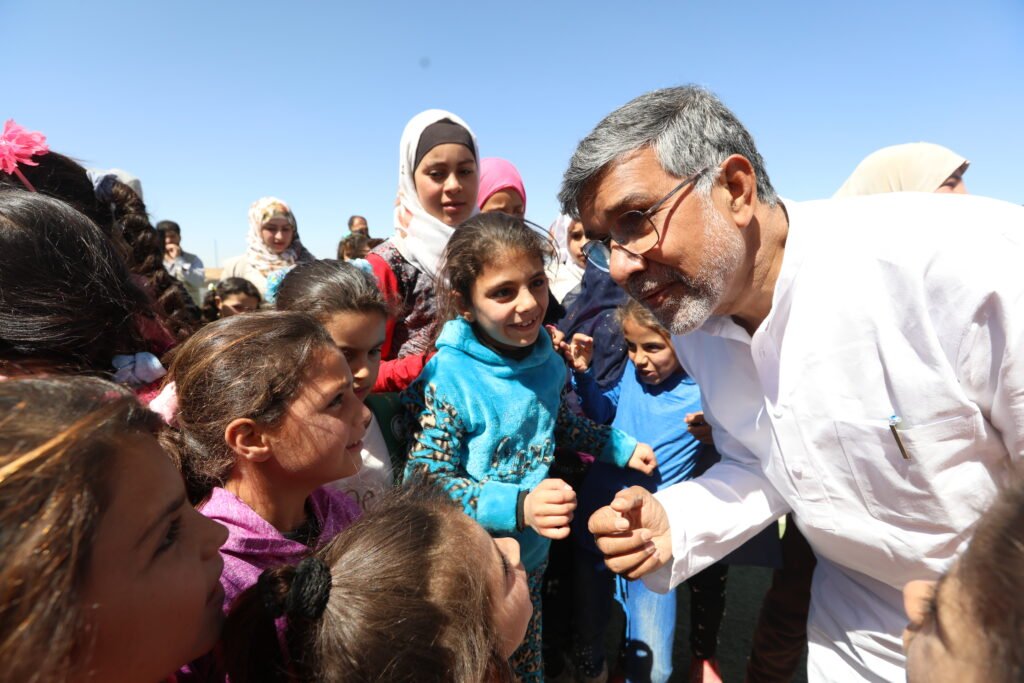
Yet nearly 138 million children remain in child labor, including 54 million in hazardous work.
For Satyarthi, the deeper challenge is political will. “Children are still not treated as a global political priority,” he says.
“The real question is whether we have the political will and the moral courage to reach every child,” he says. “Until the last child is free, our work remains unfinished.”
Beyond Empathy: The Meaning of Compassion
A central argument of Karuna is the difference between sympathy, empathy and compassion. Satyarthi illustrates it through three sisters who encounter an injured man.
“The first expressed sympathy. The second experienced empathy. But only the third sister embodies compassion, because compassion does not stop at feeling another’s pain; it compels us to act.”
Compassion, he says, “leads to a determination to end the suffering and drives us to search for solutions with courage, creativity, persistence and resolve.”
He also distinguishes compassion from charity. “Compassion dissolves that distance,” he says. “It does not see two unequal individuals, instead it bridges that gap and replaces hierarchy with equality.”
Why the Next Generation Gives Him Hope
Satyarthi rejects the idea that Gen Z is indifferent or self-absorbed. He sees young people across the world raising their voices on climate, peace, justice and inequality.
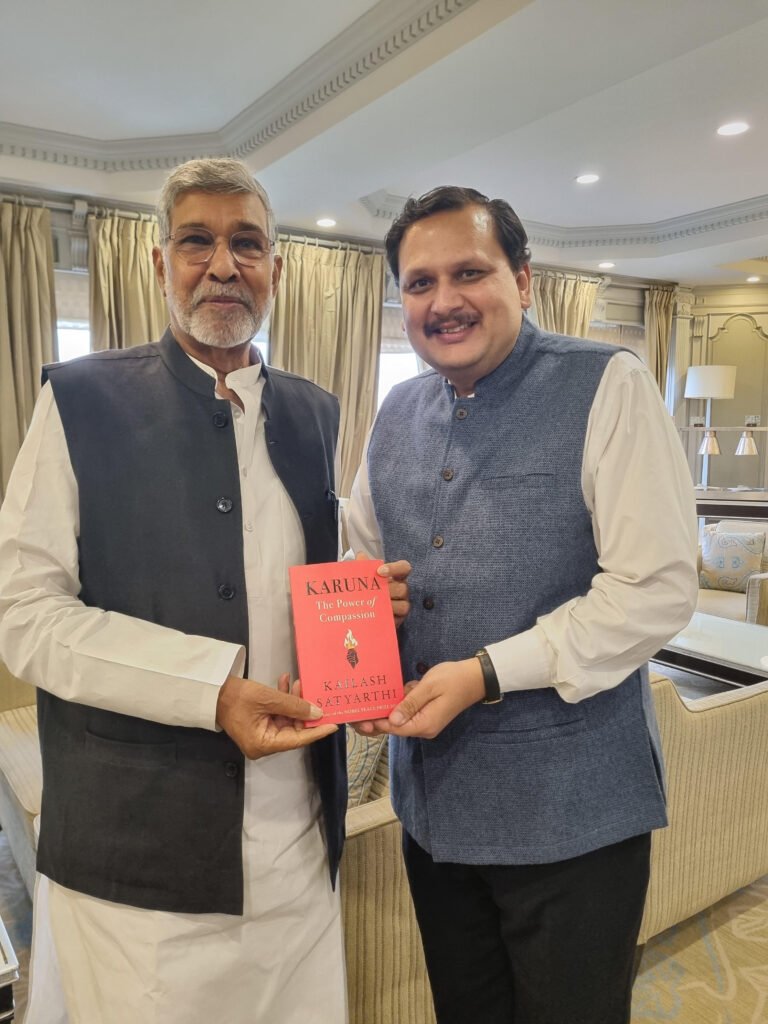
“This generation has grown up with the world’s realities placed directly in their hands,” he says. “It has made them harder to deceive. They see clearly, and they see fast.”
His concern is that young people are losing faith in institutions that fail to practice what they preach.
“They have little patience left for being preached to by those who talk of justice but do not practice it,” he says.
But he sees this skepticism as a source of hope rather than despair. “They are watching closely for those who walk the talk, and where they find such people, they follow them passionately without hesitation.”
“This is exactly why I have hope,” Satyarthi says. “The world will be shaped not by those who wait to be told what to do, but by those determined enough to see the path themselves and walk it.”
For him, the generation capable of doing so is already here.
“I believe that generation is already here and is leading the way.”
Related posts:
 “GANDHI – Mantras Of Compassion” by Padma Shri Ricky Kej and Nobel Laureate Kailash Satyarthi Set to Release on July 14
 Grammy Winner Ricky Kej and Nobel Laureate Kailash Satyarthi Announce New Album “Gandhi Hymns of Compassion”
 The Food Factor In Autism
 Rep. Ro Khanna Introduces Bill to Help Families and Child Care Workers