India has stepped up rescue and relief efforts to locate and evacuate its citizens affected by the devastating flash floods in Nepal’s Rasuwa district. The Ministry of External Affairs (MEA) has confirmed that 21 Indian nationals have so far been rescued, while authorities continue efforts to trace and establish contact with others who remain stranded or unaccounted for in the flood-hit region.
Briefing the media on Thursday, MEA spokesperson Randhir Jaiswal said the situation remained “dynamic,” with communication networks disrupted across several affected districts making it difficult to establish direct contact with people on the ground. The Indian Embassy in Kathmandu is coordinating with Nepalese authorities, project authorities, tour operators and state governments to ascertain the safety and whereabouts of Indian nationals. The government has not assigned any codename to the ongoing relief and evacuation effort.
“There are 73 Indian citizens who are working on Trishuli 1 power project. Our embassy in Kathmandu is in touch with the project head to get more details about these people,” Jaiswal said. He added that communications in the affected region had been severely disrupted. “The three or four districts that are affected by this, all the communication channels are broken. So, we are not able to talk to anyone,” he said.
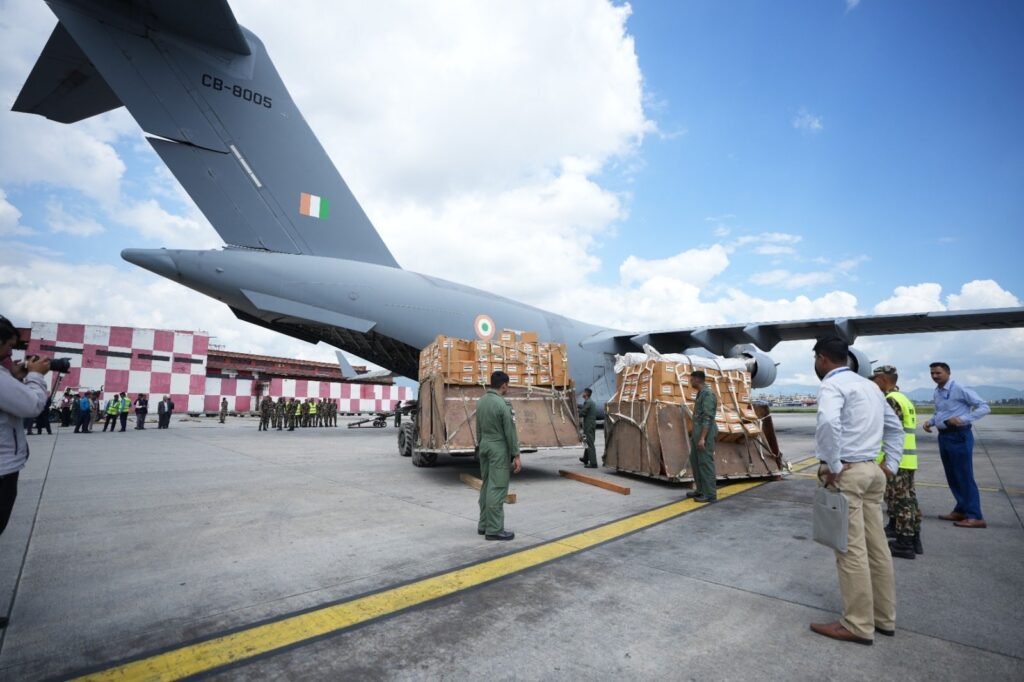
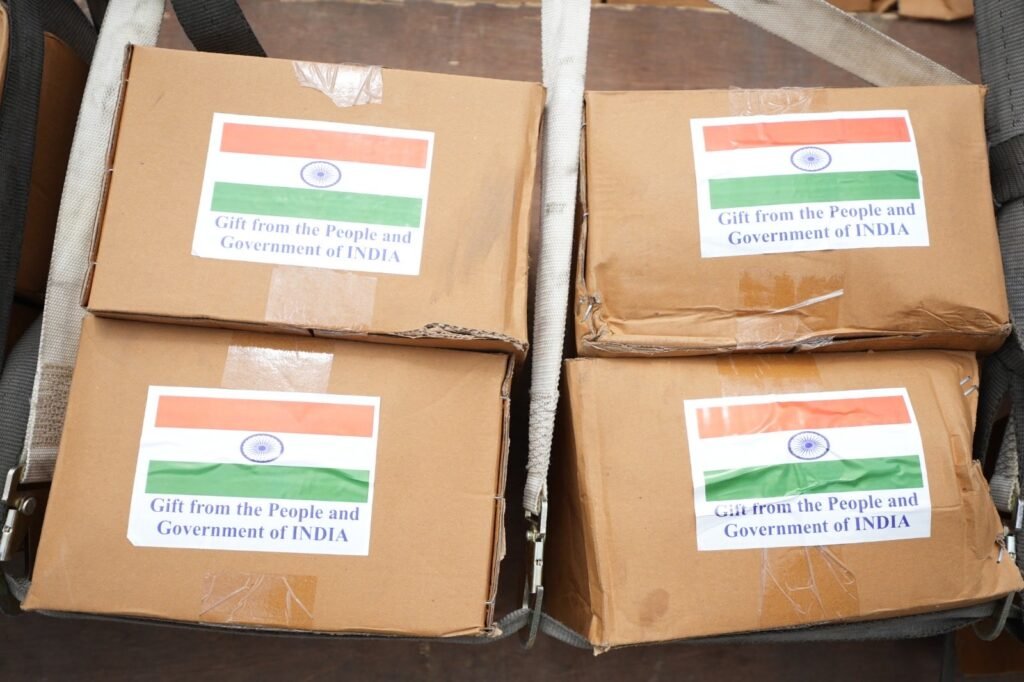
Alongside evacuation efforts, India has intensified humanitarian assistance to Nepal. Jaiswal said two Indian Air Force flights had delivered a total of 47.5 tons of relief material. The first flight arrived in Kathmandu on the evening of August 26 with 10 tons of supplies, including blankets, solar lamps, medicines, hygiene kits and tents. A C-17 aircraft departed India on Thursday carrying another 27.5 tons of relief material, comprising tents, blankets, solar lamps, pumps and kitchen sets, along with eight tons of medicines and two tons of food.
Advertisement
India is also assessing additional requirements based on requests from Nepal, including the possible deployment of field hospitals. Jaiswal said the government is working to mobilize Bailey Bridges after several bridges were washed away or damaged, disrupting connectivity in the flood-hit areas.
On Thursday, 21 Indians had been rescued, all of them from Tamil Nadu. They are expected to reach Kathmandu, following which arrangements will be made for their return to India. Jaiswal said several groups of Indian pilgrims and travelers were also present in the affected areas. These included two Tamil Nadu groups of 37 and 49 people travelling for the Kailash Mansarovar Yatra through separate operators, besides 32 people from West Bengal, 61 Indians from different states and 33 nationals from Kerala. The ministry was continuing verification efforts as contact was established with more people.
The spokesperson cautioned that the figures remained preliminary and could change as authorities gather verified information.
Jaiswal also provided an update on Indian pilgrims stranded on the Chinese side of the border. He said around 200 Indian nationals were believed to be stranded and that some others could potentially be missing. “We are doing a survey and talking to people. We will share whatever we have to share,” he said.
Of those seeking assistance, 95 were in Darchen and proceeding towards Hilsa to cross into Nepal, while four others were moving towards Jilong. The Indian Embassy in Beijing is coordinating efforts for their safe evacuation.
The ministry is also trying to establish contact with a large group associated with the Isha Foundation. Jaiswal said some members were Indian citizens while others could be foreigners, and that their status was still being ascertained. The spokesperson said the immediate focus was on humanitarian assistance rather than a broader financial package. Asked whether India was considering an assistance package similar to the $500 million package extended to Sri Lanka, he said, “At this point in time, our focus has been to supply humanitarian assistance as per the request of the Nepalese side.”
The MEA has established a round-the-clock control room to coordinate assistance and provide information to families seeking details about their relatives. The Indian embassies in Kathmandu and Beijing have also established 24-hour helplines.
External Affairs Minister S. Jaishankar had earlier reviewed the situation with the Foreign Secretary, senior MEA officials and India’s ambassadors in Kathmandu and Beijing, directing urgent efforts to ascertain the status and well-being of affected Indians. (UNI)