Join WhatsApp Channel

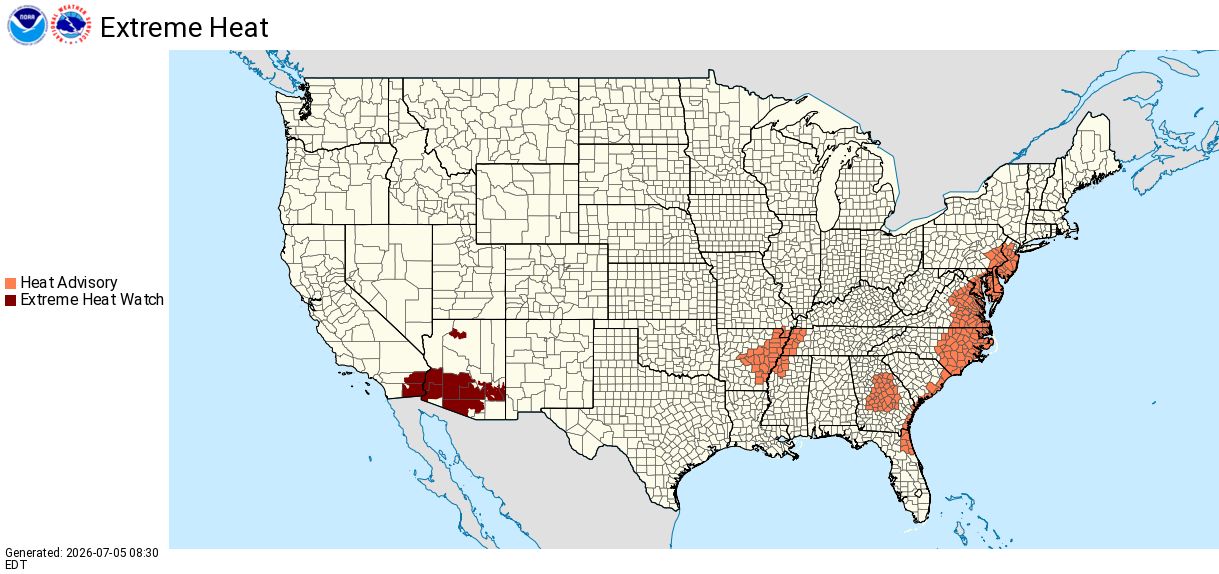
At least 24 people have died during a prolonged heatwave that has gripped large parts of the US, with around 40 million people remaining under heat alerts as forecasters warn of continuing health risks across the country, reports Axios.
Extreme heat is the nation’s deadliest weather hazard, and the rising death toll underscores how dangerous prolonged heat can be.
A powerful heat dome stretching from the Midwest to the East Coast has subjected tens of millions of Americans to days of exceptionally high temperatures, making the week-long heatwave one of the deadliest weather events of the summer so far.
New Jersey recorded the highest number of fatalities, with state officials announcing 22 heat-related deaths over the weekend. Additional deaths linked to the extreme temperatures were reported in Cook County, Illinois, and Hinds County, Mississippi, according to local authorities.
The National Weather Service (NWS) reported that dozens of weather stations across the country either broke or matched daily temperature records over the Independence Day holiday weekend.
Among the most notable records were those set at Ronald Reagan Washington National Airport in the US capital. Temperatures reached 102°F (38.9°C) on July 3, tying the previous record for the date, before climbing to a record-breaking 103°F (39.4°C) on July 4.
Meteorologists said the heatwave was intensified by a persistent high-pressure system that trapped hot air across much of the eastern US, leading to dangerous daytime temperatures and unusually warm nights.
Recent studies have linked rising global temperatures to more severe heat events across North America, Europe and other regions.
The heatwave in the US comes amid a wider period of extreme temperatures globally.
A recent analysis by the World Weather Attribution group concluded that human-induced climate change made Europe’s ongoing record-breaking heatwave virtually impossible compared to conditions 50 years ago. A separate preliminary study estimated that around 20,000 people may have died across Europe during last month’s extreme heat.
Forecasters say conditions in parts of the country are expected to gradually improve during the early part of the week as cooler air and widespread rainfall move into portions of the Mid-Atlantic and Northeast.
However, above-average temperatures are expected to persist across the Southeast, with highs remaining well into the 90s Fahrenheit across the Carolinas and northern Florida.
The National Weather Service warned that high humidity and overnight temperatures remaining in the 70s and near 80°F would continue to create hazardous conditions.
“Combined with high humidity and warm overnight lows in the 70s to near 80 degrees, these conditions will continue to pose an elevated risk of heat-related illness, particularly for those without adequate cooling or hydration,” the agency said.