Join WhatsApp Channel

At a time when stories are increasingly consumed on digital screens, Bay Area artist Pragati Sharma Mohanty is drawing audiences back to one of humanity’s oldest traditions: visual storytelling.
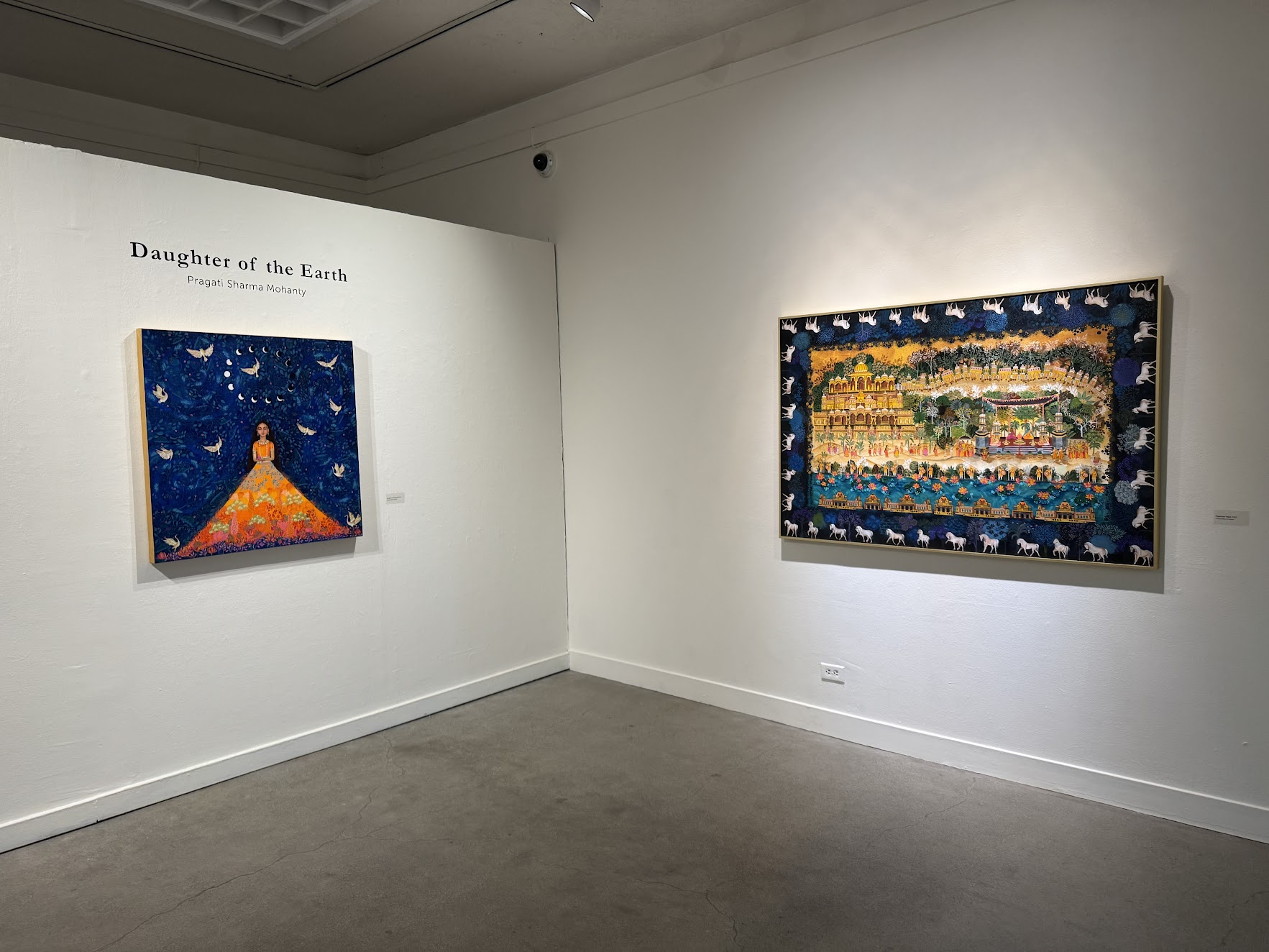
According to a statement, Mohanty’s exhibition, Daughter of the Earth, presents a contemporary interpretation of the Ramayan through more than 75 paintings, sculptural installations, divine totems, and a 100-foot handwritten Sanskrit manuscript.
The exhibition is the culmination of a six-year artistic journey grounded in research, storytelling, and creative experimentation. Drawing from multiple versions of the epic and India’s longstanding traditions of visual narration, Mohanty creates immersive works that weave together mythology, architecture, nature, symbolism, and design.
Working in her signature style, Maximalist-Miniaturism, Mohanty transforms each canvas into a richly layered narrative that encourages viewers to discover stories within stories. Rather than simply illustrating an ancient epic, Daughter of the Earth explores how enduring narratives continue to evolve and resonate with contemporary audiences.
The exhibition also reflects the long history of storytelling through visual media. For centuries, stories have been preserved and shared not only through written texts but also through paintings, manuscripts, sculpture, textiles, architecture, and oral traditions. According to the statement, Daughter of the Earth continues that legacy through contemporary visual art.
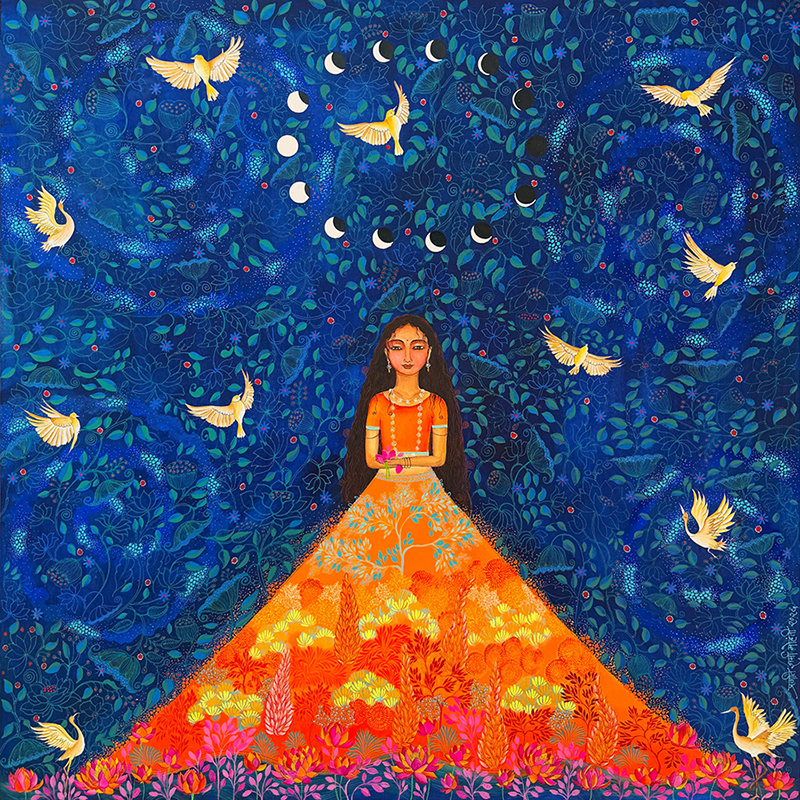
The exhibition focuses on selected narratives from the Ramayan, highlighting characters, landscapes, relationships, and moral questions that continue to resonate across cultures and generations. Each work is designed as a detailed visual world featuring symbolic imagery, architectural elements, flora, fauna, and layered narratives.
Featured works include:
- Large-scale paintings from the Ramayan Reimagined series
- Sculptural installations inspired by mythological forms
- Divine totems
- A 100-foot interactive handwritten Sanskrit manuscript
Mixed-media works that blend traditional craftsmanship with contemporary techniques
According to the Artist Statement, “At a time when stories are increasingly consumed through screens, I turn to one of humanity’s oldest traditions – visual & oral storytelling. My work explores how ancient narratives survive, transform, and find new meaning when they are retold through contemporary artistic languages.”
It added, “Through my signature style, Maximalist-Miniaturism, I create densely layered compositions where every detail contributes to a larger story. Influenced by Indian miniature traditions, folk art, manuscripts, architecture, and decorative practices, my paintings invite viewers into worlds that unfold slowly.”
The statement further noted that the Ramayan has evolved across centuries, cultures, languages, and artistic traditions. “My work is a continuation of that living tradition – not a recreation of the past, but a conversation between history and the present.”
Mohanty, an Indian-born artist based in the San Francisco Bay Area, describes her practice as one that bridges “storytelling, design, and traditional art forms.” She holds degrees in architecture from Government College of Architecture, Lucknow, and industrial design from the National Institute of Design, Ahmedabad. Her educational background informs her artistic approach to structure, composition, and narrative.
Her work combines painting, mixed media, digital planning, and handcrafted techniques to create immersive visual experiences. As the founder of Pragati Art School, Mohanty has spent more than two decades teaching and preserving Indian folk and traditional art while introducing those artistic traditions to students and communities.
Her current project, Daughter of the Earth, represents six years of exploration of the Ramayan through “painting, sculpture, manuscript-making, and installation.”
Mohanty describes Maximalist-Miniaturism as a visual language that merges two contrasting artistic concepts. It combines the “precision, intricacy, and storytelling traditions” of miniature art with the “abundance, complexity, layering, and visual richness” of maximalism.
According to the statement, the resulting works operate on multiple levels, presenting a complete composition from a distance while rewarding close observation with hundreds of intricate details and discoveries.
The statement also highlighted Mohanty’s research-driven creative process. Each work begins with an in-depth study of multiple interpretations of the Ramayan, historical references, symbolic motifs, and compositional planning before the final artwork is created. Her architectural training shapes her use of space and structure, while her experience with traditional arts influences her use of ornamentation, pattern, and visual storytelling.
The creative process integrates historical research, hand drawing and painting, digital design tools, laser-cut elements, mixed-media experimentation, and traditional craft techniques.