Join WhatsApp Channel

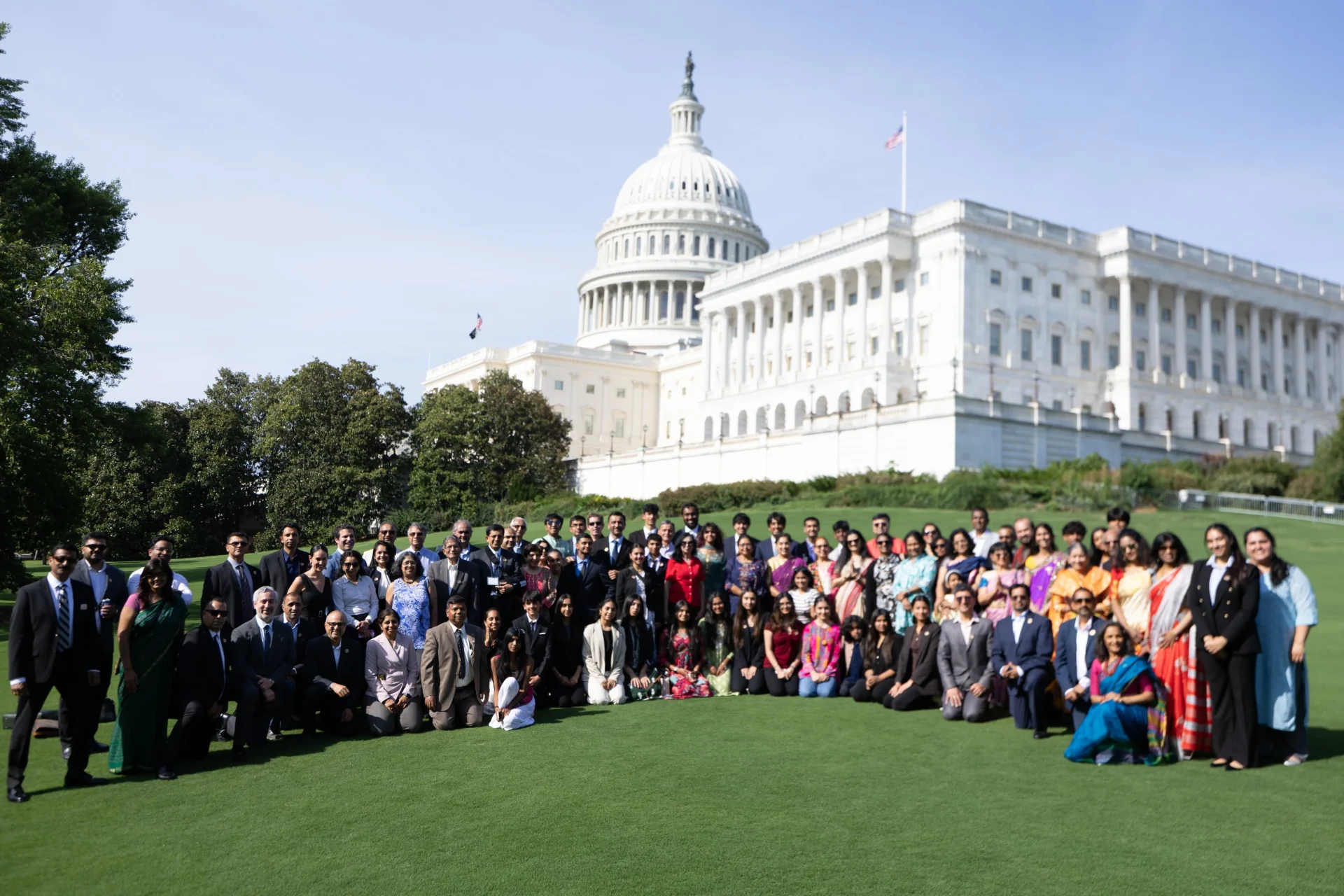
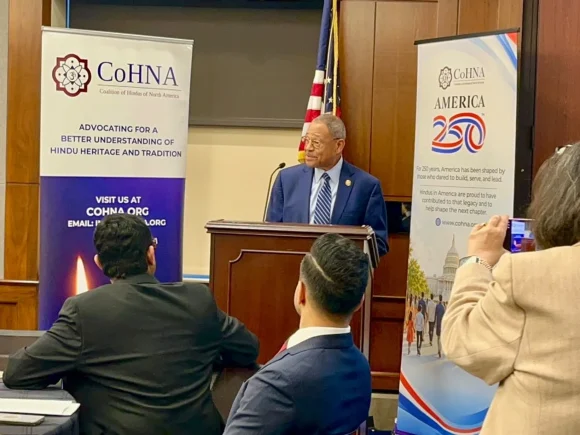
The Coalition of Hindus of North America (CoHNA) hosted its fifth Advocacy Day on Capitol Hill, bringing together more than 130 Hindu Americans from 15 states to commemorate America’s 250th anniversary, engage with lawmakers, and discuss issues affecting the Hindu American community.
According to a CoHNA statement, the event highlighted bipartisan concern over rising Hinduphobia, celebrated the nation’s 250th anniversary, and amplified the voices of young Hindu Americans. Seven members of Congress and 12 congressional staffers from both political parties participated in discussions on issues impacting the community.
Ahead of the event, Hindu delegates conducted more than 50 meetings with Senate and House staff and visited over 120 congressional offices to educate lawmakers and strengthen connections between elected officials and their Hindu constituents.
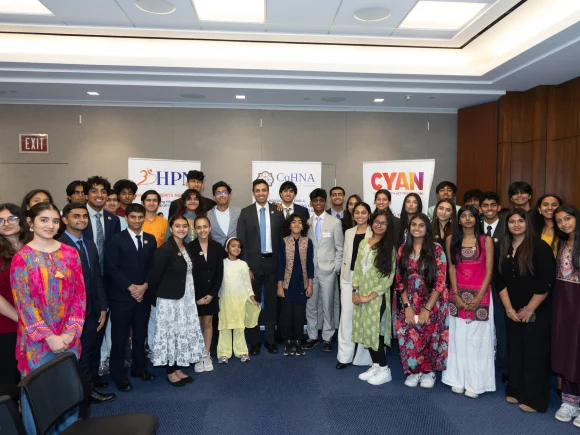
“It was a powerful day on Capitol Hill. We came together as Americans, sharing stories, and building relationships and singing the national anthem,” said CoHNA President Nikunj Trivedi. “American Hindus come from all walks of life—students, entrepreneurs, cab drivers, pharmacists, homemakers, retail workers, engineers, bankers and scientists. We are thinkers, teachers, writers and veterans. It was an honor and privilege to share insights, to educate, and to come together with our lawmakers and our interfaith allies to celebrate the grand anniversary of our country.”
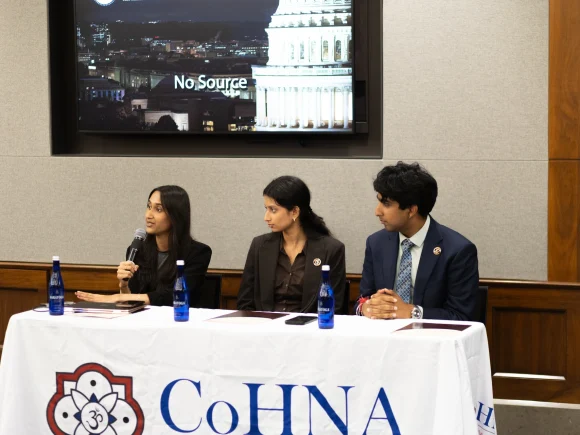
The statement noted that representatives from the Armenian and Jewish communities, along with a city council member from Maple Grove, Minnesota, also addressed attendees. A youth panel organized by the CoHNA Youth Action Network (CYAN) chapter at Rutgers University shared its experiences advocating on campus over several years, including efforts to secure representation, respond to what members described as Hinduphobic campus events, engage university administrators, and organize an academic conference on Hinduism.
“A CYAN national level leader discussed Hinduism in American history dating back to the Founding Fathers and American Hindus shared their diverse life journeys,” the statement said. “Hindu veteran Ruchir Bakshi spoke about his combat service in Afghanistan and Iraq during his years in the U.S. Army, and how the Bhagavad Gita taught him that true service means acting with discipline and integrity without attachment to outcome. And self-mastery can guide civic engagement—without giving up one’s Hindu identity.”
According to CoHNA, lawmakers from both parties expressed concern about anti-Hindu hate and joined in recognizing America’s 250th anniversary, affirming the Hindu American community’s place in the nation’s history.
Marking the anniversary, Rep. Buddy Carter (R-Ga.) said, “Freedom of religion is one of our greatest rights,” while condemning incidents of temple vandalism. He also thanked Hindu Americans for their contributions to “this great experiment of democracy.”
Rep. Shri Thanedar (D-Mich.) highlighted the role of immigrant communities in “America’s greatness” and encouraged Hindu Americans to “demand respect for our contributions in science, medicine, academia, and politics.”
Addressing young attendees, Rep. Suhas Subramanyam (D-Va.) urged them to speak out against hate rather than remain silent. “Embrace who you are as Hindus,” he said, adding that “being different becomes cool later in life—be proud now.”
The statement said lawmakers also discussed concerns related to temple vandalism, anti-Hindu rhetoric, and public policy debates affecting Hindu Americans. Rep. Zoe Lofgren (D-Calif.) cautioned that caste-based legislation could deepen discrimination rather than address it. Rep. Sanford Bishop (D-Ga.) said “Hinduphobia is un-American” and noted that Georgia was the first state to formally condemn it.
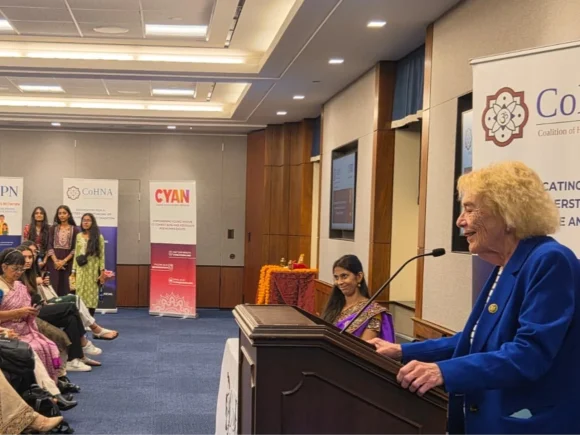
Bishop and other Georgia lawmakers highlighted the state’s efforts as an example of how “advocacy” can “translate into action for change.” Rep. Brian Jack (R-Ga.) said “Georgia is leading the way against Hinduphobia,” citing the state’s recognition of anti-Hindu hate. He also stressed the value of continued civic participation, stating, “Your annual CoHNA Advocacy Day matters enormously.”
Rep. Rich McCormick (R-Ga.) praised the achievements of Hindu Americans, describing them as “hardworking, intelligent, family-oriented, robust—that’s the American Dream.”
Expert Presentations
Dr. Joel Finkelstein, co-director of the Network Contagion Research Institute (NCRI) and a fellow at the Miller Institute for Secure Communities at Rutgers University, presented research examining efforts to incorporate caste into U.S. policymaking. Referring to a recent study, he said “caste has almost no pre-existing narrative in US civic life, making it an ideal test case for isolating the effect of a training narrative.” Citing a recent unsuccessful effort to include caste in New York state law, Finkelstein urged policymakers to require stronger evidence before incorporating activist narratives into legislation and educational curricula.
Prasiddha Sudhakar of NCRI presented research titled From Policy Drift to Purity Grift, examining online discourse surrounding U.S. immigration and its impact on Hindu Americans. According to the CoHNA statement, the research argued that incidents characterized as “anti-Indian” were primarily directed at Hindus and documented online campaigns targeting the religion, its festivals, and temples. The study also concluded that online hate incidents were amplified through viral social media activity and coordinated networks, with geopolitical factors contributing to the spread of such content.
Political strategist and former Capitol Hill staffer Anang Mittal introduced the Citation Integrity Dashboard, an independent, nonpartisan initiative designed to assess the transparency and methodology of institutional reports and evaluate whether claims about Hindu Americans and India are supported by verifiable evidence. According to CoHNA, the tool encourages readers to “scrutinize” how information is developed rather than accepting it at face value.
“It was gratifying to see so many lawmakers—both Democrats and Republicans—unite against temple attacks and anti-Hindu hate, and speak up for religious freedom for American Hindus,” said Sudha Jagannathan, CoHNA’s director of government relations. “This is the sort of bipartisan support that we at CoHNA are building for the Hindu American community because the future belongs to those who show up and advocate.”
Related posts:
 CoHNA Hosts 4th Annual Hindu Day of Advocacy at U.S. Capitol, Highlights Rising Hindu American Voice
 CoHNA Welcomes Failure of New York Caste Bills, Says Measures Would Have “Institutionalized Bias”
 Minnesota Resolution Condemning Hinduphobia Gains Support as CoHNA Highlights Community Concerns
 Mississauga Becomes Second Canadian City to Condemn Anti-Hindu Hate, CoHNA Welcomes Historic Resolution