Join WhatsApp Channel

India’s sixth National Family Health Survey (NFHS-6), the country’s most comprehensive household survey of health and demographic indicators, highlights notable improvements in maternal and child healthcare, immunization, child nutrition, and financial protection in healthcare. The findings underscore the impact of sustained nationwide investments in public health infrastructure and service delivery.
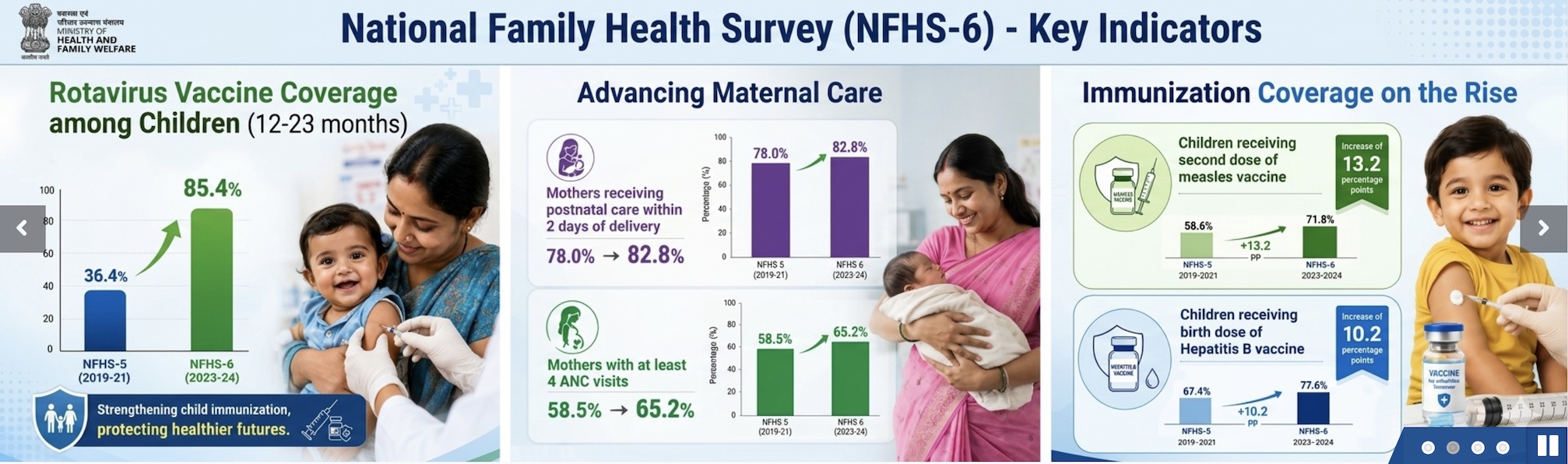
The survey reports progress across key maternal healthcare indicators. Nearly 96 percent of pregnant women received antenatal care, while the proportion receiving care during the first trimester increased from 70.0 percent to 76.2 percent. Institutional deliveries rose from 88.6 percent to 90.6 percent, bringing India closer to universal coverage, and births attended by skilled health personnel increased from 89.4 percent to 91.3 percent. Postnatal care for newborns within two days of birth also improved, rising from 79.1 percent to 85.3 percent.
Maternal nutrition showed gains as well. The proportion of women who took iron-folic acid supplements for at least 100 days during pregnancy increased from 44.1 percent to 54.9 percent.
Full immunization coverage among children aged 12 to 23 months increased from 83.8 percent to 87.1 percent. The survey found that 95.6 percent of children received most of their vaccinations through public health facilities.
Among the most significant improvements, rotavirus vaccine coverage more than doubled from 36.4 percent to 85.4 percent, while coverage of the second dose of the measles-containing vaccine increased from 58.6 percent to 71.8 percent. According to the survey, these gains were supported by last-mile service delivery through frontline health workers, strengthened cold-chain infrastructure, and digital tracking systems.
The survey also recorded encouraging improvements in child nutrition. Stunting among children under five, a key measure of chronic undernutrition, declined from 35.5 percent to 29.3 percent, while severe wasting fell from 7.7 percent to 5.2 percent. The survey attributes these improvements to coordinated national nutrition and child health initiatives.
Coverage under health insurance or healthcare financing schemes increased significantly, rising from 41.0 percent to 60.2 percent. According to the survey, the expansion reflects efforts to reduce out-of-pocket healthcare expenses and improve access to affordable care, particularly for vulnerable populations, marking progress toward universal health coverage.
Overall, the NFHS-6 findings indicate continued progress in maternal and child health, nutrition, and access to essential healthcare services. The survey also provides an evidence-based foundation for shaping future health and social policy.
For more details regarding the survey please visit: https://www.pib.gov.in/PressReleasePage.aspx?PRID=2266600®=3&lang=1