 Join WhatsApp Channel

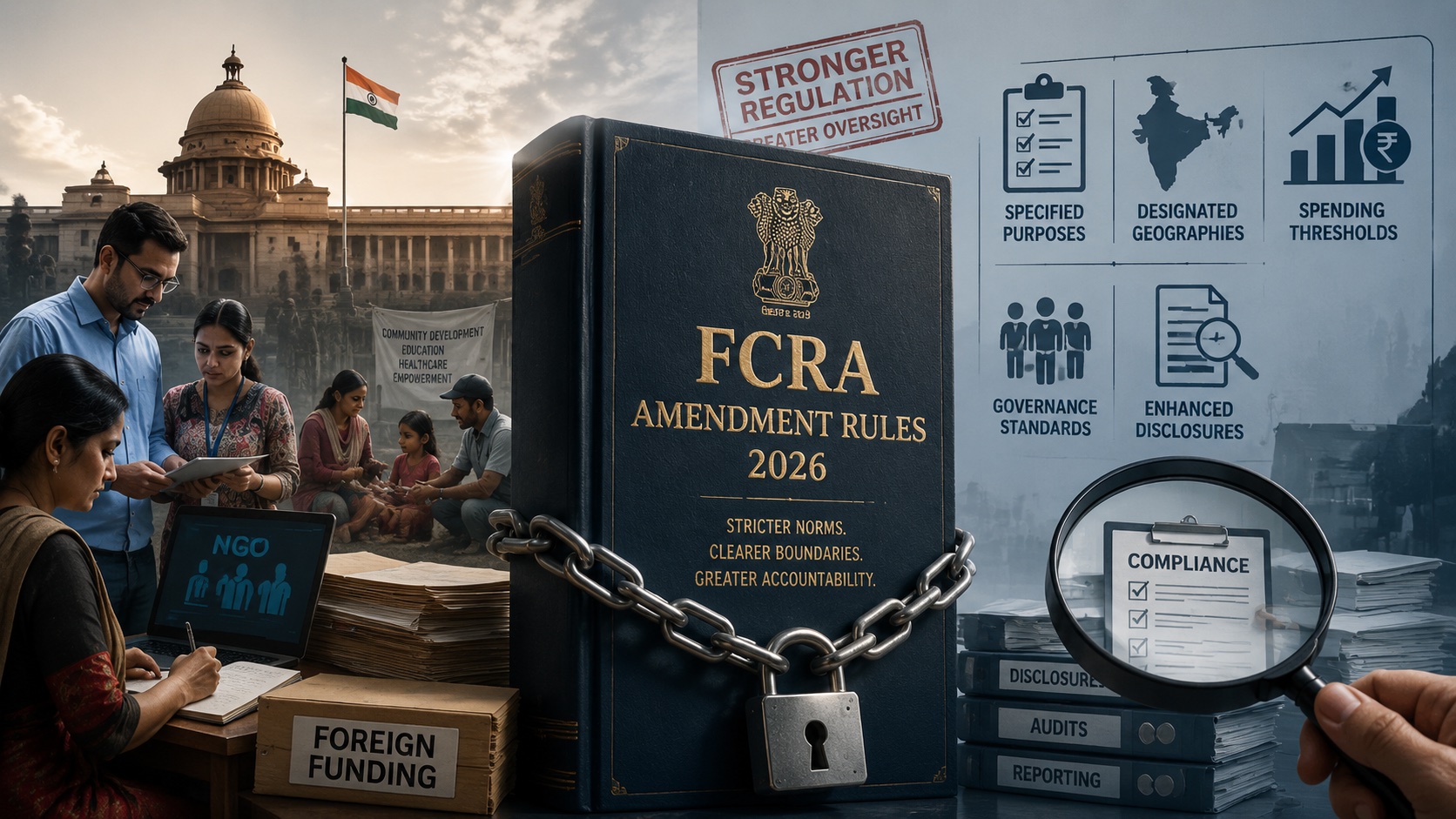
India’s non-profit sector is preparing for a fundamental shift in the way foreign-funded organizations operate after the Centre’s sweeping amendments to the Foreign Contribution (Regulation) Rules (FCRA), with legal experts warning that the changes could reshape governance structures, funding strategies and program delivery across thousands of civil society organizations.
The Foreign Contribution (Regulation) Amendment Rules, 2026, which came into force on June 22, move beyond routine compliance changes to establish a more tightly regulated framework that links foreign funding to narrowly defined purposes, specified geographical areas, measurable spending thresholds and significantly expanded disclosure requirements.
While the Ministry of Home Affairs says the amendments are designed to strengthen transparency and accountability in the use of overseas donations, sector specialists believe they represent another major tightening of the regulatory architecture governing India’s foreign-funded civil society organizations.
The latest overhaul follows the landmark 2020 FCRA amendments that prohibited sub-granting of foreign funds, capped administrative expenses and centralized all foreign contribution banking through a designated State Bank of India branch in New Delhi. Together, the changes indicate that the government is moving beyond regulating financial flows to exercising closer oversight over governance, program design and organizational strategy.
“The compliance landscape has fundamentally changed,” said a Delhi-based FCRA specialist. “Registration will no longer simply determine whether an NGO can receive foreign funding. It will increasingly determine what work it can undertake, where it can work, who can govern it and whether its activities are sufficient to justify retaining its license.”
Registration Becomes Activity- and Geography-Specific
Perhaps the most consequential reform is the shift from organization-wide registration to activity-based regulation.
Under the amended rules, every organization must identify approved purposes from a statutory schedule covering religious, cultural, economic, educational and social activities while also declaring the States and Union Territories where those activities will be carried out.
Existing FCRA-registered organizations have until June 21, 2027, to file Form FC-6F, specifying the activities and geographical areas under which they wish to retain their registration. Expanding into additional sectors or States thereafter will require fresh government approval and additional fees of ₹300 (about US$3.50) for every new purpose or State added beyond the base registration.
Lawyers say the change substantially reduces operational flexibility.
Many NGOs have traditionally shifted programs across sectors depending on donor priorities, humanitarian emergencies or community needs. Going forward, such changes could require prior regulatory approval before foreign funds can be deployed.
Governance Comes Under Closer Watch
The amendments also introduce, for the first time, a statutory definition of “key functionary.”
Instead of limiting accountability to designated office-bearers, the definition now extends to directors, trustees, partners and anyone exercising effective control over an organization’s affairs.
Compliance professionals say this considerably widens the scope of individual responsibility under the FCRA and is likely to trigger governance reviews across the sector.
The rules also state that organizations with foreign nationals—other than persons of Indian origin—as key functionaries will ordinarily not qualify for FCRA registration or prior permission, potentially affecting international charities and Indian affiliates of global non-profit networks.
Many organizations are expected to review board composition well before renewal deadlines.
Minimum Spending Requirement Could Force Strategic Changes
Another major implication is the introduction of an objective benchmark for “reasonable activity.”
To qualify for renewal, organizations must now demonstrate utilization of at least ₹10 lakh (approximately US$11,600) in foreign contributions over the previous two financial years.
Only expenditure financed directly from foreign contributions will count towards the threshold.
The provision provides statutory clarity to a term that had previously been left undefined but could also put pressure on smaller organizations receiving modest overseas grants or maintaining dormant FCRA registrations.
Sector experts believe some NGOs may choose to surrender inactive licenses rather than maintain registrations that no longer meet the utilization benchmark.
Donors May Face More Rigorous Due Diligence
The amendments are expected to alter the way international donors assess Indian partners.
Foundations, bilateral agencies and philanthropic intermediaries will increasingly need to verify that recipient organizations are registered not only under the FCRA but also for the precise program category and geographical area where projects are proposed.
Grant agreements are expected to become more detailed, requiring representations on approved activities, operational jurisdictions and compliance with the revised reporting framework.
The requirement to disclose ultimate donors where funding is routed through donor-advised funds or intermediary platforms is also expected to increase transparency across international philanthropic networks while reducing anonymity for contributors.
Compliance Costs Likely to Rise
Finance and legal professionals say the amended rules significantly expand annual compliance obligations.
The revised FC-4 return requires project-wise expenditure mapping, detailed activity reports, disclosure of websites and social media accounts, publication details, auditor Unique Document Identification Numbers (UDINs) and ultimate donor information where applicable.
Accounting systems may need substantial redesign to generate project-level financial data throughout the year rather than only during annual audits.
Organizations operating across multiple sectors or States are also expected to face higher compliance costs because each expansion of approved purposes or geographical coverage now carries additional regulatory filings and fees.
Greater Scrutiny of Advocacy Work
The amendments may also have implications for organizations engaged in advocacy and public policy.
Annual returns must now disclose publications produced by both organizations and their key functionaries, while the reporting framework reiterates statutory restrictions preventing FCRA-registered entities from producing or broadcasting news and current affairs content.
Legal observers say NGOs involved in governance, public awareness campaigns or policy research are likely to seek greater legal scrutiny of their activities to ensure continued compliance.
A More Controlled Regulatory Environment
Professional advisory firms describe the amendments as transforming the FCRA from a broad registration regime into a far more structured, purpose-driven regulatory system that emphasizes governance, transparency and measurable program delivery.
Whether the changes improve accountability or further constrain civil society will largely depend on their implementation over the coming year.
For now, thousands of FCRA-registered organizations face an extensive compliance exercise: reviewing governance structures, mapping programs to approved activity categories, verifying operational jurisdictions, reassessing foreign representation on governing bodies and preparing mandatory declarations before the June 2027 deadline.
For India’s development sector, the message is increasingly clear. Access to foreign funding will no longer depend solely on regulatory approval but on continuous compliance, demonstrable program activity and a governance framework that satisfies one of the country’s most tightly regulated legal regimes governing civil society.
Related posts:
 From Funding Rules to Institutional Control: FCRA Bill Reshapes Civil Society
 India Moves to Decriminalize Corporate Offences, Replace Jail With Penalties
 India’s New Tax Rules Widen Net for NRIs, Tighten Scrutiny of Offshore Income
 India’s Data Protection Rules Take Effect, but Compliance Costs and Regulatory Gaps Loom Large
