Join WhatsApp Channel

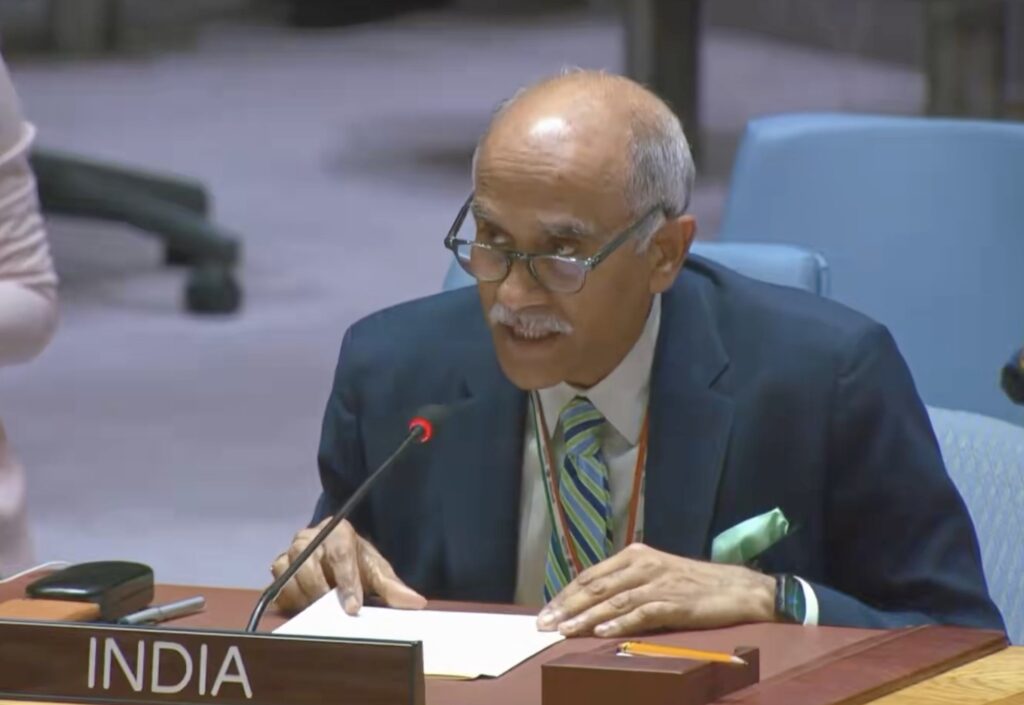
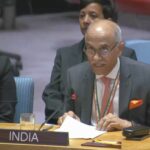
India’s Permanent Representative to the United Nations, Ambassador Harish Parvathaneni, reaffirmed India’s “unwavering” commitment to protecting children affected by armed conflict and safeguarding their right “to learn, to grow, and to realize” their full potential.
Speaking at the United Nations Security Council (UNSC) Open Debate on Children and Armed Conflict (CAAC) on June 24, Ambassador Harish emphasized that education must remain protected even during times of war. The debate focused on the theme, “Strengthening the Prevention of and Protection of Education for Children Affected by Armed Conflict: From Normative Commitments to Effective Implementation.”
“Education is a right that should endure in times of conflict,” he said. “It is the right whose fulfillment is among the most powerful contributions to lasting peace.”
Addressing the Council, Ambassador Harish described the protection of education for children living through armed conflict as one of the body’s most urgent priorities.
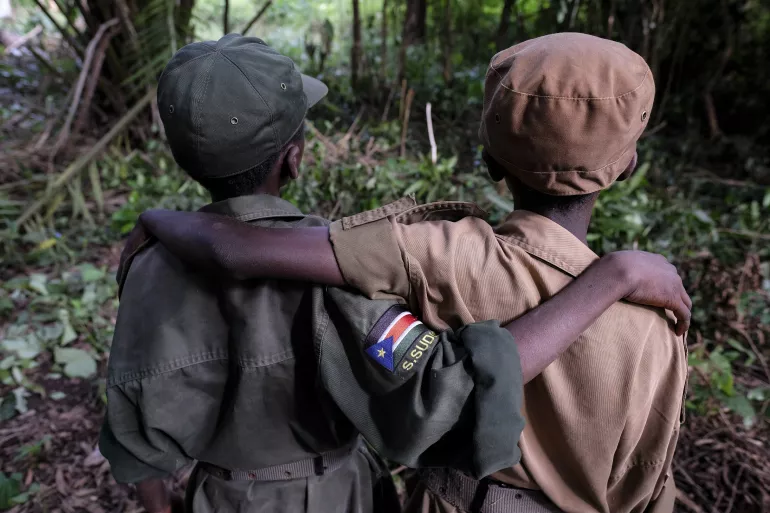
Citing the Secretary-General’s 2025 Annual Report on Children and Armed Conflict, he highlighted the growing impact of war on children. According to the report, attacks on schools increased by 44 percent in a single year. Nearly 473 million children, more than one in six worldwide, are living in or fleeing conflict zones, while more than 85 million of them have no access to education.
“These figures are a damning verdict on humanity’s collective failure to translate commitments into reality on the ground,” he said.
“Schools are far more than places of learning,” he added. “They provide the foundational basis for the cognitive, emotional and social development of children. To protect a child’s education is, therefore, to protect a nation’s future. It is with this conviction that India offers the following perspectives.”
Ambassador Harish said national governments bear the primary responsibility for protecting and promoting children’s rights.
“In India, the Right to Education is a fundamental right enshrined in our Constitution, guaranteeing free and compulsory education up to the age of 14 years. In order to ensure access to quality education to all, India launched DIKSHA (Digital Infrastructure for Knowledge Sharing), our national digital platform for school education,” he said.
He noted that the platform has “democratized access” to quality learning through interactive content and AI-powered tools available in multiple languages.
“Our domestic commitment to ensure access to affordable and quality education also shapes our engagement on this issue internationally,” he said.
Ambassador Harish also highlighted India’s use of digital technology to expand access to education during disruptions such as the COVID-19 pandemic.
“Our experience has convinced us that access to digital learning can be the bridge that helps children access education during conflicts,” he said.
He stressed that India considers investment in education for children affected by war to be an essential priority. India, he said, has made sustained investments in supporting education for refugees and displaced communities across its neighborhood, recognizing that uninterrupted learning is critical to resilience and recovery.
“We have also invested in rebuilding education infrastructure, including the construction of schools and vocational training centers, in different countries including our neighborhood,” he said.
Ambassador Harish also underscored the importance of accountability, stating that “protection without accountability is incomplete,” and warned, “Those who target schools and children with impunity must be held to account.”
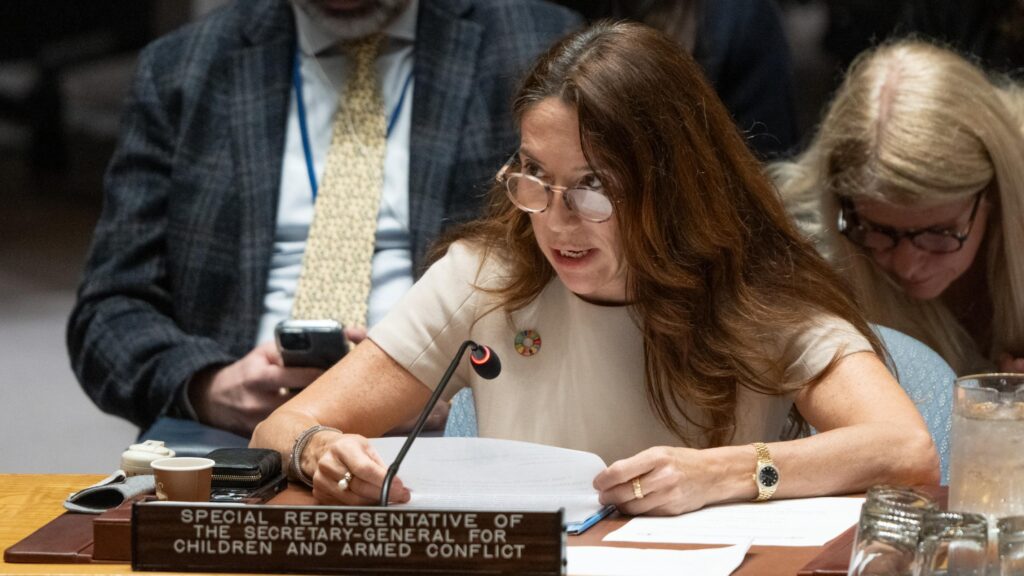
He thanked Colombia for convening the open debate and expressed appreciation to the briefers, Vanessa Frazier, Under-Secretary-General and Special Representative of the Secretary-General for Children and Armed Conflict, and Catherine Russell, Executive Director of UNICEF, for their insights.
Frazier said the Secretary-General’s report should “shake the conscience” of the Security Council, Member States, and the international community.
“It should unsettle ‘complacency, puncture euphemism,’ and strip away any remaining ‘illusion’ about the reality children face in armed conflict. This report is not merely a record of violations,” she said.
“It is an indictment of inaction and a call to use the tools already available to protect children,” she added.
Frazier reported that the United Nations Monitoring and Reporting Mechanism verified 38,558 grave violations against children, affecting 24,174 children. Although the verification was completed in 2025, it included violations committed in previous years. She said this represents the highest verified number of children affected by grave violations since the establishment of the Children and Armed Conflict mandate.
“Behind each and every number is a child whose body, mind, family, community, education, and future were assaulted by war,” she said.
Related posts:
 India Calls for ‘Zero Tolerance’ on Civilian Deaths at UNSC Debate
 At UN Security Council, India Defends Operation Sindoor, Rejects Pakistan’s Claims, Calls for Stronger Rule of Law and UN Reforms
 India Calls for Peace, Stability, and Greater Humanitarian Support for Afghanistan at UN Security Council
 India Reaffirms Support for Afghanistan’s Peace and Stability at UN Security Council