Join WhatsApp Channel

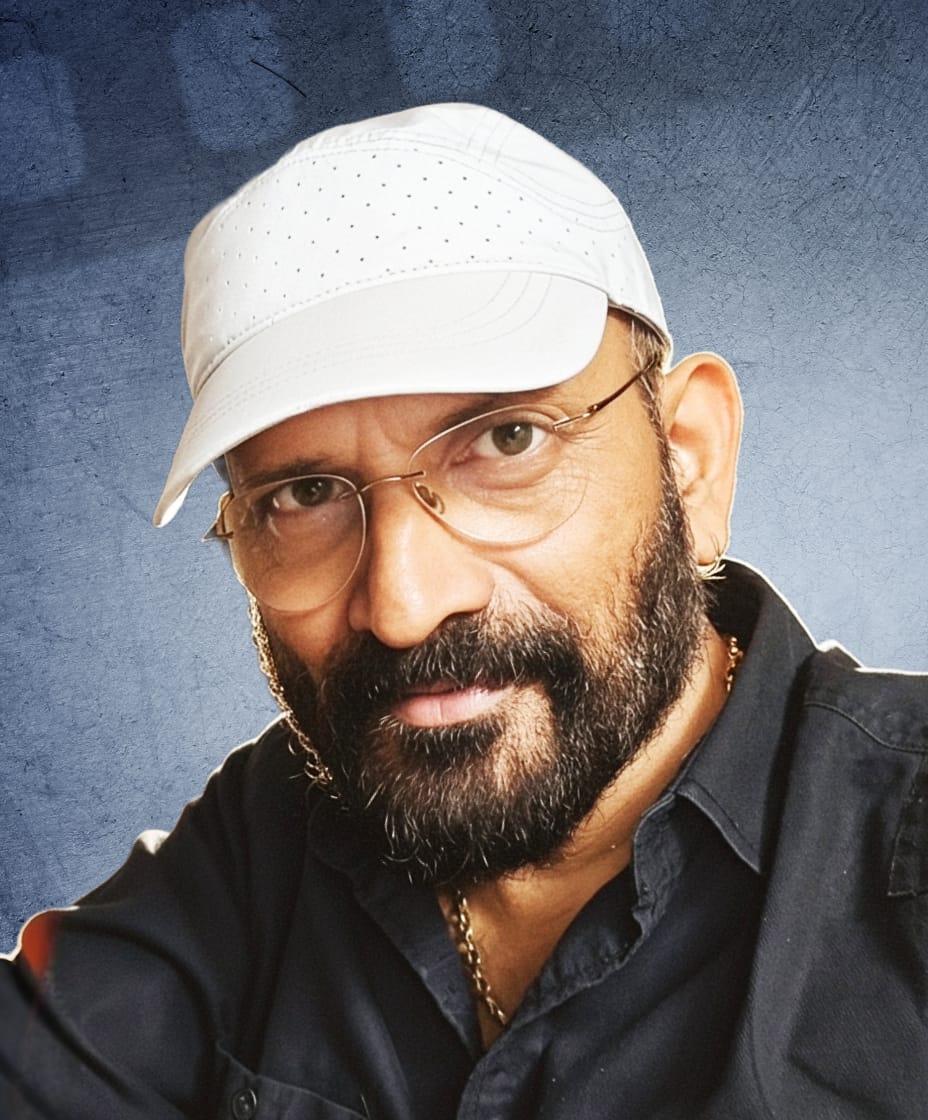
He is a legend in television circles: Rajan Waghdhare, the director who specializes mainly in comedies, or, as he puts it, “Clean comedy that families can watch together,” has just completed 52 episodes of Office Office—Chali Mussaddi Ki Beti, a serial on Doordarshan (India’s national TV channel) and its OTT avatar, Waves. He’s been active (after starting out as editor in the late 1980s) independently as director since the early 1990s and in that capacity has stopped counting the number of episodes of various hit shows that he has done.
“I must have completed between 2500 to 3000 episodes, possibly more!” he says humbly.
We met at the office of Umesh Mehra, veteran director (Ali Baba Aur Chaalis Chor, Sohni Mahiwal, et al) from the iconic banner of Eagle Films, who has produced the new season of this serial, for a breezy interaction.
Is this your second project for the Mehras of Eagle Films?
Yes, we did Jeannie Aur Juju together for which I also won a Best Director award. In any case, Office Office itself is a prestigious brand and I had to take it further.
In that case how much was the creative pressure on you?
Of course, the pressure was there, but (Umesh Mehra) sir told me, “Do it your way!” so I did not have to follow the older serial. Let us see how successful it will be as I have given it my own interpretation.
How was the experience of making this show? Umesh Mehra said that he had taken the main creative decisions of the cast and so forth.
A director works best when there is no creative interference! Umesh sir is very professional and it was a complete pleasure working on Office Office… for me. We discussed everything on the table, this very table! That’s not interference at all! Interference means a producer who sits in an airconditioned room and tells a director to change something, or directs me on how to take a shot! He would come on set but never ask, ‘What is this you are doing?’ In such cases, a director has the advantage that he can make a project as per his own vision and thus make a good show.
We decided on the cast after meeting the actors. We had reading sessions on the scripts, corrections if any would be done and then another re-reading session would be there for each of the 52 episodes. If it was not possible to meet physically, there would be Zoom meetings with Umesh-sir and the core five or six team members. That way, the final shoot never took time because of this pre-planning. And we deliberately chose new actors or lesser-known talents to bring in freshness and contemporary appeal.
And frankly, Umesh-sir’s experience is solid. He has been a film director who began almost 50 years back! I would be naïve if I did not listen to his suggestions. And I am someone who firmly believes that in TV, as in any creative field, everything is teamwork.
I met your lead actress, Shruti Sharma, and she was praising you for the freedom you gave her. What’s your reaction?
Yes, I believe in that process! I never ‘teach’ my actors. I just give them the situation and ask them to enact it in their way. I allow that freedom to improvise and only ensure that they don’t cross the limits of the scene or in their performance.
An example of your ‘limits’ would be?
Right from my first serial, Shriman Shrimati, which came out in 1994, I make sure there is no vulgarity, only clean, pure comedy that families can sit together and watch. In short, my comedy should be universal and very nikhall(pleasant and pure). I have clear dos and don’ts. Shriman Shrimati was the base for the series, Bhabi Ji Ghar Par Hai, and Yes Boss and that serial had stories whose themes could be termed for adults, but I made sure that vulgarity was never there.
Having worked with and watched so many comedians, who is your favorite comic actor?
(Instantly) Rakesh Bedi. He is totally a director’s actors who is very knowledgeable and has lots of references at his disposal. He is so well-read, can recite Mirza Ghalib and so much sher-o-shaayari, and I have done maximum work with him.
He has changed his image now with the Dhurandhar franchise and the series Raakh. What do you think?
I am very happy for him. It was high time he got his due!
Which are your favorite comedies in Hindi, Marathi and English?
I have not seen much of English cinema or shows. My all-time favorite is Kamal Haasan’s Pushpak. I love the work of Hrishikesh Mukherjee and his Gol Maal is again a top favorite. In fact, Hrishi-da once invited me and the Yes Bossteam home through Rakesh and complimented us all, asking me how we were able to think of so many new plots when filmmakers like him took so much time to work on one film! In Marathi, Sachin’s films remain dear to me, especially his directorial, Navari Mile Navryala.
You have also directed a bit of CID and Adaalat. Please tell us about your lesser-known aspects and work?
I edited some of the last episodes of the cult TV show, Yeh Jo Hai Zindagi. I began as an editor and my guru was V.N. Mayekar, who edited films like Betaab, Ghayal and most of Basu Chatterjee’s movies. I began as an editor with the Marathi series Swami in 1988. I also did the pilot episode of Bhabi Ji Ghar Par Hai and gave it its due direction, as it was essentially an adaptation of my first serial as director, Shriman Shrimati. They wanted me to direct Bhabi Ji… as well, but I was too busy then. So my associate Shashank Bali took it forward. However, I came in sometime in 2021-2022 for a while as there were TRP issues.
What next?
We are waiting for the feedback on Office Office… as of now. I don’t like my work to overlap but like to work on one project at a time. I have a few ideas—from diverse writers—that I will take up only when I am free. Meanwhile, I have completed my first Marathi film that has shaped up rather well—Kadhi Prem Kadhi Gondhal, which is completely shot in London. Produced by Ameya Khopkar and Swati Khopkar, it stars Sanjay Narvekar, Prarthana Behere, Kushal Badrike, Shivani Surve of Vaalvi fame, Laxmikant Berde’s son Abhinay Berde and Vinay Yedekar.
Are you shifting to cinema?
No. If the film works, I have a couple of subjects more. But television is always there.